
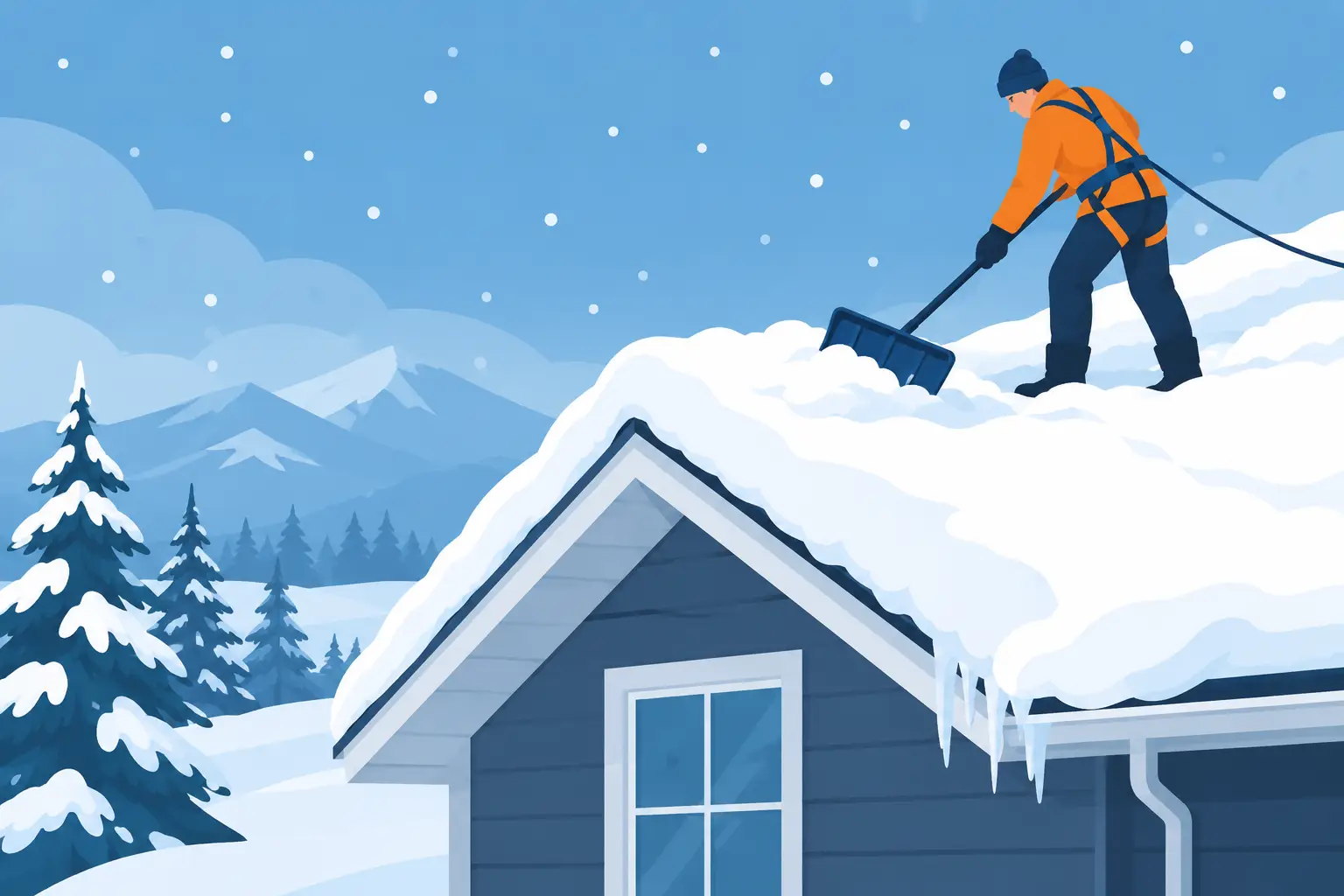
A heavy Sierra storm can change a roof’s conditions in a single afternoon. Light, powdery snow may look manageable, then warm temperatures or rain turn it into dense, waterlogged weight. This roof snow load safety guide helps homeowners, facility managers, and property operators recognize the risks, respond safely, and protect the building before snow becomes a structural or water-intrusion problem.
Why roof snow load is more than a snowfall total
Snow load is the weight of accumulated snow and ice pressing on a roof. The depth of snow matters, but its moisture content matters more. A foot of dry snow weighs far less than a foot of wet, compacted snow. Wind can also create deep drifts on one side of a roof, behind parapet walls, around rooftop equipment, or in valleys where snow gathers instead of sliding away.
Roof shape, age, framing, drainage, and previous modifications all affect how a building handles that weight. A steep residential roof may shed snow in some areas while holding it in valleys and behind chimneys. A low-slope commercial roof may retain snow across a broad surface, especially where drains are blocked or tapered insulation directs water and melting snow toward a restricted area.
That is why there is no responsible one-size-fits-all depth that tells every owner when to remove snow. Building design loads vary by location and construction. If a roof has a history of repairs, sagging, ponding water, structural alterations, or poor drainage, it deserves closer attention during winter weather.
Roof snow load safety guide: warning signs to act on
A roof does not always give notice before a serious failure, but changes inside or outside the building should never be dismissed during or after a major storm. Contact a qualified roofing and, when needed, structural professional promptly if you notice these conditions:
- New sagging along the roofline, ceiling, soffits, or interior ceiling tiles
- Cracks in drywall, plaster, walls, or finishes that appear after heavy snowfall
- Doors or windows that suddenly stick, bind, or no longer close properly
- Water stains, active leaks, dripping around light fixtures, or unusual ceiling discoloration
- Loud cracking, popping, or creaking sounds from the roof structure
- Deep, uneven snow drifts near roof edges, parapets, valleys, skylights, or rooftop units
Treat active sagging, major cracking, repeated loud structural noises, or rapidly increasing leaks as urgent conditions. Keep people out of the affected area, avoid placing equipment or materials below the suspected weak point, and arrange a professional assessment. Do not climb onto a roof to investigate a potential structural problem.
Know where snow creates the greatest risk
Snow rarely distributes itself evenly. On residential roofs, valleys, lower roof sections, dormers, skylights, and areas below upper roof slopes are common collection points. Ice dams at eaves can trap melting water and force it under shingles or flashing, damaging decking, insulation, ceilings, and wall finishes.
On commercial roofs, the concern often centers on drift zones and drainage. Parapet walls, mechanical curbs, HVAC equipment, solar arrays, penthouses, and changes in roof elevation can create pockets where wind-driven snow piles up. Once melting begins, clogged drains and scuppers can allow water to pond. The added water weight and the risk of membrane leaks can turn a winter maintenance issue into an expensive interruption to operations.
Pay particular attention to additions and older sections of a building. Different roof areas may have different framing systems, slopes, drainage layouts, and load capacity. A roof that appears uniform from the ground may not perform uniformly under snow.
Remove snow safely without damaging the roof
Snow removal can reduce risk, but unsafe removal methods can damage the roof or injure the person doing the work. Falls are a serious hazard, and sharp tools can puncture shingles, membranes, flashings, and coatings. A puncture may not be obvious until the next thaw sends water into the building.
For many homes, a roof rake used from the ground is the safest option for reducing buildup near eaves. Pull snow down in manageable sections and keep clear of falling snow and ice. Do not stand beneath the area being cleared, and do not pull hard enough to scrape roofing material. Leave a thin layer of snow rather than trying to expose the roof surface.
Property owners should not use axes, shovels with sharp metal edges, pressure washers, or salt products that are not approved for the roofing system. Chipping at ice dams can tear shingles and flashing. On low-slope roofs, dragging tools across a membrane or coating can create cuts that compromise waterproofing.
Professional snow removal is the better choice when the roof is steep, the accumulation is substantial, access is limited, or the building is commercial or multi-story. Trained crews use appropriate fall protection, walk pads where applicable, snow-removal methods suited to the roof system, and a planned approach that avoids creating dangerous unbalanced loads.
Do not create an uneven load while clearing
Removing all snow from one section while leaving a deep drift beside it can shift loads in ways the structure was not intended to handle. This is especially relevant on large low-slope roofs and roofs with multiple elevations. Snow should be reduced methodically, with attention to drift zones, drainage paths, and the roof’s overall condition.
A contractor can help prioritize the highest-risk areas without overworking the roof surface. For commercial properties, this may mean clearing drains and scuppers first, reducing drifts at parapet walls and equipment curbs, and checking flashings, seams, and penetrations after removal. For homes, the focus may be eaves, valleys, roof transitions, and areas where ice dams have begun to form.
Prevent ice dams by managing heat and drainage
Ice dams begin when heat escaping from the building melts snow higher on the roof. The water runs downward, then refreezes at colder eaves. The growing ridge of ice blocks drainage and can push water back beneath roofing materials.
Heat tape can be an effective targeted solution for vulnerable eaves, gutters, downspouts, and drainage paths when designed and installed correctly. It is not a substitute for sound roof construction, adequate insulation, ventilation, or maintenance. Improperly installed cable can create electrical concerns, interfere with drainage, or fail to address the real source of uneven roof temperatures.
Before winter, inspect attic insulation and ventilation, seal major air leaks around ceiling penetrations, clean gutters where they are part of the drainage system, and confirm that downspouts discharge away from the building. On commercial roofs, schedule preventive maintenance to clear drains, inspect membrane seams, verify secure flashings, and address ponding areas before snow arrives.
Schedule an inspection after severe weather
The safest time to understand a roof’s vulnerabilities is before the next storm, not while snow is accumulating. A professional inspection can identify loose flashing, damaged shingles, deteriorated sealants, blocked drains, membrane wear, weak transitions, and signs of water intrusion that winter weather can worsen.
For facility managers, a winter response plan should identify roof access procedures, approved snow-removal vendors, drain locations, emergency contacts, and interior areas that need monitoring. A documented maintenance plan also supports better budget planning because minor repairs can be addressed before they become structural or business-disrupting events.
For homeowners, an inspection after a heavy winter can catch damage that is easy to miss from the ground. Staining may not appear until weeks after the storm, when melting snow finds a compromised flashing detail or damaged underlayment.
Mountain Valley Roofing helps Nevada and Northern California property owners assess winter roof conditions, repair storm-related damage, and plan snow-management solutions that protect both the roofing system and the people below it. When snow begins to build, a prompt professional assessment is often the most cost-effective way to protect a long-lasting roof and avoid a preventable emergency.