
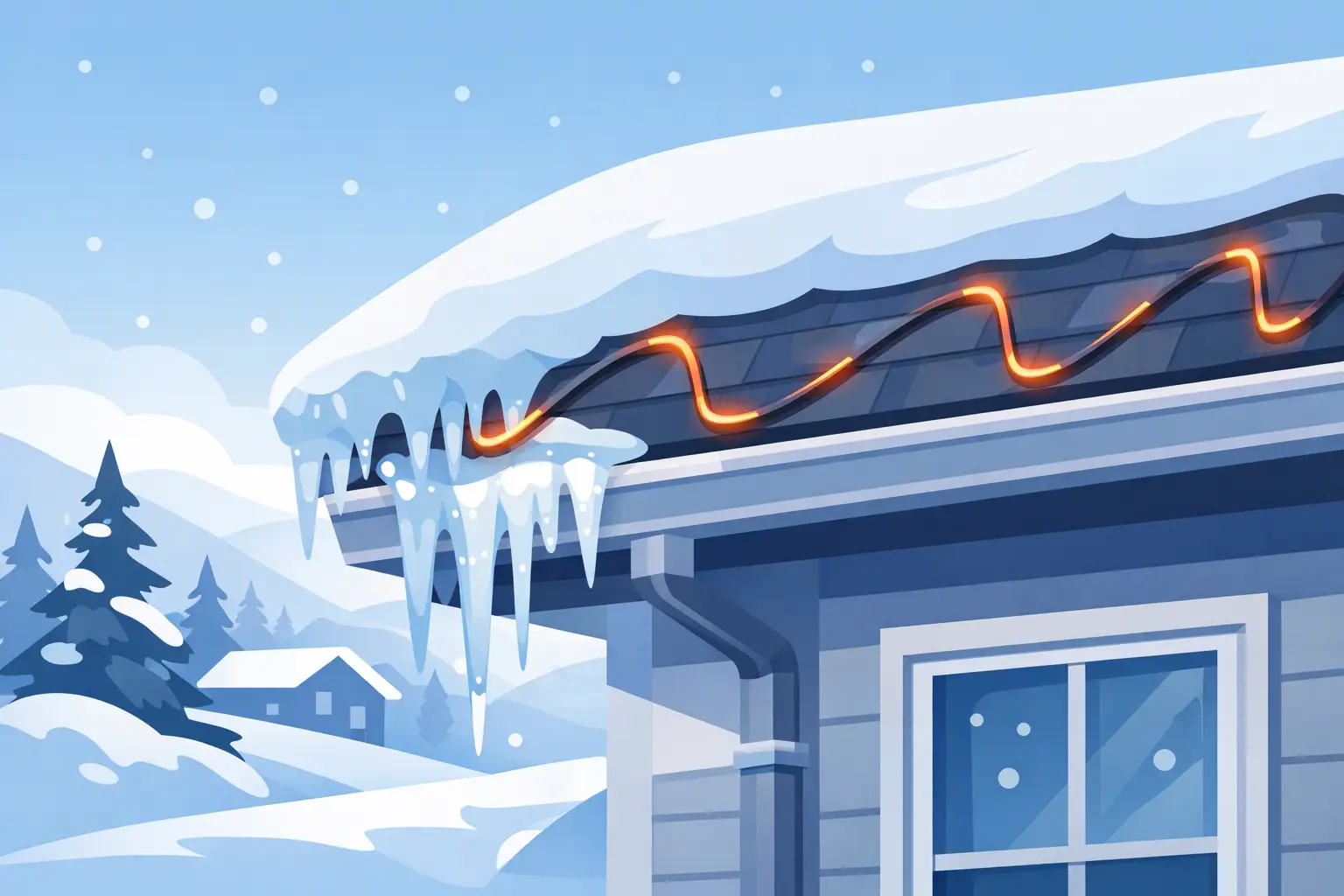
A line of ice at the roof edge may look harmless after a storm, but it can hold meltwater where it does the most damage. Heat tape for ice dams can create a controlled drainage path through snow and ice, helping protect shingles, gutters, soffits, and interior finishes. It is a practical solution for many mountain properties, but it works best as part of a larger plan for roof performance.
Why ice dams put roofs at risk
Ice dams form when snow on the upper roof melts, runs down toward the colder eaves, and refreezes. The ridge of ice that develops at the roof edge blocks later meltwater from draining off the roof. That water can back up under shingles or other roofing materials and find its way into the roof deck, attic, exterior walls, and living spaces.
In Nevada and Northern California, winter conditions can shift quickly. A sunny afternoon may melt snow on a dark roof surface, followed by freezing temperatures overnight. Higher-elevation homes and commercial buildings can see repeated freeze-thaw cycles for weeks at a time. Roofs with long runs, valleys, north-facing slopes, skylights, low-slope transitions, or poorly insulated attic areas are especially vulnerable.
The visible ice is only part of the problem. Persistent damming can lead to stained ceilings, wet insulation, deteriorated sheathing, damaged fascia, loose gutters, and rot around roof edges. If water reaches structural framing, a relatively small winter issue can become a significant repair project.
What heat tape for ice dams actually does
Roof heat tape, also called heat cable, is an electrically powered cable installed in strategic areas where ice builds up. When properly designed and installed, it melts channels through snow and ice so water can move off the roof instead of ponding behind an ice dam.
The cable is commonly arranged in a zigzag pattern along the eaves. Depending on the roof layout, it may also be installed in valleys, behind gutters, inside gutters and downspouts, or around problem areas where snow routinely collects. The goal is not to melt every inch of snow from the roof. It is to maintain a clear route for meltwater to drain safely.
That distinction matters. Heat tape is an ice-management tool, not a replacement for proper roofing, insulation, ventilation, or snow removal. A system that runs constantly to compensate for major heat loss may reduce visible ice while leaving the underlying cause unaddressed.
When heat cable is a good investment
Heat tape is often a worthwhile option when a roof has recurring ice dams despite reasonable attic insulation and ventilation. It can also make sense where the building design naturally concentrates snow and water, such as at roof valleys, dormers, complex eaves, skylights, and gutter systems that remain shaded in winter.
For commercial properties, heat cable can protect entrances, loading areas, walkways, and drainage components from falling ice and overflow. For homes, it can reduce the risk of water intrusion at vulnerable eaves and help preserve gutters that are repeatedly stressed by frozen buildup.
It depends on the roof and the source of the problem. A simple roof with adequate ventilation may need only improved insulation or periodic snow removal. A building with several roof elevations, shaded drainage paths, and repeated winter leaks may benefit from a professionally planned heat cable system.
Signs your property may benefit
Consider a heat tape evaluation if you regularly see thick ice along eaves, icicles that return after each storm, water stains near exterior walls, gutters pulling away from the fascia, or snow melting unevenly across the roof. Melt patterns can be useful clues. Bare patches in the middle of a snow-covered roof often indicate heat escaping from the building into the attic space.
A roofing inspection can identify whether the concern is limited to a few drainage areas or whether roof repairs, insulation improvements, ventilation changes, or flashing work should come first.
Proper installation is the difference
Heat cable is only effective when the system is correctly sized, routed, secured, and powered. Incorrect installation can leave gaps in the drainage path, damage roofing materials, overload circuits, or create avoidable electrical hazards.
Professional installation begins with the roof itself. The contractor should inspect shingles or membrane conditions, flashing, gutters, downspouts, attic ventilation, insulation levels, and previous leak areas. Installing cable over a deteriorated roof does not resolve failed flashing, worn shingles, open seams, or soft decking.
The layout must also match the roof geometry. Eaves may require a cable pattern that reaches far enough up the roof to connect the heated drainage channel to the warmed portion of the roof. Valleys and gutters need continuous paths so meltwater does not refreeze before it reaches the ground. Downspouts often need cable as well, particularly where they run through cold areas or drain into locations prone to freezing.
Electrical planning matters just as much. Heat cable should be installed according to manufacturer specifications and applicable electrical requirements, with appropriate ground-fault protection and weather-rated connections. Self-regulating cable can adjust its heat output based on surrounding temperatures, while constant-wattage systems provide consistent output. The right choice depends on the application, cable length, controls, and expected weather exposure.
Avoid fastening cable by puncturing roofing materials. Roof-safe clips and attachment methods are designed to hold the system in place without compromising the waterproofing layer. This is especially important on low-slope commercial roofs and on shingle systems where unnecessary penetrations can create future leak points.
Heat tape works better with prevention
The most cost-effective approach addresses why the ice dam is forming. Heat cable manages the immediate risk, while building-envelope improvements reduce the conditions that cause recurring melt and refreeze cycles.
Start with the attic. Air leaks around light fixtures, plumbing penetrations, access hatches, ducts, and wall tops can allow warm air to enter the attic and heat the roof deck. Proper air sealing and insulation help keep heat inside the conditioned space where it belongs. Adequate ventilation then helps maintain a more consistent roof temperature.
Roof drainage should also be clear before winter arrives. Debris-filled gutters and downspouts can trap water even when heat cable is present. Damaged gutters, loose hangers, and poorly pitched drainage components should be repaired so the system can carry water away once the cable creates an opening.
Snow removal may be appropriate after heavy accumulation, particularly on roofs carrying large snow loads. It should be done carefully with the right equipment and without scraping roofing materials. Never chip ice with sharp tools or use open flames to clear a roof. Those methods can damage the roof and create serious safety hazards.
Operating and maintaining roof heat cable
A heat tape system should be tested before the first major freeze, not after an ice dam has already formed. Check that controls respond properly, connections are secure, cable is undamaged, and gutters and downspouts are clear. A thermostat, moisture sensor, or manual control may be used depending on the system design.
Running heat cable only when weather conditions call for it can help control energy use. The operating cost depends on cable type, total footage, electrical rates, run time, roof exposure, and the severity of the winter. There is a trade-off: using too little cable or turning it on too late may limit its effectiveness, while using it as the only answer to attic heat loss can increase utility costs.
Inspect the system at least once a year and after severe weather. Look for cable that has shifted, been pinched by ice, or been damaged by falling branches or roof work. Any electrical concerns should be handled by a qualified professional.
Protect the roof before winter weather arrives
Recurring ice dams are a warning that water, heat, and drainage are not working together the way they should. A well-planned heat cable system can protect vulnerable roof edges and keep meltwater moving, but it delivers the best long-term value when paired with sound roofing, effective insulation, clear drainage, and routine maintenance.
For properties exposed to heavy snow and sharp temperature swings, a professional assessment before winter can prevent emergency repairs when access is difficult and damage is already underway. Mountain Valley Roofing can evaluate the roof system, identify the source of recurring ice buildup, and recommend practical protection built for the conditions your property faces.