
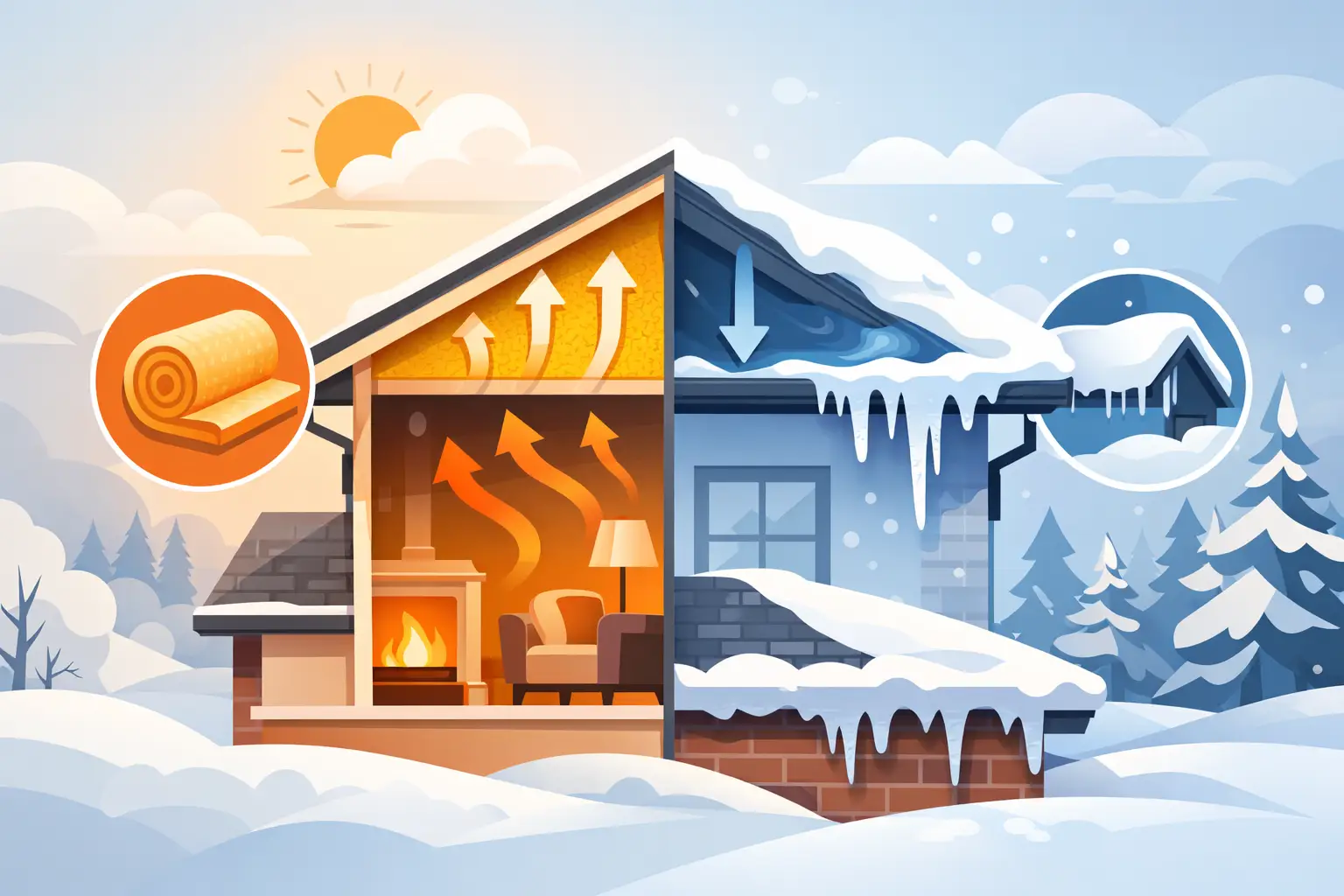
Ice dams often start with a problem homeowners cannot see from the ground: uneven heat loss through the ceiling and attic. A roof may look sound after a snowfall, yet heat escaping from living spaces can melt snow near the upper roof. When that water reaches the colder eaves, it refreezes into a ridge of ice. So, can insulation reduce ice dams? Yes, when it is part of a complete attic and roofing strategy that controls heat loss, air movement, and moisture.
For homes in Nevada and Northern California mountain communities, ice dams are not just a winter inconvenience. They can force water beneath shingles, damage roof decking and insulation, stain interior ceilings, and contribute to dry rot over time. Addressing the underlying cause protects the roof system and helps avoid repeat repairs.
Can Insulation Reduce Ice Dams?
Proper insulation can substantially reduce the conditions that cause ice dams. Its job is to slow the transfer of heat from conditioned rooms into the attic. A colder, more consistent attic helps keep the roof deck closer to the outdoor temperature, allowing snow to remain frozen instead of melting unevenly across the roof.
Insulation alone, however, is rarely a complete cure. Warm air can bypass insulation through gaps around plumbing stacks, recessed lighting, attic hatches, wiring penetrations, chimneys, and wall top plates. Even a well-insulated attic can lose significant heat if those openings are not sealed.
The most reliable approach is air sealing first, then installing or improving insulation to the appropriate depth and coverage. This sequence prevents warm interior air from reaching the attic while the insulation slows heat transfer through the ceiling plane. When both are done correctly, the roof surface stays more uniform during snow events.
Why Ice Dams Form Along the Eaves
Snow is an effective insulator. Once it accumulates on a roof, heat escaping from the home may warm the roof deck enough to melt the snow from underneath. The meltwater travels down the slope until it reaches the overhang, where there is less heat rising from the building. Temperatures at the eaves are colder, so the water freezes.
As that ice ridge grows, it blocks water coming down the roof. The backed-up water can work under shingles, flashing, or underlayment. This is why an ice dam can produce a leak even when the roof covering is not at the end of its service life.
Some heat loss is caused by insufficient insulation, but several other conditions can contribute:
- Air leaks from the living space into the attic
- Inadequate intake or exhaust ventilation
- Blocked soffit vents or insulation covering the vent path
- Heat-producing ductwork, equipment, or recessed fixtures in the attic
- Complex rooflines with valleys, dormers, skylights, or transitions that collect snow and water
A professional inspection should identify which of these conditions are present. Treating only the visible ice can provide short-term relief while allowing the real cause to continue.
Air Sealing Is Often the First Repair
If an attic has obvious drafts or uneven insulation, adding more material may seem like the fastest answer. It can help, but air sealing usually delivers the better first step. Warm air carries moisture as well as heat. When it enters a cold attic, it can raise roof-deck temperatures and create condensation that affects framing, sheathing, and insulation performance.
Common leakage points include attic access panels, plumbing and electrical penetrations, open framing cavities, bathroom fan housings, and gaps around chimneys. These details need to be sealed using materials appropriate for the location and any fire-safety clearance requirements. Chimneys, flues, and certain lighting assemblies require special care. A qualified contractor can correct leaks without creating a safety issue or blocking needed ventilation.
Air sealing also improves comfort below the roof. Rooms may feel less drafty, heating equipment may cycle less often, and insulation can perform closer to its intended rating.
Insulation Must Be Installed Evenly
The best insulation type depends on the attic design, existing materials, moisture conditions, and available access. Blown-in insulation can provide consistent coverage across large open attic floors. Batt insulation can work well in accessible, regular framing bays when it is fitted carefully. Dense-pack or spray foam solutions may be considered in enclosed or difficult-to-reach areas, although they require a design that accounts for ventilation and moisture management.
Coverage matters as much as the material itself. Thin areas, gaps, compression, and disturbed insulation can create hot spots on the roof. Insulation should be continuous over the ceiling plane without blocking soffit vents. Vent baffles at the eaves preserve an air channel from the soffits into the attic while keeping loose-fill insulation where it belongs.
More insulation is not automatically better if the attic has unresolved moisture, active roof leaks, or major air leaks. Those issues should be corrected first. Otherwise, new insulation can conceal a problem rather than solve it.
Ventilation Helps Maintain a Cold Roof Deck
Attic ventilation works with air sealing and insulation. Its purpose is not to compensate for a poorly insulated attic. Instead, it helps remove small amounts of heat and moisture that still reach the attic and supports a more consistent roof-deck temperature.
A balanced system generally includes intake ventilation at the soffits and exhaust ventilation near the ridge or upper roof area. Air needs a clear path between them. If soffits are clogged with paint, debris, insulation, or improperly installed baffles, the system cannot draw air as intended.
Ventilation requirements vary by roof structure and local conditions. Cathedral ceilings, low-slope residential roofs, finished attics, and complicated rooflines may require a more specialized solution. In snow-country homes, the goal is to preserve a dry, cold, well-managed roof assembly without creating wind-driven snow entry or other weatherproofing concerns.
When Insulation Will Not Fully Stop Ice Dams
Insulation can reduce ice dam risk, but no single improvement can guarantee that ice will never form. Long periods of heavy snowfall followed by temperature swings can challenge even well-built roofs. Shade, solar exposure, wind patterns, roof orientation, and snow depth all affect where melting and refreezing occur.
Roof geometry also matters. Valleys, dead-end walls, wide overhangs, and areas behind dormers naturally collect snow and can create localized ice. Older homes may have framing or attic layouts that make complete air sealing difficult without more extensive work.
In these cases, a layered protection plan is often the most cost-effective option. It may include attic improvements, roof repairs, upgraded underlayment during replacement, targeted heat tape installation, and safe snow removal when accumulation becomes excessive. Heat tape can keep specific drainage paths open, but it should be designed and installed correctly. It is a supplemental control, not a substitute for insulation, air sealing, or sound roofing details.
Roof Maintenance Still Matters
A roof with aging shingles, failed flashing, damaged valleys, or worn underlayment is more vulnerable when ice forms. Ice dams can expose weaknesses that may not leak during ordinary rain. Seasonal inspections give property owners a chance to address minor defects before winter weather adds stress to the roof.
Snow removal should also be handled carefully. Improper raking or chopping can damage shingles, gutters, flashings, and protective granules. Avoid climbing onto an icy roof or using sharp tools to break ice from the surface. A professional can evaluate snow load, ice buildup, drainage paths, and roof condition while recommending the safest next step.
For commercial properties, ice-related concerns may look different on low-slope roofs. Snow load, drain performance, scuppers, edge details, and ponding water need to be evaluated as part of a complete building-envelope maintenance plan. Insulation can improve energy efficiency, but drainage and membrane condition remain critical to preventing winter water intrusion.
A cold, dry attic and a well-maintained roof give snowmelt fewer opportunities to become a damaging ice dam. If ice keeps returning to the same area, treat it as a building-performance warning sign, not just a seasonal nuisance. A thorough inspection can identify the heat loss, ventilation, insulation, and roofing details that need attention before the next storm puts them to the test.