
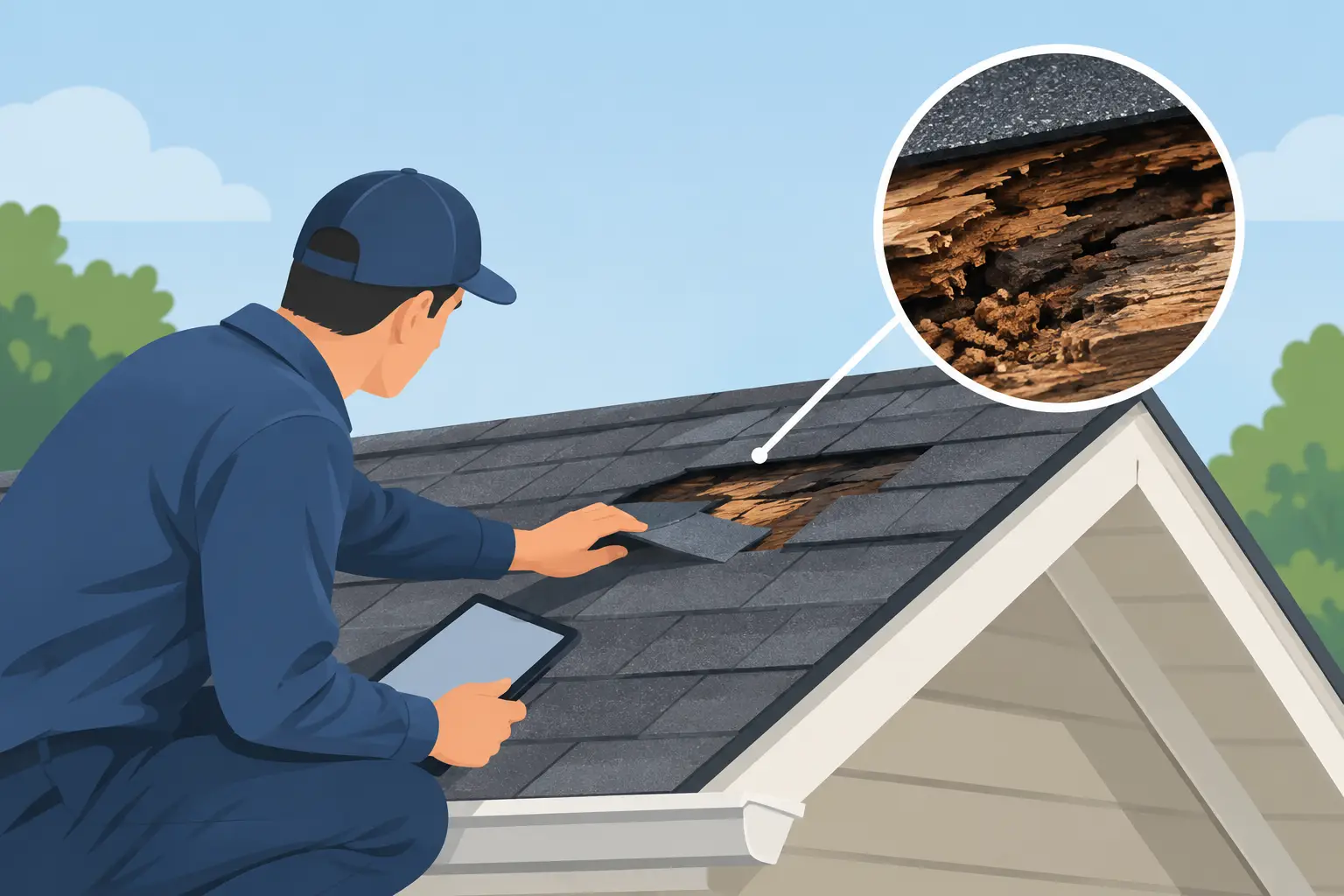
A roof can look sound from the street while moisture is quietly breaking down the wood beneath it. For property owners, knowing how to identify roof rot early can mean the difference between a focused repair and a much larger project involving decking, framing, insulation, and interior finishes.
Roof rot is not usually a sudden failure. It develops when water repeatedly reaches wood components and those materials cannot dry properly. In Nevada and Northern California, intense sun, wind-driven rain, snow accumulation, freeze-thaw cycles, and rapid temperature swings can all expose weak points in a roof system. The key is recognizing the warning signs before small leaks become structural damage.
What Roof Rot Is and Why It Spreads
Roof rot generally refers to decay in wood caused by long-term moisture exposure. Roof decking, rafters, fascia boards, eaves, and sheathing are especially vulnerable when a leak, damaged flashing, poor ventilation, or ice buildup allows water to remain in place.
The problem is often called dry rot, although the wood still needs moisture for the decay process to begin. Once fungal decay takes hold, affected wood can become soft, brittle, cracked, or crumbly. It may lose the strength needed to support roofing materials, snow loads, or equipment installed on the roof.
A single missing shingle does not automatically mean the roof deck has rotted. Likewise, a ceiling stain does not always reveal the full extent of damage. The condition depends on where water entered, how long it remained, the type of roof system, and whether the assembly had a chance to dry. That is why a professional inspection is often the most cost-effective next step when warning signs appear.
How to Identify Roof Rot From the Outside
Start with a ground-level visual check. Do not walk on a roof unless you have the training, safety equipment, and roof access needed to do so safely. Some of the clearest warning signs are visible from the yard, driveway, or a properly positioned ladder.
Look for uneven roof lines. A roof plane that appears wavy, dipped, or sagging may indicate weakened decking beneath the shingles or roofing membrane. Sagging does not always mean rot, but it should be evaluated promptly, particularly after a heavy snow season or a major storm.
Pay close attention to roof edges, eaves, and fascia. Peeling paint, dark staining, cracked boards, soft-looking wood, and gaps along the roofline can point to repeated water exposure. These areas commonly fail when gutters overflow, drip edges are missing, or ice dams hold melting snow against the roof edge.
Damaged roofing materials also increase the risk of concealed rot. On shingle roofs, watch for curled, cracked, missing, or loose shingles, as well as exposed nail heads and deteriorated pipe boots. On low-slope commercial roofs, ponding water, open seams, blisters, punctures, failing edge metal, and deteriorated flashings deserve immediate attention. Water does not need a large opening to reach the deck below.
These exterior signs are especially worth investigating:
- Soft, stained, split, or visibly deteriorated fascia and trim
- Roof decking that appears to dip between rafters or trusses
- Moss, algae, or debris that holds moisture against roofing materials
- Loose flashing around chimneys, skylights, walls, and roof penetrations
- Persistent standing water on flat or low-slope roof areas
Moss or algae alone is not proof of rot. However, growth that traps moisture and shades the roof surface can speed up deterioration, particularly in cooler or tree-covered locations.
Interior Clues That Moisture Has Reached the Roof Structure
The attic is often the best place to find roof rot before it becomes visible indoors. On a dry day, use a flashlight to inspect the underside of the roof decking. Look for dark rings, black or brown staining, white residue, wet insulation, rusty nail tips, and wood that appears layered, cracked, or softened.
A musty odor in the attic can also signal a moisture issue. Odor by itself is not enough to diagnose rot, but it is a reason to inspect more closely. If the attic feels unusually humid or shows condensation on roof nails, ventilation may be contributing to the problem even if the roof covering is intact.
Inside occupied spaces, ceiling discoloration, bubbling paint, peeling drywall tape, and recurring stains near exterior walls can indicate a roof leak. Water can travel along framing before it appears inside, so the stain may not sit directly below the damaged roof area. A stain that dries after rain is still a warning. The leak may return with the next wind-driven storm, snowmelt event, or backed-up drainage area.
Watch for changes around skylights, chimneys, and vents. These penetrations rely on properly installed flashing to direct water away from the roof opening. When flashing fails, water can damage the surrounding deck and framing long before a major interior leak appears.
Common Causes of Roof Rot in Nevada and Northern California
Most roof rot begins with a manageable roofing defect combined with time. Aging shingles and membranes can crack under ultraviolet exposure. High winds can lift edges and loosen flashing. Snow and ice can force water under roofing materials, while blocked gutters can keep water against fascia and eaves.
Ventilation is another major factor. Warm, moist indoor air that enters a cold attic can condense on the underside of the roof deck. This is common in buildings with inadequate intake and exhaust ventilation, air leaks around ceiling penetrations, or insufficient insulation. In this situation, replacing exterior roofing materials alone may not solve the source of moisture.
Commercial properties face additional risks at drains, scuppers, HVAC curbs, skylights, pipe penetrations, and parapet walls. Flat and low-slope systems must shed water efficiently and maintain watertight seams. Even a small failure near a penetration can allow moisture to spread through insulation and decking before it is detected.
When a Repair Is Enough and When Replacement Is Smarter
The right solution depends on the extent of decay. If moisture damage is isolated and the surrounding roof materials are in good condition, a qualified contractor may be able to remove the affected section, replace damaged decking or framing, correct the leak source, and restore the roofing system. This approach can protect the structure without replacing the entire roof.
A broader replacement may be the better investment when rot is widespread, the roof is near the end of its service life, or multiple repairs have already been made. Covering damaged decking with new roofing materials is not a lasting fix. The weakened wood remains below the surface, and trapped moisture can continue causing damage.
For commercial roofs with a sound underlying structure, restoration coatings may extend service life and improve UV resistance after repairs are completed. Coatings are not a cure for hidden rot, saturated insulation, failed drainage, or open seams. The roof has to be dry, structurally sound, and properly prepared first.
What to Do If You Suspect Roof Rot
Document what you see, including interior stains, damaged fascia, standing water, or changes in the roof line. If active water is entering the building, move valuables away from the affected area and use temporary containment only if it can be done safely. Avoid probing soft roof decking, climbing into unsafe attic areas, or delaying service after a storm.
A thorough roof inspection should identify the source of moisture, the materials affected, and the practical repair scope. It should also consider ventilation, drainage, flashing, insulation, and the remaining life of the roof system. Addressing all of those factors helps prevent the same damage from returning.
Mountain Valley Roofing helps residential and commercial property owners evaluate roof leaks, deteriorated decking, dry rot, and weather-related damage with repairs built for demanding regional conditions. The most valuable time to act is when the first warning signs appear, while the repair can still protect the roof structure and keep costs under control.