
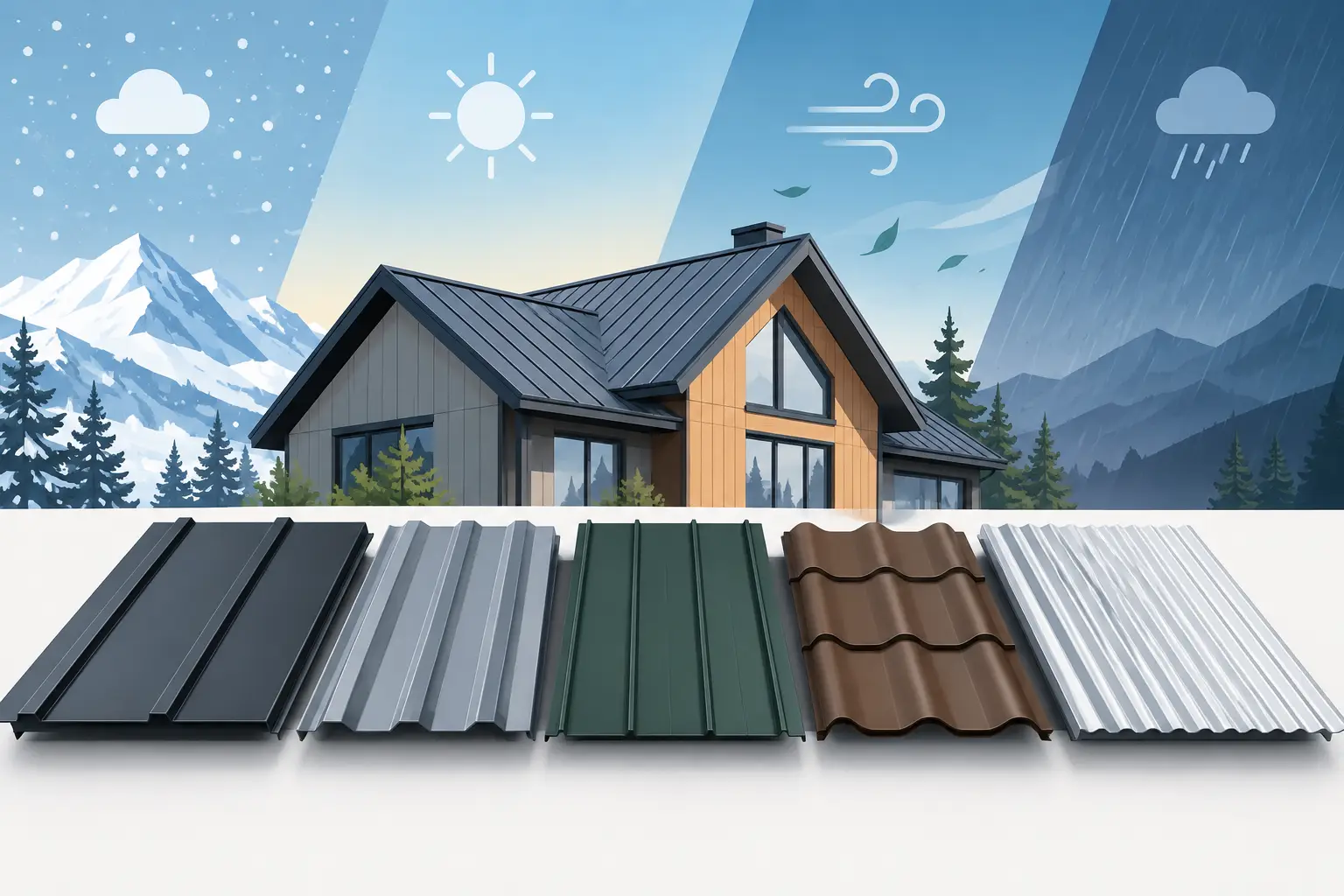
A metal roof in Nevada or Northern California has a demanding job. It may face high-elevation snow, hard wind, intense UV exposure, wildfire risk, freeze-thaw cycles, and large temperature swings in the same year. That is why a metal roofing materials review should look beyond curb appeal or a single installed price. The right material must match the building, roof design, local weather, and the level of maintenance the owner is prepared to provide.
Metal roofing can deliver decades of dependable protection, but not every metal performs the same way. Steel, aluminum, copper, and zinc each have strengths, limitations, and ideal applications. Panel profile, coating quality, fastening method, insulation, and installation workmanship also affect how well the finished roof performs.
Metal Roofing Materials Review: The Main Options
Steel: The practical choice for most properties
Steel is the most common metal roofing material for residential and commercial applications, largely because it provides strong performance at a manageable cost. It is available in a wide range of colors, gauges, panel profiles, and finishes. For many homeowners, businesses, and agricultural property owners, a properly specified steel roof offers the best balance of durability, appearance, and long-term value.
Most roofing steel is protected with a galvanized or Galvalume coating. Galvanized steel uses zinc for corrosion resistance. Galvalume combines aluminum and zinc to provide strong protection against weathering, particularly in dry climates with significant sun exposure. Both can perform well, but the coating system and paint finish matter as much as the base metal.
A painted standing seam steel roof is often a strong fit for homes and buildings in snow country because its concealed fasteners reduce potential leak points. Exposed-fastener steel panels can be more economical and work well on certain outbuildings, shops, and commercial structures, but the fasteners and washers need periodic inspection as the roof ages.
Steel does have trade-offs. It can dent from severe hail or falling branches, depending on panel gauge and profile. If the protective finish is damaged and left unaddressed, corrosion can eventually begin. Choosing the proper gauge, a high-quality finish, and experienced installation helps protect the investment.
Aluminum: Excellent corrosion resistance with a higher cost
Aluminum is naturally resistant to corrosion, making it especially useful where moisture, salt exposure, or persistent condensation creates added risk. While inland Nevada and Northern California properties are not typically coastal, aluminum may still be worth considering for buildings with challenging moisture conditions or owners who want a lightweight, long-lasting roof.
Because aluminum is lighter than steel, it can be an advantage on certain structures where weight is a concern. It also does not rust in the traditional sense. That said, aluminum is a softer metal, so it is more prone to cosmetic denting than a heavier-gauge steel system. It also generally costs more.
Aluminum is often a smart choice when corrosion resistance is the priority and the project budget supports it. For a standard inland residential replacement, steel may provide comparable practical value at a lower upfront cost. The right answer depends on the building’s exposure, expected service life, and appearance expectations.
Copper: Long-lasting character at a premium price
Copper has a distinctive appearance and an exceptionally long service life. Over time, it develops a natural patina that shifts from bright metallic tones to deeper brown and green shades. It is often selected for custom homes, historic properties, architectural accents, bay windows, cupolas, and highly visible roof sections.
Copper does not need a painted coating to resist corrosion, and it can outlast many conventional roofing materials when installed correctly. However, it comes with a significantly higher material cost than steel or aluminum. Its appearance also changes over time, which some owners value and others may not prefer.
Copper requires careful detailing. Contact with incompatible metals can create galvanic corrosion, and expansion must be accommodated correctly. This is not a material to choose strictly for prestige. It makes sense when architectural character, exceptional longevity, and budget all align.
Zinc: Self-healing protection for specialized projects
Zinc is another premium metal roofing option known for its natural patina and long lifespan. Its surface develops a protective layer that can help minor scratches weather over time. Like copper, zinc is often used on architect-designed homes and specialized commercial projects rather than typical budget-conscious replacements.
Zinc can be an attractive choice for complex roof designs because it is workable and performs well in appropriate applications. Still, it has specific installation requirements and needs proper ventilation and drainage. Standing water or poorly designed roof details can shorten its service life.
For most regional properties, zinc is a specialized solution rather than the default recommendation. A detailed roof assessment is necessary before selecting it.
Material Is Only One Part of Roof Performance
The best metal roof is not simply the most expensive metal. A lower-cost steel system with proper underlayment, flashing, ventilation, snow retention, and installation can outperform a premium material installed without attention to the building’s conditions.
Roof slope is a key consideration. Standing seam systems are commonly used on low-slope applications when engineered and installed for that purpose, while certain corrugated or exposed-fastener panels require steeper slopes to shed water reliably. On commercial buildings, the roof assembly may call for a coating or single-ply system instead of metal, particularly when the roof is nearly flat.
Thermal movement also matters. Metal expands and contracts as temperatures change. Panels need fastening and clip systems that allow for that movement without stressing seams, fasteners, or flashings. This is particularly relevant in areas where roofs heat up under direct summer sun and cool rapidly overnight.
A well-designed metal roof should also account for snow and ice. Smooth panels can shed snow quickly, which is useful in some situations but can create hazards near entryways, walkways, lower roof sections, and equipment. Snow guards or snow fence systems may be necessary to control snow release safely. Heat tape, properly installed where needed, can help manage recurring ice issues around valleys, gutters, and drainage points.
Comparing Cost, Lifespan, and Maintenance
Steel usually offers the most accessible entry point and can provide a long service life when it has quality coatings and receives basic care. Aluminum costs more but adds corrosion resistance and lower weight. Copper and zinc sit at the premium end of the market, with long lifespans and distinctive appearances that justify their cost only for the right project.
Maintenance requirements are often lower than with many conventional roofing materials, but metal is not maintenance-free. Property owners should have the roof inspected after major wind events, heavy snow, hail, or falling debris. Inspections should check panel condition, sealants, flashing, pipe penetrations, fasteners, gutters, and any points where one roof section meets another.
For exposed-fastener roofs, replacement fasteners and washers may be needed over time. For all metal roof types, keeping drainage paths clear is essential. Debris that traps moisture against the roof can shorten the life of finishes and create preventable trouble at valleys and transitions.
Energy Efficiency and Fire Considerations
Metal roofing can support energy-efficient building performance, especially when paired with a reflective finish, appropriate insulation, and proper attic or roof ventilation. Light-colored and cool-roof finishes can reduce heat gain from direct sunlight, which is valuable during hot Nevada summers and in exposed Northern California locations.
The roof color alone does not determine energy performance. Insulation levels, air sealing, deck construction, and the full roofing assembly all influence heating and cooling costs. A contractor should evaluate the complete system rather than promising savings from a panel color alone.
Metal is noncombustible, which can be a meaningful benefit in wildfire-prone areas. However, fire performance also depends on the full roof assembly, including underlayment, decking, vents, and how the roof interfaces with surrounding building materials. A fire-resistant roof deserves equally careful attention to defensible space and property maintenance.
How to Choose the Right Metal Roof
Start with the building rather than the brochure. Consider roof slope, elevation, wind exposure, snow loads, drainage, surrounding trees, building use, and budget. A homeowner replacing a steep-slope roof may benefit from painted standing seam steel. A facility manager may need a system that minimizes disruption, supports energy goals, and fits a planned maintenance program. An architectural project may justify copper or zinc where appearance and longevity are central to the design.
Ask for clear specifications that identify the panel type, metal thickness, protective coating, finish warranty, underlayment, flashing details, and fastening method. Those details reveal far more about expected performance than a broad claim that a roof is simply “metal.”
Mountain Valley Roofing helps property owners evaluate roofing systems for the climate conditions they actually face, not a generic set of assumptions. The goal is a weather-resistant roof that protects the building, controls long-term costs, and holds up when the weather turns severe.
A metal roof should be selected as a complete protection system. When the material, design, and installation are matched to the property, it can provide dependable performance long after a lower-cost shortcut would have required repair or replacement.