
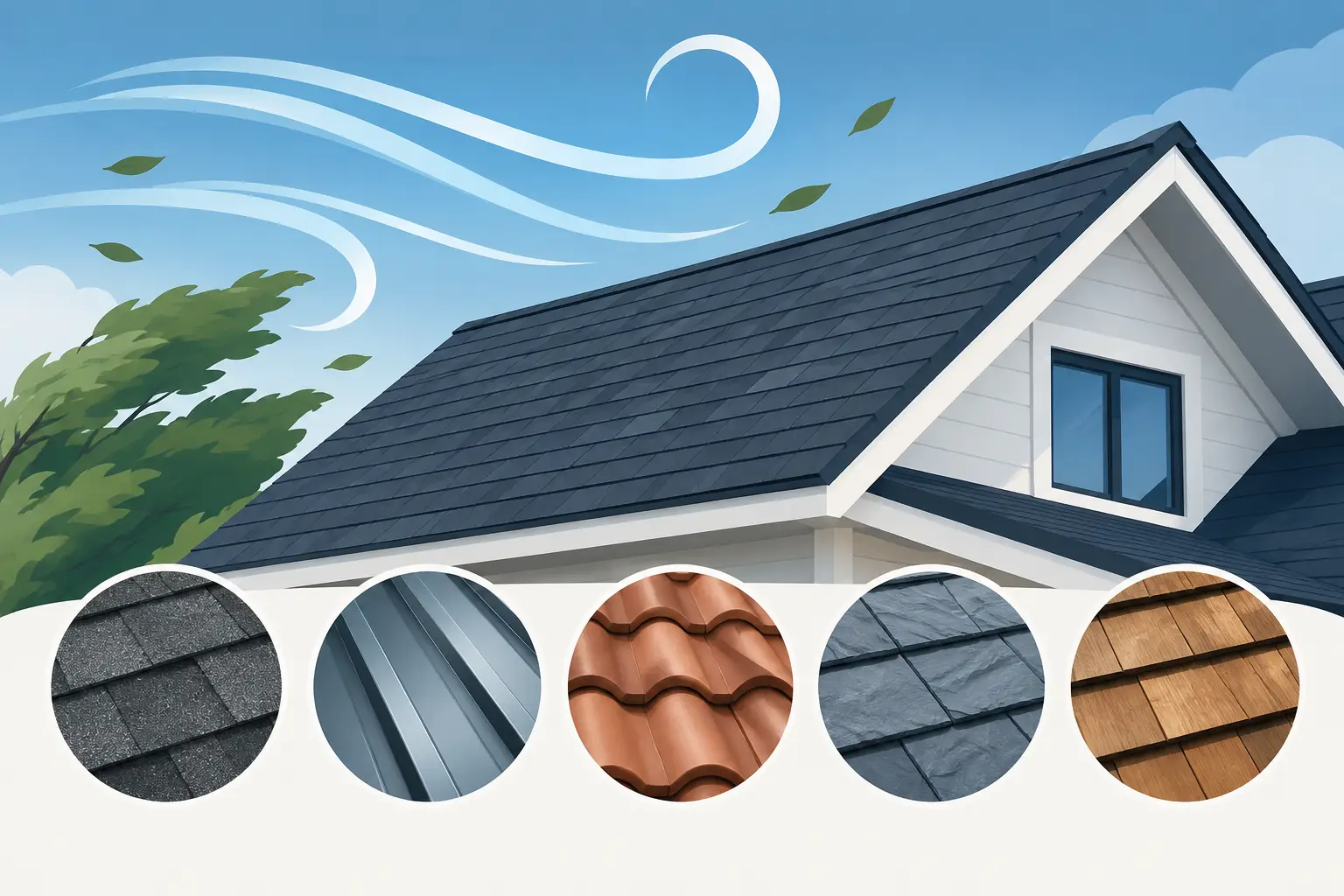
A windstorm rarely damages a roof all at once. It starts at the edges, ridge, flashing, vents, or one loose shingle. Once wind gets beneath the roofing surface, uplift pressure can turn a small vulnerability into missing materials, exposed decking, and interior water damage. Choosing the best roofing materials for wind means looking beyond appearance and price to the complete system: material, attachment method, roof design, and workmanship.
For property owners in Nevada and Northern California, wind resistance has to work alongside intense sun, temperature swings, snow exposure in higher elevations, and the occasional severe storm. The strongest choice is not always the same for every building. A steep residential roof, a commercial low-slope roof, and an aging roof being restored each require a different approach.
What Makes a Roof Wind-Resistant?
Wind resistance is not simply a material rating on a product label. Roofs fail when wind creates uplift – a pulling force that is strongest around roof perimeters, corners, ridges, and transitions. The roofing material must resist that force, but so must the fasteners, underlayment, flashing, edge metal, and roof deck beneath it.
A quality wind-resistant roof begins with a sound substrate. Damaged or moisture-weakened decking may not hold fasteners securely, regardless of how durable the new roof covering is. Proper edge detailing also matters. Drip edges, starter courses, ridge caps, pipe boots, and flashing should be installed and secured for the wind conditions the property faces.
Roof shape, height, and surrounding terrain affect the risk. A home on an exposed ridge or a commercial building with a broad, open roof often sees greater wind pressure than a structure protected by nearby buildings or trees. A professional inspection can identify these site-specific concerns before replacement or repair work begins.
Best Roofing Materials for Wind: Residential Options
Standing-Seam Metal Roofing
Standing-seam metal is one of the strongest residential choices for areas with recurring wind exposure. Its long panels run from the ridge toward the eaves, and concealed clips or fasteners secure the system to the roof structure. With fewer exposed fastening points and properly engineered panel attachment, a metal roof can provide excellent resistance to wind uplift.
Metal also handles intense sun well, sheds snow effectively, and can last for decades with proper installation and maintenance. Reflective finishes and cool-roof coatings may improve energy performance in hot, sunny climates. For Nevada and Northern California homeowners, that combination of wind, UV, and snow performance is a major advantage.
The trade-off is upfront cost. Metal roofing typically costs more than standard asphalt shingles, and installation requires a contractor who understands panel expansion, flashing details, and fastening patterns. A poorly installed metal roof can rattle, leak at penetrations, or suffer panel damage despite the material’s inherent strength.
Architectural Asphalt Shingles
High-quality architectural shingles offer a practical balance of wind performance, appearance, and cost. Many premium shingle systems are designed for higher wind ratings when they are installed with the manufacturer-approved starter strips, nails, ridge caps, and underlayment.
Compared with older three-tab shingles, architectural shingles are thicker, heavier, and generally more resistant to lifting. They are also easier to repair locally after a storm if damage is limited to a defined area. This makes them a dependable option for homeowners who want proven protection without the higher initial investment of metal.
The rating only applies when installation meets the product requirements. Nail placement is especially critical. Nails driven too high, too low, crooked, or overdriven can weaken the shingle’s hold. In wind-prone locations, the difference between a standard installation and a carefully installed complete roofing system is significant.
Tile and Synthetic Roofing Materials
Concrete and clay tile can perform well in wind when each tile is properly fastened and the underlying system is correctly built. Tile offers a long service life, fire resistance, and a distinctive appearance. However, it is heavy, so the structure must be capable of carrying the added load. Individual tiles can also crack from impact or become dislodged when fastening or maintenance is neglected.
Synthetic slate and shake products can be a lighter alternative for owners who want a premium look with strong weather performance. Product quality varies, so it is worth comparing wind ratings, warranty terms, installation requirements, and long-term performance in high-UV conditions. These materials are not automatically better than shingles or metal, but the right system can be a strong fit for a specific home.
Wind-Resistant Roofing for Commercial Buildings
Low-slope commercial roofs face wind differently. Their large, relatively flat surfaces are particularly vulnerable at corners and perimeters, where uplift pressure is highest. The best system depends on drainage, insulation needs, roof traffic, existing conditions, and whether restoration can extend the roof’s life.
Single-Ply Membranes
TPO and PVC single-ply membrane systems are common choices for commercial buildings because they provide waterproofing, reflect sunlight, and can be engineered for demanding wind conditions. Heat-welded seams create a continuous surface that helps prevent water intrusion. The membrane may be mechanically attached, fully adhered, or installed as part of a ballast-free system based on the building’s needs.
For wind performance, attachment patterns matter as much as membrane selection. A roof often needs closer fastener spacing around corners and edges than in the field of the roof. Properly detailed penetrations, parapet walls, and edge metal are also essential. A membrane roof with weak perimeter details can fail long before the membrane itself wears out.
Modified Bitumen and Torch-Down Roofing
Modified bitumen systems, including torch-down applications where appropriate, provide layered protection and strong durability for certain low-slope roof conditions. Their multi-ply construction can be valuable on buildings that need a tough, repairable surface. When installed by trained professionals using the right attachment method and flashing details, these systems can provide dependable wind and water resistance.
Because torch application involves open flame, safety practices and site conditions must be evaluated carefully. Not every building or roof layout is suitable for this method. A contractor should assess whether an alternative modified bitumen application or a single-ply system offers a better fit.
Roof Coatings for Restoration
A commercial roof coating can be a cost-effective way to restore an existing roof, improve UV resistance, and extend service life when the underlying roof remains structurally sound. Coatings are not a shortcut for a failing roof. They need proper surface preparation, repairs to seams and penetrations, and sufficient dry film thickness to perform as intended.
For wind-exposed properties, coatings work best as part of a restoration plan that addresses loose materials, deteriorated flashing, edge conditions, and drainage. They can reduce heat gain and postpone replacement, but they cannot compensate for saturated insulation, widespread membrane failure, or unstable roof decking.
Installation Is the Deciding Factor
The best material can only perform as well as the system beneath it. Wind damage investigations often reveal that a roof did not fail because the product was inadequate. It failed because fasteners missed the deck, flashing was undersized, shingles were nailed incorrectly, or edge metal was not secured for uplift forces.
A dependable installation should account for the property’s exposure, roof geometry, local code requirements, and manufacturer specifications. This includes verifying deck condition, replacing compromised materials, using compatible components, and reinforcing vulnerable areas. For commercial facilities, it may also involve a wind-uplift assembly designed for the building’s location and roof layout.
Maintenance protects that investment. Seasonal inspections can catch lifted shingles, loose ridge caps, open seams, clogged drains, damaged coping, and deteriorated sealant before wind-driven rain enters the building. After a major storm, prompt inspection is especially valuable because small roof damage can be difficult to see from the ground.
Choosing the Right System for Your Property
Metal is often the strongest long-term residential option for severe wind, sun, and snow, while premium architectural shingles provide capable protection at a more accessible cost. For commercial low-slope roofs, properly engineered TPO, PVC, or modified bitumen systems can deliver reliable wind resistance when perimeter and attachment details are handled correctly.
The right decision should consider more than a wind rating. Budget, roof slope, building use, insulation, energy goals, existing roof condition, and maintenance plans all affect long-term value. Mountain Valley Roofing evaluates the full roofing system so property owners can make decisions based on protection and lifecycle cost, not just the lowest replacement price.
When wind is part of the forecast year after year, choose a roofing system with the right material, the right attachment, and the skilled installation needed to keep the weather outside where it belongs.