
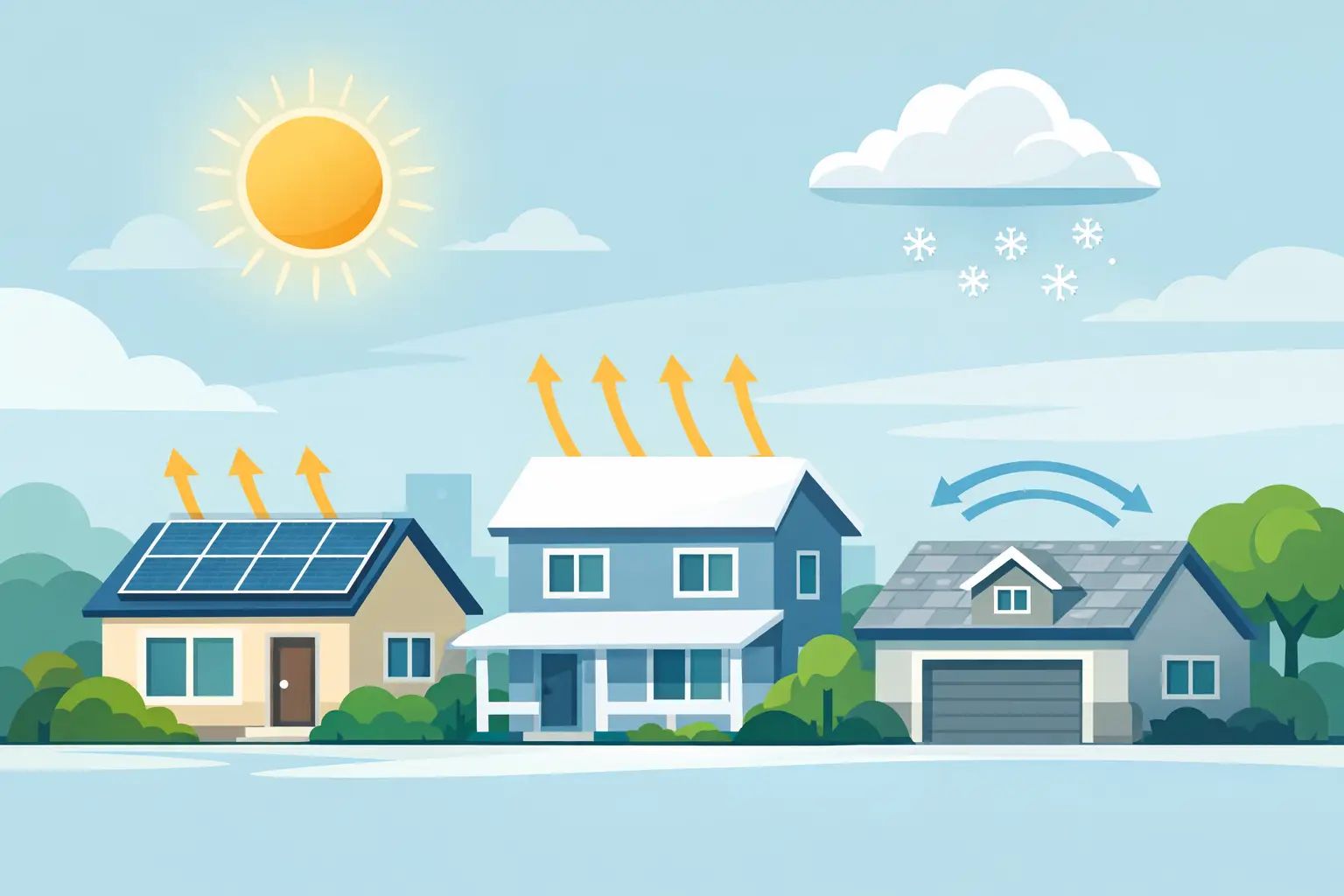
If your upstairs rooms stay hot long after sunset, your roof is doing more than covering the house – it is storing heat. That is why more homeowners are looking at cool roof options for homes, especially in places like Nevada and Northern California where intense sun, dry heat, elevation, and winter weather can all hit the same property.
A cool roof is built to reflect more sunlight and absorb less heat than a standard roof. That sounds simple, but the right system depends on your home, your roof shape, your climate exposure, and whether you are repairing, restoring, or replacing the roof entirely. The best choice is not always the brightest white material or the lowest upfront price. It is the system that performs well year after year in your conditions.
What makes a roof a cool roof?
A cool roof is not one single product. It is a category of roofing materials and coatings designed to reduce heat gain. The two main factors are solar reflectance, which is how much sunlight the surface reflects, and thermal emittance, which is how well it releases absorbed heat.
For homeowners, the practical result is easier to understand. A cooler roof surface can reduce attic heat, lower strain on air conditioning, and help indoor temperatures stay more stable during hot weather. In some cases, it can also extend roof life by reducing thermal stress from constant expansion and contraction.
That said, cool-roof performance is not identical from one material to another. A product that performs well on a low-slope home in a hot valley may not be the best fit for a steep-slope roof in a mountain area that sees snow, ice, and high winds.
Cool roof options for homes by material
When homeowners ask about cool roof options for homes, they are usually choosing between a few proven categories: reflective shingles, metal roofing, tile, and roof coatings. Each has advantages, limitations, and ideal use cases.
Cool roof shingles
Cool roof shingles are often the easiest starting point for homeowners who want a familiar residential look. These asphalt shingles are made with reflective granules that help reduce heat absorption compared to standard darker shingles.
The biggest advantage is appearance and accessibility. They fit many neighborhood styles, work well on sloped residential roofs, and are usually less expensive upfront than metal or tile. They can be a practical option when a roof is already due for replacement and the homeowner wants better energy performance without changing the look of the home too dramatically.
The trade-off is that shingles generally do not reflect as much heat as some metal panels or specialized coatings. Performance also depends on color selection, product quality, ventilation, and installation. In a very hot climate, a standard shingle upgrade may help, but it may not deliver the same temperature reduction as a higher-reflectance system.
Metal roofing with reflective finishes
Metal is one of the strongest long-term options for homeowners who want durability and energy efficiency in one system. Reflective painted metal panels and metal shingles can perform very well in sunny climates because they shed heat effectively and stand up well to UV exposure.
This option makes sense for homeowners who are thinking beyond immediate cooling. Metal roofs are known for longevity, low maintenance, and strong performance in wind, fire-prone areas, and snow-shedding conditions. In parts of Nevada and Northern California, that range of protection matters.
Upfront cost is usually higher than asphalt shingles, and not every home is the right visual match for exposed fastener or standing seam profiles. Installation quality also matters a great deal. A poorly detailed metal roof can create problems around penetrations, trim, or transitions even if the panels themselves are high quality.
Tile roofing
Tile roofs, including concrete and clay options, can also qualify as cool roofing when they are manufactured with reflective finishes or lighter colors. Tile has natural durability and performs well in high-heat environments. It also creates air space beneath the tiles, which can help reduce heat transfer into the home.
For some homes, tile offers the right balance of curb appeal and thermal performance. It is especially attractive on architectural styles that already suit a tile profile.
The main caution is weight and structural compatibility. Not every home is built for tile without reinforcement. Tile can also be more expensive to install and repair, and individual tiles may crack from impact or foot traffic if the roof is not handled carefully.
Cool roof coatings
For certain homes, especially those with low-slope or flat roof sections, a reflective roof coating can be one of the most cost-effective solutions. These coatings are designed to create a reflective surface over an existing roof system, helping reduce heat absorption and, in many cases, extending service life.
This is often a strong option when the roof is still in serviceable condition but needs restoration rather than a full tear-off. A quality coating system can improve waterproofing, reflect UV rays, and lower rooftop temperatures.
The key phrase is serviceable condition. A coating is not a shortcut around saturated insulation, widespread structural issues, or severe roof deterioration. If the underlying roof is failing, coating over it will not fix the real problem. Proper inspection is what determines whether restoration is smart or whether replacement is the better long-term investment.
How climate affects the best choice
Roofing decisions in this region are rarely just about summer heat. Homes in Nevada and Northern California can face intense UV exposure, large day-to-night temperature swings, wind-driven storms, snow loads, and ice in higher elevations. That is why the best cool roof is not simply the most reflective one on paper.
A homeowner in a lower, hotter area may prioritize maximum reflectivity and lower cooling costs. A homeowner in a mountain community may need to balance reflectivity with snow performance, ice protection, ventilation, and structural demands. Even roof pitch matters. Some materials are better suited to steep slopes, while others are ideal for low-slope applications.
This is where contractor experience matters. Product brochures provide ratings, but they do not evaluate your attic ventilation, your existing deck condition, your underlayment needs, or how your roof handles snow sliding onto walkways and lower sections.
Beyond the roof surface: what else affects performance?
Homeowners sometimes expect a cool roof alone to solve every comfort issue. It can make a real difference, but overall performance depends on the full roofing assembly.
Attic insulation is a major factor. If insulation levels are low or uneven, heat will still move into living spaces more easily. Ventilation also matters because trapped heat in the attic can limit the benefits of reflective roofing. Flashing, underlayment, and drainage details matter too, especially in areas that see both extreme sun and winter moisture.
In other words, a cool roof works best as part of a complete system, not as a standalone feature.
When a cool roof is worth the investment
A cool roof is usually worth serious consideration if your home gets heavy sun exposure, your summer cooling costs are high, your current roof is nearing replacement age, or your existing roof has large low-slope sections. It can also be a smart move if you plan to stay in the home and want long-term value rather than a short-term patch.
The strongest return often comes when energy savings, roof longevity, and reduced maintenance all align. A lower-cost material may save money upfront but require earlier replacement. A premium system may cost more now but perform better for decades under tough weather conditions.
That is why the right question is not just, “Which cool roof is cheapest?” It is, “Which roof gives this house the best protection and value over time?”
Choosing the right contractor for cool roof options for homes
Even the best roofing material can underperform if it is installed without attention to ventilation, slope requirements, flashing, and climate exposure. Homeowners should look for a contractor who understands both energy-efficient materials and the local weather demands that affect roof life.
That includes knowing when restoration makes sense, when a full replacement is the smarter call, and which products hold up best in regional conditions. Mountain Valley Roofing approaches these decisions with that practical lens because performance on paper is only part of the story. The roof has to work on your home, in your weather, for the long haul.
If you are comparing cool roof options, start with the condition of the roof you already have, then match the material to your climate, structure, and long-term goals. The best roof is the one that keeps paying you back in comfort, durability, and fewer surprises when the weather turns.