
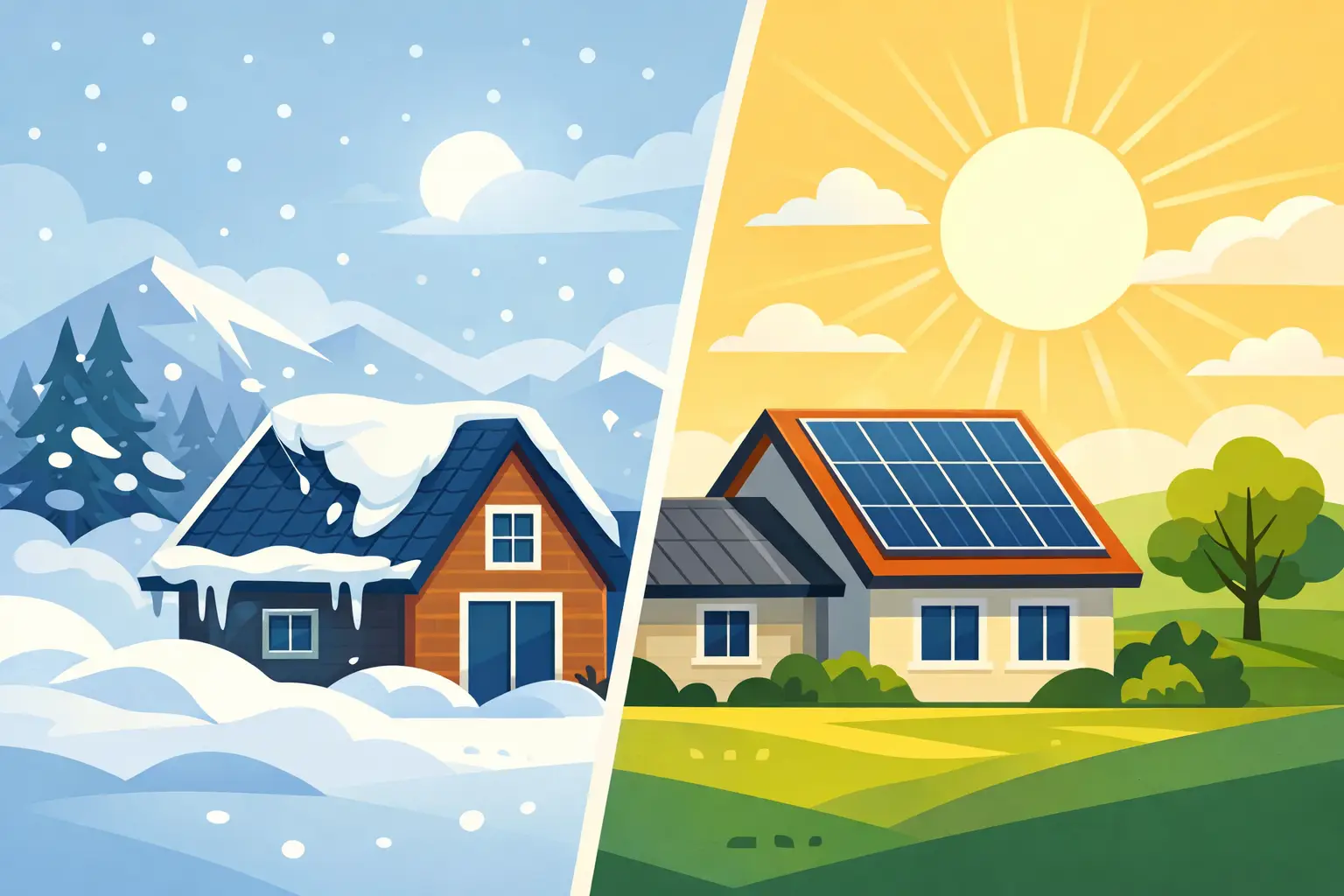
A roof that handles heavy snow can still fail early under intense summer sun. That is the challenge in places like Nevada and Northern California, where a roof may need to shed snow in winter, resist UV damage in summer, and hold up through sharp temperature swings in between. If you are trying to choose the best roof for snow and sun, the right answer is rarely one material alone. It comes down to roof design, climate exposure, building use, and how much maintenance you are willing to stay ahead of.
What makes the best roof for snow and sun?
Snow and sun put very different kinds of stress on a roofing system. Snow adds weight, creates ice dam risk, and tests waterproofing at penetrations, valleys, and eaves. Sun does the opposite. It dries materials out, breaks down exposed surfaces with UV radiation, and can drive attic or interior temperatures up if the roof is absorbing too much heat.
That is why the best roof for snow and sun needs more than just surface durability. It should manage load, resist moisture intrusion, reflect or tolerate heat well, and work with proper ventilation and insulation. On commercial buildings, it also needs to minimize downtime and control life cycle costs. On homes, it should protect the structure without turning energy bills into a second mortgage.
The top roofing options for mixed snow and sun exposure
Metal roofing
For many mountain and high-desert properties, metal is one of the strongest contenders. It sheds snow efficiently, stands up well to UV exposure, and delivers long service life when installed correctly. Snow tends to slide off more readily than it does on rougher roofing surfaces, which can reduce buildup, though that benefit sometimes needs to be managed with snow retention systems above entries, walkways, or sensitive equipment.
Metal also performs well under intense sun, especially with reflective finishes or cool-roof coatings. That can help reduce heat gain in summer. The trade-off is cost. Metal usually has a higher upfront price than asphalt shingles, and the details matter. Improper fastening, weak flashing, or poor underlayment can undercut the value of the entire system.
For both residential and commercial properties, metal is often a smart long-term choice when durability, snow shedding, and energy performance are high priorities.
Architectural asphalt shingles
Architectural shingles remain a common option for homeowners because they are widely available, cost-effective, and visually versatile. In moderate snow conditions and strong sun exposure, a quality shingle system can perform well if it includes proper underlayment, attic ventilation, and ice-and-water protection in vulnerable areas.
The weakness is lifespan in harsh climates. Constant UV exposure can accelerate aging, and freeze-thaw cycles can stress the system over time. Shingles also do not shed snow as quickly as metal. That does not make them a bad option. It means they are often the practical middle-ground choice for homeowners balancing budget and performance.
If you go with shingles, quality installation matters as much as the product itself. A lower-priced roof that needs major repair years early is rarely the bargain it seemed to be.
Single-ply roofing for low-slope commercial roofs
Commercial buildings often do not have the steep pitch that helps shed snow naturally. On low-slope roofs, single-ply systems such as TPO or PVC are popular because they offer strong waterproofing, UV resistance, and energy-efficient reflectivity.
In sunny climates, reflective membranes can help reduce roof surface temperatures and lower cooling demand. In snowy conditions, however, the design and drainage become critical. Snow may sit on the roof for long periods, which means ponding risk, flashing integrity, and insulation performance all need careful attention.
For many commercial properties, the best answer is not just choosing a membrane. It is choosing the right assembly, including insulation, drainage layout, attachment method, and a maintenance plan that catches trouble before leaks interrupt operations.
Roof coatings and restoration systems
For some commercial roofs, restoration can be more cost-effective than full replacement. A properly selected coating can improve UV resistance, add reflectivity, and extend service life without the disruption of tearing off the existing roof.
That said, coatings are not a cure-all. If the roof has major structural issues, trapped moisture, or failing substrate conditions, coating over the problem is just delaying a bigger repair. But on a sound roof that needs renewed weather protection, a restoration approach can be a smart move, especially for buildings trying to control capital spending while improving performance.
Material is only part of the answer
A lot of roofing problems blamed on weather are really installation or design problems. A good material installed poorly will still fail. In climates with snow and strong sun, details matter even more.
Ventilation and insulation
Poor attic ventilation can cause heat to build up under the roof in summer and create uneven roof temperatures in winter. That winter imbalance contributes to ice dams, where melted snow refreezes at the roof edge and backs water up under the roofing material. Proper insulation and ventilation help stabilize temperatures and reduce moisture risk year-round.
Underlayment and waterproofing details
Underlayment is not the glamorous part of a roof, but it often decides how forgiving the system is when weather gets rough. Ice-and-water barriers at eaves, valleys, and penetrations provide extra protection in snow-prone areas. On commercial roofs, seam quality, flashing details, and transitions at rooftop equipment are just as important.
Drainage and slope
Snow that melts has to go somewhere. If drainage is weak, water will find the lowest point and test every seam and penetration along the way. On low-slope systems, that means drains, scuppers, and crickets need to be designed and maintained properly. On steep-slope roofs, the pitch, valley construction, and gutter system all affect how well the roof handles snowmelt and runoff.
Best roof for snow and sun by property type
For a mountain home or residential property with a steeper roofline, metal is often the strongest all-around performer, especially when snow shedding and long-term durability are priorities. Architectural shingles can still be a solid fit for homeowners who want lower upfront cost and dependable performance, provided the system is built for the local climate.
For commercial buildings with low-slope or flat roofs, single-ply membranes and coating systems are usually more realistic than steep-slope materials. The best system depends on drainage conditions, insulation goals, roof traffic, and the remaining life of the existing roof. In many cases, restoration is worth considering before replacement, but only after a professional inspection confirms the roof is a good candidate.
Climate-specific trade-offs to think through
There is no perfect roofing material for every property. Metal may outlast shingles and handle snow better, but the initial investment is higher. Shingles may fit the budget today, but they may not offer the same life span under intense UV exposure. Reflective commercial membranes can help with summer heat, but they still need proper drainage and regular inspection to perform well through snow season.
This is where local expertise matters. A roof in a shaded mountain corridor will behave differently than a roof on an exposed high-desert slope. Wind exposure, freeze-thaw cycles, tree cover, snow retention needs, and building occupancy all change the recommendation.
That is also why the cheapest bid should not drive the decision. Roof performance in this kind of climate depends on matching the system to the building, then installing it with discipline.
How to choose the right system with confidence
Start with the building itself, not the product brochure. Look at roof pitch, structural capacity, drainage, insulation, ventilation, and how the property is used. Then weigh your time horizon. If you expect to keep the building long-term, it often makes sense to invest in a more durable, lower-maintenance system. If you need to control near-term costs, a quality mid-range option or restoration strategy may be the better fit.
A professional inspection can also uncover issues that affect the decision, such as hidden moisture, weak flashing, dry rot, storm damage, or poor ventilation. Those conditions matter because even the best roof material cannot overcome an unhealthy roof assembly underneath it.
For property owners across Nevada and Northern California, Mountain Valley Roofing often sees the same pattern: the roofs that last are the ones designed for the climate, installed with care, and maintained before small issues turn expensive.
The right roof should do more than survive the next season. It should give you confidence when the snow piles up, when the summer heat settles in, and when the weather changes fast overnight.