
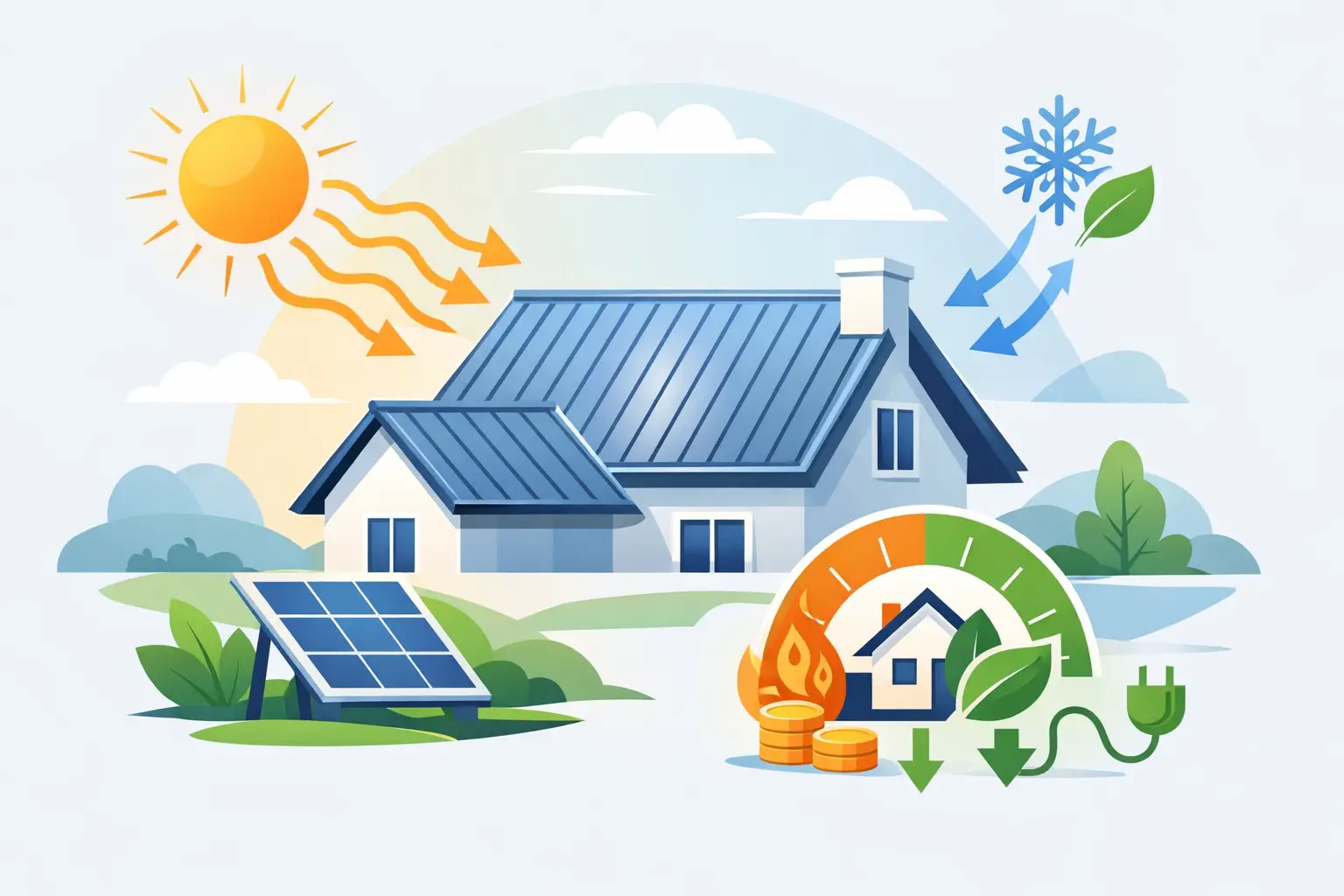
If your attic turns into an oven by midafternoon, the question is not abstract – is metal roofing energy efficient enough to make a real difference in your utility bills and indoor comfort? In Nevada and Northern California, that answer often comes down to more than the roofing material alone. It depends on the panel finish, roof color, ventilation, insulation, and how well the system is installed for your climate.
Is metal roofing energy efficient in real-world conditions?
Yes, metal roofing can be highly energy efficient, especially in hot, sunny, high-exposure regions. One of the biggest reasons is solar reflectivity. Many metal roofing systems are designed to reflect a significant portion of the sun’s radiant heat instead of absorbing it into the building.
That matters on homes and commercial properties where roof surface temperature drives indoor heat gain. A roof that stays cooler under direct sun can reduce the strain on air conditioning systems, improve interior comfort, and help stabilize peak cooling loads during the hottest part of the day.
Metal also cools down faster after sunset than some heavier roofing materials that retain heat longer. In climates with strong daytime sun and evening temperature swings, that can contribute to more consistent building performance.
Still, energy efficiency is not automatic. A dark, low-reflective metal roof installed over poor attic insulation will not perform the same way as a light-colored, properly detailed cool-metal system. The product choice and the roof assembly matter.
What makes a metal roof energy efficient?
The biggest factor is the coating on the metal. Modern metal roofs are often manufactured with reflective finishes that help reduce solar heat absorption. These finishes are especially effective when paired with lighter colors, though some darker colors now offer improved solar performance compared to older products.
Emissivity also plays a role. That refers to how well a material releases absorbed heat. A metal roof with good emissive properties can shed heat more efficiently, which helps keep the roof assembly from storing excess thermal energy through the day.
Installation details matter just as much. In residential applications, attic ventilation and insulation are a major part of the equation. In commercial settings, the efficiency of a metal roof often depends on the insulation package below it, as well as whether the building uses a structural or architectural panel system. Gaps in air sealing, poor flashing details, and inadequate insulation can reduce the energy benefit of even a high-performance roof panel.
How metal roofing compares to other roofing materials
Compared to many traditional asphalt shingle roofs, metal roofing often performs better in hot-weather energy efficiency. Standard dark shingles tend to absorb and hold more heat, which can increase attic temperatures and push cooling systems harder.
Tile can also offer good thermal performance, particularly when the profile creates an air gap below the surface. In some cases, tile and metal can both be strong options, but metal often has an advantage in weight, longevity, and compatibility with reflective coatings.
For low-slope commercial roofs, single-ply membranes and coated roof systems can also be very energy efficient. That is why the best roofing choice is not always the same for every building. A steep-slope home in Truckee has different performance priorities than a flat commercial building in Reno or Carson City.
Energy efficiency is not the same as insulation value
This is where property owners sometimes get mixed signals. Metal itself is not a high-insulation material. If you touch bare metal in the sun, it gets hot quickly. That does not mean the full roof system is inefficient.
A metal roof helps primarily by reflecting solar radiation and releasing heat efficiently. Insulation handles a different job – slowing heat transfer into the building. The best-performing roof combines both. In other words, metal roofing can support energy savings, but it works best as part of a properly built system rather than as a standalone fix.
Best conditions for energy savings
Metal roofing tends to deliver the most noticeable savings in buildings with high sun exposure, long cooling seasons, and aging roofs that absorb heat. In the Mountain West and high desert climate, that can be a strong advantage.
Homes with upstairs rooms that stay hot, vaulted ceilings with high solar gain, and older attic ventilation setups may see better comfort after a metal roof upgrade, especially when ventilation improvements are made at the same time. Commercial properties with large roof areas can also benefit because reducing rooftop heat absorption over a broad surface can have a measurable effect on cooling demand.
The roof color matters here. Light colors such as white, light gray, tan, and some reflective bronze tones generally perform better for cooling efficiency than darker finishes. That does not mean darker metal roofs are always a poor choice. In colder or mixed climates, there can be a trade-off between summer reflectivity and winter heat gain, though cooling savings usually matter more in sunny regions with intense summer exposure.
Trade-offs property owners should understand
A metal roof can lower cooling costs, but it may come with a higher upfront cost than asphalt shingles. For many owners, the value comes from the long service life, lower maintenance demands, weather resistance, and potential energy savings over time rather than the lowest initial price.
Noise is another common concern, but a properly installed metal roofing system over solid decking with appropriate underlayment is not the loud, echoing roof many people imagine. In most residential applications, sound control is comparable to other roofing systems.
Condensation is worth discussing too, particularly in buildings with poor ventilation or interior moisture issues. If a roof system is not designed correctly, moisture problems can offset performance benefits. That is why climate-specific detailing matters.
Is metal roofing energy efficient in winter too?
It can be, but not because metal traps heat. Winter performance depends more on insulation, air sealing, underlayment, and ventilation than on the metal panel alone. A well-built metal roof can absolutely support good cold-weather energy performance, especially in areas with snow, freeze-thaw cycles, and strong winds.
In snow country, metal roofing also sheds snow more readily than many other materials. That can help reduce moisture risk and ice-related issues when the system is designed with the right accessories and safety considerations. But if the goal is lower heating bills, the insulation package beneath the roof is doing most of that work.
Residential and commercial performance are not identical
For homeowners, the biggest energy-efficiency benefits usually show up as lower attic heat, better second-floor comfort, and less stress on the cooling system. The appearance of the roof also matters, so product selection often balances performance with curb appeal.
For commercial buildings, the analysis is more operational. Facility managers may look at reflectivity ratings, insulation strategy, maintenance cycles, roof lifespan, and whether a retrofit can avoid tear-off costs. In some cases, a metal roof retrofit or restoration approach can improve efficiency while extending the service life of the existing structure.
That is why a blanket yes or no answer is rarely enough. The building use, roof slope, insulation design, and exposure all shape the result.
How to get the best energy performance from a metal roof
If energy efficiency is one of your top goals, start by looking beyond the panel itself. Choose a roofing system with a proven reflective finish suited to your climate. Match the roof color to your performance priorities. Make sure attic or roof cavity ventilation is addressed where applicable. Confirm the insulation levels meet the building’s needs. And work with a contractor who understands how weather, elevation, snow load, and sun exposure affect roofing performance in your region.
This is especially important in areas where intense UV, strong winds, and winter weather all show up in the same year. A roof has to do more than reflect heat. It also has to hold up over time, resist leaks, manage expansion and contraction, and protect the building envelope through every season.
For many property owners, that is where metal roofing stands out. It offers a strong combination of longevity, weather resistance, and cooling performance when the system is chosen carefully and installed correctly.
Mountain Valley Roofing works with residential and commercial clients who need roofing systems built for real climate stress, not showroom claims. If you are weighing metal against shingles, tile, coatings, or a low-slope option, the smartest move is to evaluate the entire roof assembly and the demands of the building before making a decision.
A good roof should not just look durable from the street. It should help the building stay more comfortable, more efficient, and better protected year after year.