A windstorm can turn a sound-looking roof into an active leak path in a single afternoon. This wind damage repair example shows how a professional contractor moves from immediate protection to a durable, weather-resistant repair, without replacing more of the roof than the damage requires.
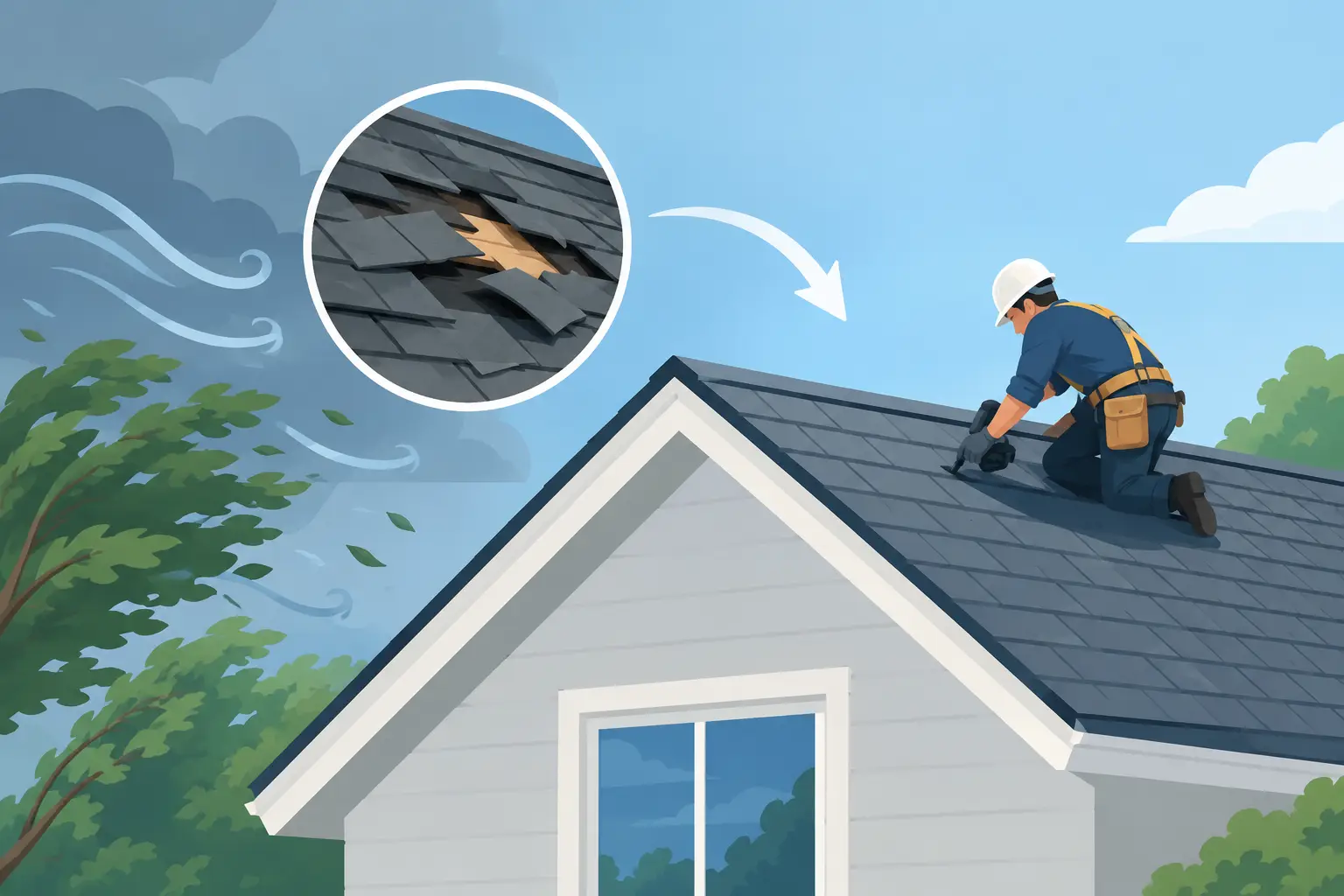
Consider a Northern Nevada home with a steep-slope asphalt shingle roof. After several days of high winds, the homeowner notices shingles scattered in the yard and a brown stain forming on a second-floor ceiling. From the ground, the roof appears to have only a small damaged area. A closer inspection tells a different story: lifted shingles along the ridge, exposed fasteners, damaged flashing around a plumbing vent, and wind-driven rain beneath adjacent shingle courses.
The visible missing shingles are only part of the problem. The repair must restore the roof’s layered water-shedding system, secure vulnerable edges, and address any moisture that entered the structure. That is what separates a short-term patch from a repair built to withstand the next storm.
Wind Damage Repair Example: What the Inspection Found
The first priority is making the roof safe and stopping additional water intrusion. On this home, the most exposed shingles had been bent backward by gusts and could no longer seal properly. Several tabs had torn away completely. The ridge cap shingles were loosened, leaving fasteners and the upper roof transition vulnerable to rain.
A thorough inspection also checks areas where wind commonly creates concealed damage. These include roof edges, rakes, eaves, valleys, penetrations, chimneys, skylights, and the transition points where different roof planes meet. Wind can break the adhesive bond beneath shingles without removing them. A shingle may lie flat after the storm but still lift easily, allowing rain to reach the underlayment.
Inside the attic, the inspection found damp insulation near the plumbing vent and light staining on roof decking. The decking remained structurally sound, which mattered. Catching the problem quickly meant the homeowner could avoid widespread deck replacement, mold remediation, and interior repairs beyond a limited ceiling area.
For commercial properties, the same principle applies, although the warning signs look different. On low-slope roofs, wind may pull at membrane seams, dislodge edge metal, damage rooftop equipment flashings, or create openings around drains and penetrations. Small separations can admit significant water during a wind-driven rain event, especially across a large roof surface.
The Repair Plan: Protect First, Then Rebuild Correctly
Before permanent work began, the damaged residential area was protected from further moisture. A temporary covering can be appropriate when weather prevents same-day repair, but it is not a final solution. Tarps can shift, collect water, or conceal conditions that need correction beneath them. Once conditions allowed, the crew removed the compromised shingles and ridge materials rather than attempting to glue down damaged tabs.
The exposed roof deck was inspected again after the shingles came off. Any wet materials were allowed to dry, and deteriorated components would have been replaced if found. In this case, the decking was usable, so the repair could focus on rebuilding the roofing layers.
New underlayment was installed with proper overlap to restore secondary water protection. The plumbing vent flashing was replaced because it had been bent and lifted during the storm. New shingles were then installed to match the existing roof as closely as available, with fastening and alignment completed according to the roofing system requirements. Finally, new ridge cap shingles were secured to protect the roof peak and reinforce the area that had taken the strongest wind exposure.
This approach costs more than applying sealant to a few lifted shingles, but it addresses the actual failure points. Sealant has a place in limited, manufacturer-appropriate repairs. It should not be used to disguise torn shingles, failed flashing, missing underlayment, or moisture-damaged materials. In Nevada and Northern California, strong sun and temperature swings can cause a shortcut repair to fail sooner than expected.
Why Matching Materials Matters
A roof repair should perform like the rest of the roof, not merely look acceptable from the street. Matching the shingle type, profile, color blend, and installation pattern helps preserve both weather resistance and curb appeal. Exact color matches are not always possible, particularly on older roofs where sun exposure has changed the appearance of existing shingles.
When a close match is unavailable, the contractor should explain the options clearly. A localized repair may still be the most cost-effective choice if the roof has substantial service life remaining. If storm damage affects multiple elevations, existing materials are brittle, or the roof is nearing the end of its expected lifespan, a larger repair or full replacement may provide better long-term value.
Documentation Can Strengthen an Insurance Claim
Wind damage is not always obvious to an insurance adjuster, especially when the roof has no large opening. Clear documentation helps establish what happened and what work is necessary to restore the roof properly.
In this example, the contractor documented missing and lifted shingles, damaged ridge material, compromised vent flashing, interior staining, and moisture found in the attic. Photos were taken before temporary protection, during removal, and after the completed repair. The homeowner also saved photos of shingles found on the property and recorded the date of the wind event.
Insurance coverage depends on the policy, deductible, roof age, and the cause of loss. A contractor cannot decide coverage, but professional inspection findings and detailed repair scopes can help property owners communicate clearly with their insurer. The goal is accurate documentation, not inflated damage claims.
For facility managers, prompt documentation is equally valuable. It creates a record for ownership, insurers, tenants, and maintenance planning. It also helps distinguish storm-related damage from pre-existing wear, deferred maintenance, or ponding-water concerns that may need separate attention.
How the Repair Prevented a Larger Failure
The repair was completed before the next weather system arrived. The ceiling stain required limited interior restoration, but the home avoided a more expensive chain of damage: saturated insulation, decayed decking, damaged framing, and possible electrical concerns. The roof was again able to shed water as designed.
The larger benefit came from correcting the weak points exposed by the storm. The new flashing, properly installed underlayment, and secured ridge materials improved the roof’s ability to resist future wind-driven rain. A final inspection confirmed that adjacent shingles remained properly sealed and that the repaired area integrated correctly with the existing system.
This is also where maintenance makes a practical difference. After a major wind event, property owners should look for loose or missing materials from the ground, check attic spaces for drips or daylight, and inspect ceilings for new discoloration. They should not climb onto a steep, wet, or visibly damaged roof. Wind damage can create unstable footing and concealed weak areas.
A professional inspection is particularly worthwhile for older roofs, buildings in exposed locations, and properties with trees or rooftop equipment nearby. It can identify minor damage while repair options are still straightforward and cost-effective.
When Repair Is Not the Best Answer
A targeted repair is often the right decision when damage is localized and the existing roof is otherwise in good condition. It preserves useful roof life and controls immediate costs. However, repair is not always the most durable solution.
Replacement may be the better investment when wind damage is widespread, shingles have become brittle, repeated repairs are appearing across the roof, or the roof has reached the end of its service life. Commercial roofs may be stronger candidates for restoration when the substrate remains sound but the surface needs renewed waterproofing and UV protection. A coating system can extend service life in the right conditions, but it cannot correct trapped moisture, major membrane failure, or unstable roof components.
The right recommendation depends on the roof system, the extent of storm damage, the building’s exposure, and the owner’s long-term plans. Mountain Valley Roofing evaluates those factors to provide repair, restoration, or replacement recommendations based on lasting performance rather than a one-size-fits-all answer.
After high winds, a small roof issue is rarely worth ignoring. A timely inspection and properly scoped repair can protect the structure, preserve the roof’s remaining life, and give property owners confidence before the next storm arrives.