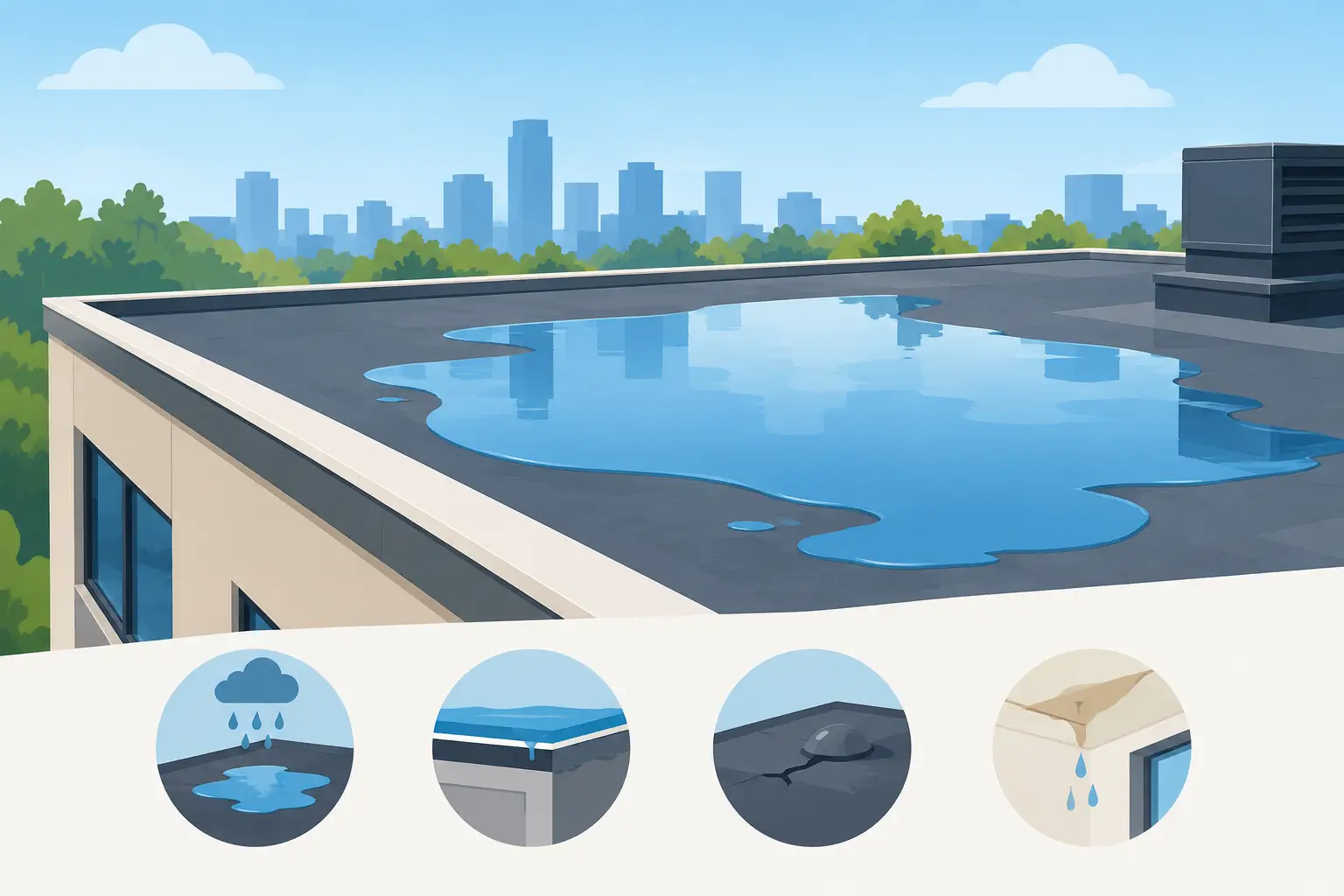
A low-slope roof should shed water efficiently after a storm, not hold it for days. Understanding roof ponding causes helps property owners address drainage problems before standing water turns into leaks, insulation damage, premature membrane failure, and costly disruption.
Ponding water is generally water that remains on a roof for 48 hours or longer after rainfall. A small amount of temporary water on a nearly flat roof is not always an emergency. However, recurring puddles in the same locations deserve attention, especially on commercial roofs and multifamily properties where a small drainage issue can affect a large area of the building.
What Causes Roof Ponding?
Roof ponding is rarely caused by one issue alone. More often, it develops when roof slope, drainage components, structural movement, and surface condition work against each other. The source matters because the right repair for a clogged drain is very different from the right repair for a sagging roof deck.
Inadequate Roof Slope
Low-slope roofs are designed to move water toward drains, scuppers, or gutters, even when the slope is subtle. If the roof was built without enough positive drainage, or if an addition altered the roof layout, water may naturally settle in low areas.
This is common on older commercial buildings, where past repairs may have addressed leaks without correcting underlying drainage. A coating or patch can protect the surface for a time, but it cannot make water flow uphill. In some cases, tapered insulation, strategic crickets, or a redesigned drainage plan is needed to direct water where it belongs.
Clogged or Undersized Drains, Scuppers, and Gutters
Leaves, windblown debris, granules, nesting material, and dirt can block roof drains and scuppers quickly. In Nevada and Northern California, seasonal storms, wind events, and nearby trees can leave drainage paths obstructed when they are needed most.
A drain can also be clear but still inadequate. If a roof has too few drains, undersized scuppers, or poor overflow capacity, heavy rain may exceed what the system can handle. Water then backs up across the roof surface and collects at the lowest point.
Settling, Structural Deflection, or Deck Deterioration
A roof is not static. Over time, building movement, roof framing deflection, compressed insulation, and repeated loading can create depressions that collect water. Snow loads, equipment placement, and years of standing water can all contribute to these low spots.
This cause requires more than a surface repair. If the deck or supporting structure has deteriorated, the area must be evaluated carefully before new roofing materials are installed. Covering a sagging section without correcting the substrate may only hide the problem until the next major weather event.
Compressed or Wet Insulation
Insulation beneath a commercial membrane can lose its shape when it becomes wet or compressed. Once that happens, the roof surface may dip and retain water. The standing water then places more stress on the affected area, creating a cycle that accelerates deterioration.
Wet insulation also reduces energy performance. For facility managers, that means ponding can affect both roofing costs and operating costs. Infrared moisture scanning or core sampling may be used during a professional inspection to determine whether water has moved below the membrane.
Improper Repairs or Poorly Installed Roofing Materials
A repair should restore waterproofing without disrupting drainage. Unfortunately, excessive patch material, poorly placed flashing, uneven coating applications, or incompatible repair methods can create small dams that trap water.
Installation quality also matters during a replacement or restoration project. Seams, drains, edge details, and transitions around rooftop equipment must be built to manage water, not simply resist it. A durable single-ply membrane, modified bitumen system, or roof coating will perform best when the substrate and drainage plan are sound.
Rooftop Equipment and Changed Water Flow
HVAC units, pipe supports, solar equipment, skylights, and other penetrations can interrupt the natural path of water. If curbs and supports are not properly flashed or water is not diverted around them, debris and water can accumulate behind the obstruction.
This does not mean rooftop equipment is a problem by itself. It means every roof modification should be considered as part of the drainage system. A minor change in flow can become a major issue on a broad, low-slope roof.
Why Standing Water Should Not Be Ignored
Waterproof roofing systems are built to withstand rain, but prolonged immersion creates greater exposure than normal drainage. Ponding water can speed up membrane aging, weaken seams, expose small defects, and increase the likelihood of leaks at penetrations and flashing details.
The added weight is another concern. One inch of water weighs more than five pounds per square foot. Across a large ponding area, that load can be substantial. If the roof is already deflecting, standing water adds weight to the same low area and can worsen the structural condition.
There are practical property concerns as well. Stagnant water attracts debris, promotes surface staining, and may encourage biological growth. When leaks develop, the consequences can include damaged ceiling systems, inventory loss, interrupted operations, and indoor air quality concerns.
Not every puddle means the roof needs replacement. A newer membrane with isolated, shallow ponding may need drainage maintenance or a localized correction. An older roof with recurring ponding, soft areas, and visible membrane deterioration may be a stronger candidate for restoration or replacement. The condition of the roof system determines the right investment.
How to Identify the Real Ponding Problem
Start by observing the roof after rain has stopped and it is safe to access. Note where water remains after 24 to 48 hours, whether the puddle is growing, and whether it appears near a drain, seam, penetration, or equipment curb. Photos taken after several storms can help show a pattern.
Look for related warning signs: clogged drain bowls, vegetation near scuppers, wrinkles in membrane roofing, cracked coating, open seams, interior water stains, or areas that feel soft underfoot. Do not walk on a roof that appears unstable or heavily saturated. The surface may not reveal what is happening beneath it.
A professional roof inspection should evaluate the entire drainage path, not just the visible puddle. That includes drains, strainers, leaders, gutters, scuppers, overflow routes, roof slope, membrane condition, flashings, and the supporting substrate. This broader assessment prevents a short-term patch from becoming a recurring expense.
Repair Options Depend on the Cause
For debris-related ponding, cleaning and regular maintenance may restore drainage immediately. Drain strainers, gutters, scuppers, and downspouts should be cleared before the wet season and checked after major storms.
Where slope is the problem, a contractor may recommend tapered insulation, a built-up low area, added crickets, modified drainage components, or a more extensive reroofing plan. Tapered insulation can be highly effective, but it must be designed around roof elevations, doors, curbs, drains, and edge conditions. Adding height in the wrong place can create new drainage problems.
If ponding has exposed localized membrane damage, repairs may include seam restoration, flashing work, patching, or recoating. A commercial roof coating can be a cost-effective restoration option when the existing roof is dry, structurally sound, and suitable for the coating system. It is not a cure for saturated insulation, failed decking, or severe drainage deficiencies.
When moisture has spread beneath the roof surface or structural deterioration is present, replacement of affected materials may be necessary. While that is a larger project, correcting drainage and damaged components together can protect the building for years rather than extending a failing system one repair at a time.
Preventing Future Ponding Water
The most cost-effective approach is routine inspection and maintenance. Roof drains and gutters need attention before storms arrive, not after water has already backed up. Facility teams should also watch for new rooftop equipment, construction changes, and recurring low spots that could affect flow.
For commercial properties, scheduled maintenance creates a record of roof conditions and helps prioritize repairs before they become emergency work. For homeowners with low-slope sections, garages, patios, or additions, seasonal inspections can reveal blocked scuppers, damaged flashing, and drainage issues that are easy to miss from the ground.
Mountain Valley Roofing evaluates roof ponding with the full building envelope in mind, helping property owners determine whether maintenance, repair, restoration, or replacement will provide the most reliable result. Addressing standing water early protects the roof, preserves building operations, and gives you more control over long-term costs.