
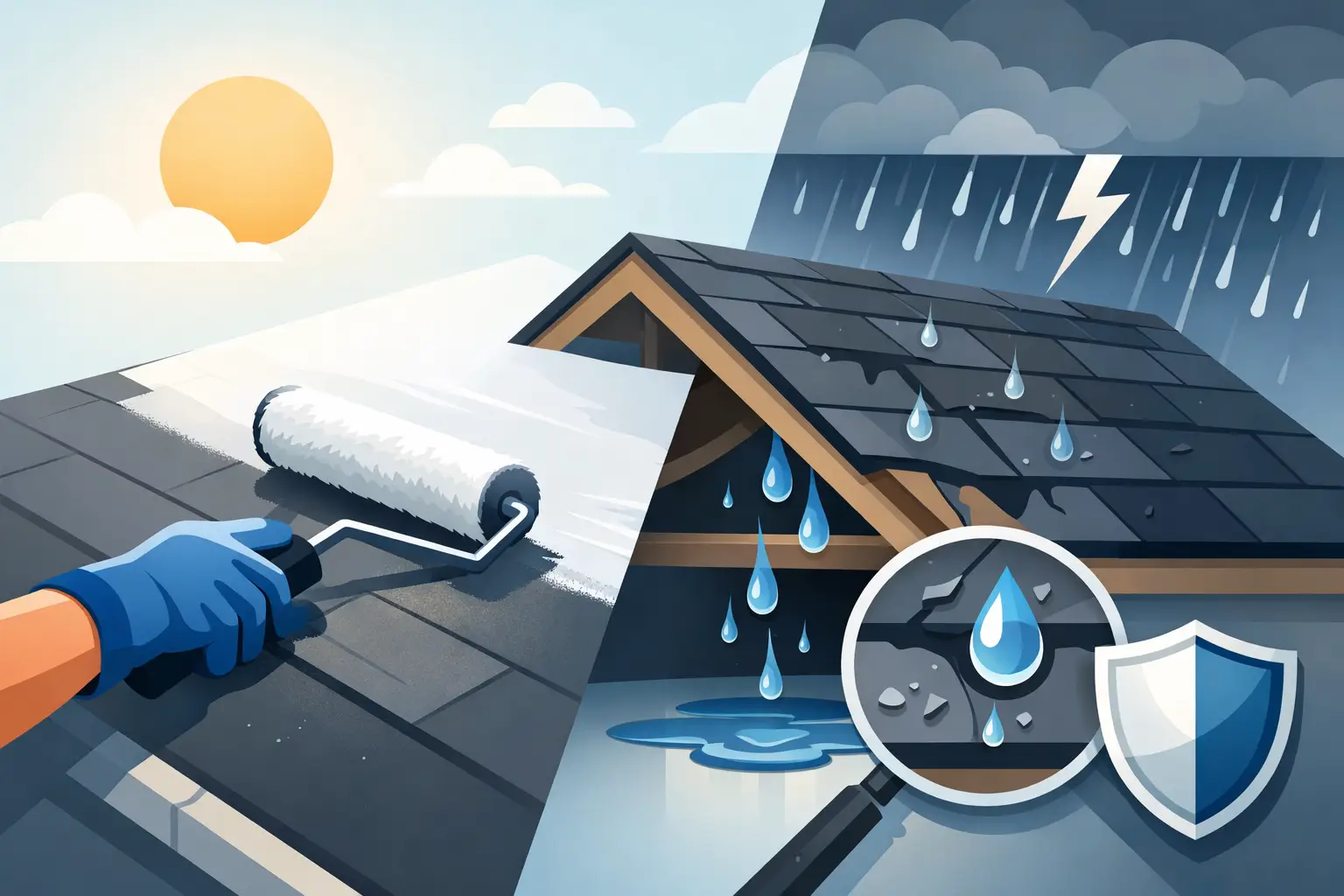
A leak that appears over a ceiling tile or in a spare bedroom is rarely the whole problem. Water can travel beneath a membrane, through insulation, or along roof decking before it becomes visible indoors. So, can roof coatings stop leaks? Often, yes – but only when the existing roof is a good candidate and the source of the leak has been properly repaired first.
For property owners in Nevada and Northern California, coatings can be a practical way to restore an aging roof, improve weather resistance, and delay the cost of a full replacement. They are not a shortcut for major structural damage, saturated insulation, failed flashing, or a roof that has reached the end of its service life. The value comes from applying the right system to a roof that can still perform.
How Roof Coatings Help Stop Water Intrusion
A roof coating is a fluid-applied material that cures into a continuous, protective surface over an existing roof. On low-slope commercial roofs, common coating systems include silicone, acrylic, and polyurethane. Each has different strengths, but a properly selected and installed coating can seal small surface defects, reinforce vulnerable transitions, and create a durable barrier against rain, snowmelt, and standing water.
Unlike a sheet roofing system with seams at regular intervals, a coating creates a monolithic surface. That matters around penetrations, drains, curbs, pipes, skylights, and parapet walls, where many leaks begin. When the roof is cleaned, repaired, primed where needed, and coated to the specified thickness, the finished system can reduce the pathways water uses to reach the building.
Coatings also protect the roof from ultraviolet exposure. Intense sun is hard on roofing materials, especially in high-desert climates where hot days and sharp temperature swings cause expansion and contraction. A reflective cool roof coating can lower surface temperatures, reduce thermal stress, and help preserve the roofing system beneath it. The energy-saving benefit is real for many buildings, but waterproofing and roof-life extension should remain the first priorities.
Can Roof Coatings Stop Leaks on Every Roof?
No. A coating performs best as a restoration system, not as a cover for unresolved damage. Before recommending one, an experienced roofer needs to determine why the roof is leaking and whether the existing assembly is dry, stable, and well attached.
A coating may be a strong option when the roof has isolated cracks, weathered seams, minor ponding-related wear, surface deterioration, or aging details around penetrations. It can also make sense when the membrane or metal roof remains structurally sound but needs renewed waterproofing and UV protection.
It is usually not the right answer when there are widespread wet areas below the roof surface, extensive blistering, deteriorated decking, failed insulation, significant dry rot, or major membrane separation. Applying coating over trapped moisture can hide the symptoms temporarily while the roof system continues to deteriorate. The result may be more expensive repairs later, not fewer.
Residential roofs require the same honest assessment. Some specialized coatings work well on metal roofs, low-slope sections, and certain compatible roofing materials. A conventional steep-slope shingle roof with widespread damage, missing shingles, or failing underlayment often needs targeted repair or replacement rather than a surface coating. The roof design and material determine the right solution.
Leak Repairs Come Before the Coating
The preparation work is where a coating project succeeds or fails. A roof must be inspected carefully, including seams, flashing, drains, penetrations, rooftop equipment, edges, and previous repair areas. If water has entered the building, the contractor should trace the likely entry point rather than simply coat the area directly above the interior stain.
Repairs typically address open seams, splits, punctures, loose flashing, damaged pipe boots, and deteriorated sealant. On commercial roofs, crews may also reinforce seams and transitions with compatible fabric or detail materials before applying the field coating. Drains must remain clear and properly flashed so water can leave the roof as designed.
Cleaning is equally important. Dust, chalking, oils, biological growth, and loose material prevent a coating from bonding correctly. The roof needs to be cleaned, dried, and prepared according to the coating manufacturer’s requirements. Some substrates also require a primer to improve adhesion or prevent bleed-through.
Thickness matters as well. A coating applied too thin may look uniform on day one but lack the durability needed to bridge minor movement and withstand years of weather. A professional installation follows the specified coverage rate and pays close attention to details that receive the most water exposure. This is craftsmanship, not paint application.
Choosing the Right Coating for Local Conditions
The best roof coating depends on the existing roof, drainage conditions, building use, and local weather exposure. Silicone coatings are often selected for their strong UV resistance and ability to handle ponding water. Acrylic coatings are reflective and cost-effective for roofs with positive drainage, though they may be less suitable where water stands for long periods. Polyurethane systems can offer excellent toughness in areas exposed to foot traffic or mechanical wear.
Material compatibility is critical. A coating that performs well over one membrane may not adhere properly to another without the right preparation or primer. Metal roofs present their own considerations, including rust treatment, fastener inspection, seam reinforcement, and movement at panel joints.
The climate across Nevada and Northern California adds another layer of decision-making. Roofs may face high UV exposure, wind-driven rain, freezing temperatures, snow loads, and rapid temperature changes during the year. A restoration plan should account for those conditions rather than rely on a one-size-fits-all product recommendation.
When a Coating Is More Cost-Effective Than Replacement
A coating system can extend the useful life of a qualifying roof while avoiding the disruption and expense of an immediate tear-off. For commercial property owners and facility managers, that can mean less interruption to operations, fewer materials sent to the landfill, and a more predictable maintenance plan.
That said, restoration is only cost-effective if the roof still has a reliable foundation. Spending less today is not a savings if the roof needs replacement shortly afterward. The right question is not simply, “What is the cheapest way to stop this leak?” It is, “What solution will protect this building for the years we expect from it?”
A professional inspection can clarify that decision. It should identify active leak sources, assess the condition of the roof surface and underlying components, document drainage concerns, and explain whether repairs, coating restoration, or replacement will deliver the best long-term value.
Protect a Coated Roof With Ongoing Maintenance
Even the best coating system benefits from routine care. Keep drains, scuppers, and gutters clear so water does not remain on the roof longer than necessary. Inspect after severe storms, high winds, heavy snow, or work performed by other trades. Service crews, HVAC technicians, and solar installers can create accidental damage if they walk on vulnerable areas or disturb flashing.
Property owners should also act quickly when they notice water stains, bubbling paint, musty odors, or dripping during a storm. Small leaks are easier to repair before insulation becomes saturated or moisture reaches framing, electrical components, and interior finishes.
For a coated roof, periodic inspections help catch worn details before they become active leaks. This maintenance-first approach is especially valuable for commercial buildings, where a single overlooked penetration can affect inventory, equipment, tenant spaces, and daily operations.
A roof coating can be an effective, long-lasting solution when it is part of a complete repair and restoration plan. Mountain Valley Roofing evaluates the roof beneath the problem, not just the visible leak, so owners can make a practical decision that protects their property through the next storm and the years that follow.