
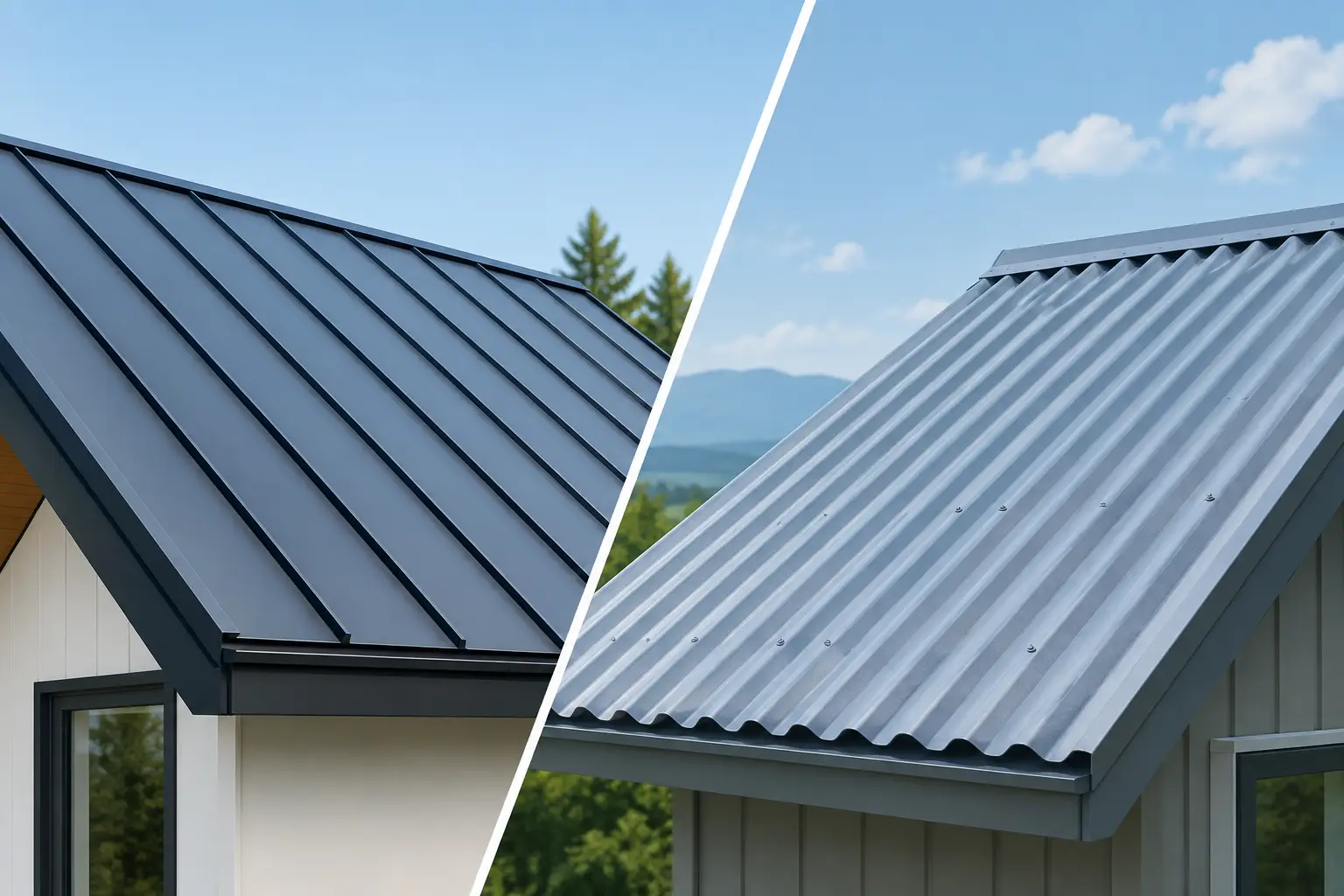
A metal roof has to do more than look good from the street. In Nevada and Northern California, it must handle intense UV exposure, high winds, snow loads, temperature swings, and sudden storms without becoming a recurring maintenance issue. The standing seam vs corrugated metal decision comes down to how each system manages water, movement, fasteners, cost, and the demands of the specific building.
Both options can provide long service life when properly specified and installed. They are not interchangeable, however. Standing seam is generally the higher-performance architectural system, while corrugated metal can be a practical, cost-effective choice for the right roof or exterior application.
Standing Seam vs Corrugated Metal at a Glance
Standing seam roofing uses wide, flat metal panels connected by raised vertical seams. The panels attach with concealed clips or hidden fasteners, so the roof surface has few, if any, exposed screws. That design gives standing seam a clean appearance and reduces the number of places where water can eventually find its way into the building.
Corrugated metal roofing uses panels formed with repeating waves, ribs, or channels. Many corrugated systems are installed with exposed fasteners driven through the face of the panel. The profile is familiar, durable, and often less expensive than standing seam, but every fastener is a long-term maintenance point.
For a residence, office, retail building, agricultural structure, or detached garage, the right choice depends on roof slope, budget, appearance, expected service life, and how much maintenance the owner is prepared to manage.
Waterproofing and Weather Protection
The biggest practical difference between these metal roof systems is how they keep water out.
Standing seam keeps fasteners out of the weather
A standing seam roof places its attachment system beneath the panel seams. Because the fasteners are concealed, they are not directly exposed to sun, rain, snow, and expanding ice. This is a major advantage in climates where metal panels repeatedly expand in heat and contract in cold.
Quality standing seam systems are designed to allow controlled thermal movement. The panels can move across the roof without pulling against exposed screw holes. That reduces the risk of elongated fastener openings, failed washers, and leaks caused by years of temperature cycling.
The raised seams also help direct water downhill and away from panel connections. This makes standing seam a strong choice for homes and commercial buildings where long-term water protection and a refined finish are priorities.
Corrugated metal relies on maintained fasteners
Corrugated panels shed water effectively when they have adequate slope, proper overlap, correct closures, and well-installed flashing. They are a proven roofing material, especially for simpler structures and applications where value is the main concern.
The trade-off is the exposed-fastener design found on many corrugated roofs. Fastener screws use sealing washers to keep water from entering around the screw. Over time, UV exposure can dry or crack those washers. Panel movement can also loosen screws, and a screw installed too tightly or at an angle may fail earlier than expected.
That does not mean corrugated roofing is unreliable. It means routine inspection matters. A property owner should expect to check for loose fasteners, worn washers, damaged sealant, and corrosion around penetrations over the life of the roof.
Cost: Upfront Price Versus Lifecycle Value
Corrugated metal is often the lower-cost option at installation. The panels are generally less expensive, and installation can be more straightforward on uncomplicated roof shapes. For outbuildings, workshops, equipment shelters, and budget-driven projects, that price difference can make corrugated metal the sensible choice.
Standing seam costs more because the panels, concealed clip system, trim details, and labor require greater precision. Complex roof lines, skylights, chimneys, valleys, and transitions add further cost. The investment can be justified when the building needs stronger long-term leak resistance, a premium appearance, or fewer exposed maintenance points.
Cost should not be measured only by the initial proposal. A lower-priced roof that requires frequent screw replacement, sealing work, or repairs may cost more over time than expected. Conversely, a standing seam roof is not automatically the best value for every structure if its performance advantages exceed the needs of the project.
A contractor should also consider the full roof assembly, not just the panel price. Underlayment, insulation, ventilation, flashing, drainage, roof deck condition, and penetration details all affect the final result.
Appearance and Design Flexibility
Standing seam has a clean, linear look that works well on custom homes, mountain properties, modern commercial buildings, and visible rooflines. It is available in a range of colors and panel widths, allowing the roof to complement stone, stucco, wood, siding, and other exterior finishes. Its consistent vertical seams can make a large roof appear more organized and intentional.
Corrugated metal has a more textured, traditional appearance. It can fit rural properties, barns, utility structures, cabins, industrial buildings, and projects where a straightforward metal profile is part of the desired character. Corrugated panels are also commonly used for wall cladding, wainscoting, and accent features.
Neither profile is inherently better-looking. The question is whether the material matches the architecture and whether the roof will remain visible from key areas of the property. On a highly visible home, standing seam often supports stronger resale appeal. On a functional outbuilding, corrugated metal may deliver exactly the right balance of appearance and cost.
Wind, Snow, and Heat Performance
Nevada and Northern California create roofing conditions that deserve more than a one-size-fits-all recommendation. Desert heat can place constant stress on coatings, sealants, and exposed fastener washers. Mountain areas may experience heavy snow, ice, wind-driven rain, and sharp day-to-night temperature changes.
Standing seam performs well in these conditions when it is engineered and installed for the building. Its concealed fastening and thermal movement capacity are especially valuable where heat and cold cycles are severe. Snow retention systems can also be designed to work with standing seam panels without drilling through the roof surface, which helps protect entryways, walkways, and lower roof sections from sliding snow.
Corrugated metal can also perform well under wind and snow loads, but panel gauge, rib profile, fastener spacing, roof deck attachment, and edge detailing must be matched to the site. A light-gauge panel with minimal fastening is not the same as a properly designed system for a high-wind or snow-prone location.
Color matters, too. Light-colored and reflective metal finishes can reduce heat absorption and support energy-efficient roof design. For commercial properties, cool roof performance may be part of the decision, particularly where large roof areas receive direct sun for much of the year.
Roof Slope and Building Type Matter
Standing seam is often selected for low-to-steep-slope roofs because its interlocking seams provide dependable water management. The exact minimum slope depends on the panel system and manufacturer requirements, but it is commonly a better choice than exposed-fastener panels when the roof pitch is low.
Corrugated metal generally needs enough slope to move water quickly and prevent it from backing up at laps or fasteners. It is usually a better fit for steeper, simpler roof planes. It may not be appropriate for every low-slope commercial roof, where single-ply membrane, coatings, or another low-slope system could provide better protection.
For commercial facilities, roof traffic is another consideration. Neither corrugated nor standing seam metal should be treated as a walking surface without planning. Service routes for HVAC equipment, skylights, and other rooftop components should be addressed before installation to avoid panel damage and unnecessary penetrations.
Maintenance Expectations
Every roof benefits from regular inspection, especially after wind events, hail, heavy snow, or major temperature shifts. Standing seam typically requires less fastener-related maintenance because the attachment points are protected. Inspections should still check seams, flashing, penetrations, sealant joints, gutters, snow guards, and areas around rooftop equipment.
Corrugated metal needs the same attention, plus a closer review of exposed screws and washers. Fasteners can back out, corrode, or lose their seal over time. Replacing a small number of compromised fasteners early is far less expensive than waiting for water intrusion to damage insulation, decking, or interior finishes.
Keeping debris out of valleys and gutters is equally important for both systems. Trapped leaves, pine needles, and sediment hold moisture against metal and can interfere with drainage. In snow country, safe snow removal and properly designed snow retention can prevent damage to both the roof and the areas below it.
Choosing the Right Metal Roof
Choose standing seam when long-term weather resistance, a clean architectural appearance, concealed fasteners, and lower maintenance exposure are worth a higher initial investment. It is often the stronger choice for primary residences, visible commercial buildings, low-slope metal applications, and properties exposed to demanding sun, wind, or snow conditions.
Choose corrugated metal when the project has a simpler roof design, sufficient slope, a tighter budget, and a practical need for durable coverage. It can be an excellent material for garages, barns, workshops, utility buildings, and many residential or commercial applications when installed with the right details and maintained consistently.
The best roof is not the panel with the lowest price or the most polished appearance. It is the system designed for the building, local weather, drainage needs, and expected maintenance plan. A qualified roofing inspection can identify those conditions before material is selected, helping protect the property for decades rather than simply covering it for the next season.