
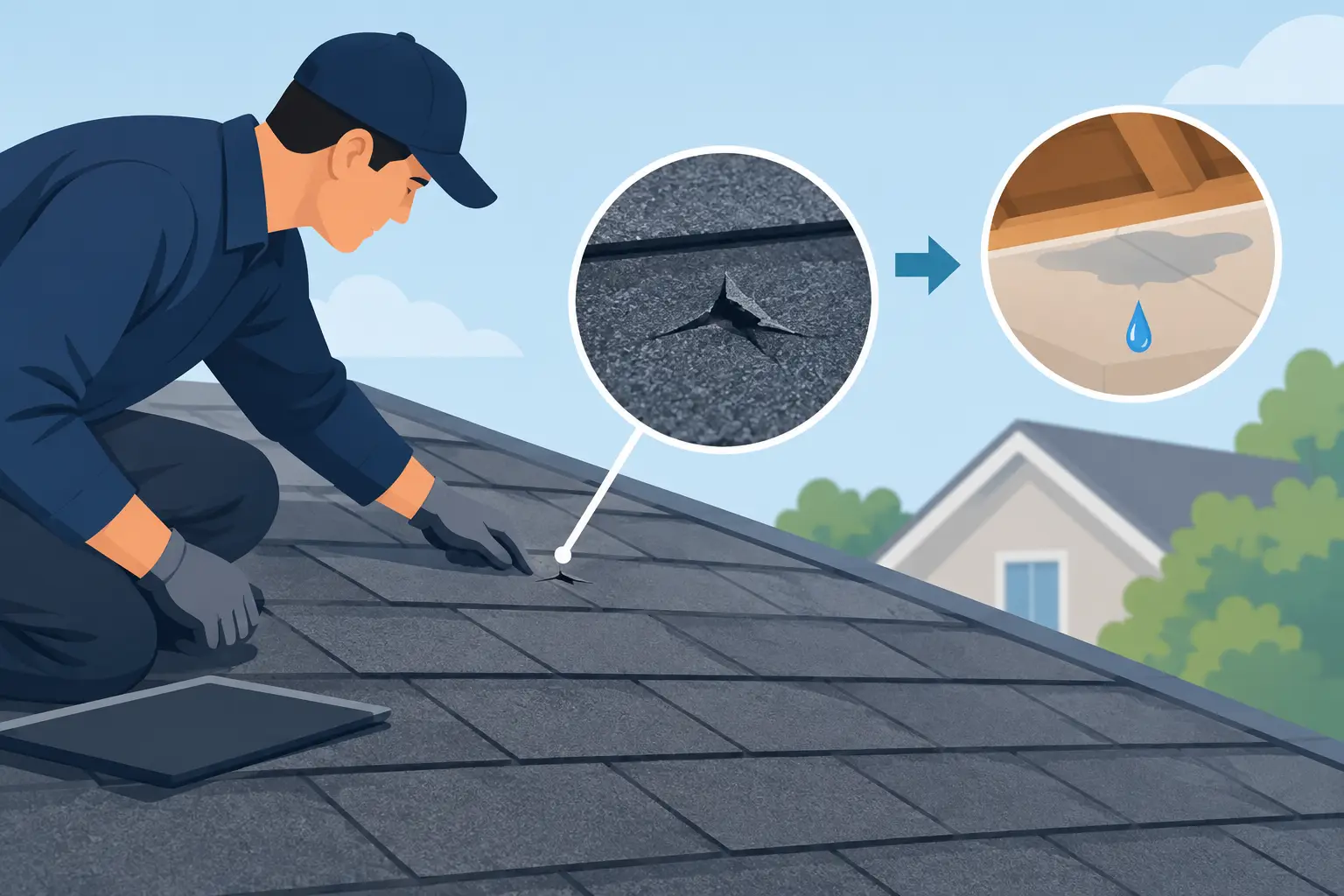
A roof puncture can be smaller than a coin and still create an expensive moisture problem. Sharp windblown debris, fallen branches, foot traffic, misplaced tools, and storm damage can all compromise the roof surface. Knowing how to identify roof punctures early helps property owners prevent leaks, insulation damage, mold concerns, and premature roof replacement.
The challenge is that punctures do not always leak immediately. Water can enter through a small opening, travel beneath shingles or membrane seams, and show up inside the building far from the actual damage. A careful response starts with knowing what to look for, what not to disturb, and when to bring in a qualified roofing professional.
How to Identify Roof Punctures From the Ground
Start with a visual inspection from a safe position on the ground. You will not see every small opening, but you may spot the conditions that commonly lead to puncture damage. Look for branches resting on the roof, missing shingle sections, loose flashing, storm debris, or areas where the roof surface appears uneven.
After high winds, hail, or heavy snow, check the perimeter of the roof and the area around downspouts. Granules washed from an asphalt shingle roof may collect in gutters or at ground level. Granule loss alone does not prove there is a puncture, but it can indicate impact damage or excessive wear that leaves the roof more vulnerable.
On flat and low-slope commercial roofs, look for standing water that remains long after a storm. Ponding water can expose weak areas in a membrane and make a small puncture more likely to become an active leak. Also pay attention to loose rooftop debris. A sharp screw, broken metal edge, or branch dragged across a membrane by wind can damage the surface.
Do not climb onto a roof if the surface is wet, steep, snow-covered, or otherwise unsafe. Roof inspections require more than a quick walk across the surface. Unnecessary foot traffic can worsen existing damage, especially on aging shingles, tile, or single-ply membranes.
Signs of a Roof Puncture on Different Roofing Systems
A puncture looks different depending on the roofing material. The common issue is the same: the protective, waterproof layer has been breached.
Asphalt shingle roofs
On shingle roofs, a puncture may appear as a clean hole, a torn shingle tab, an exposed dark spot where granules have been knocked away, or a raised area caused by trapped moisture. Nails backing out of the roof deck can also create openings over time. Check carefully around roof penetrations such as vents, pipe boots, skylights, and chimneys, where water is already concentrated.
A damaged shingle does not always mean the roof deck below has been punctured. Still, a torn or missing shingle should be repaired promptly because the underlayment and decking have less protection from Nevada and Northern California weather.
Single-ply and membrane roofs
TPO, PVC, EPDM, and other low-slope membrane systems can be punctured by dropped tools, HVAC service activity, sharp debris, or repeated foot traffic. Warning signs include visible cuts, splits, scrapes, puncture holes, lifted seams, and scuffed areas where the membrane has become thin.
A membrane puncture may be difficult to spot if dirt or water is covering the area. Facility managers should pay close attention to paths leading to HVAC equipment, drains, hatches, and solar equipment. These are high-traffic locations where a protective walkway pad or targeted maintenance plan may be needed.
Metal roofs
Metal roofing is durable, but it can be damaged by impact, fastener failure, and penetrations around accessories or equipment. Look for dents with cracked coatings, loose or missing fasteners, damaged sealant, and holes near panel laps or flashing. A dent is not automatically a leak risk, but damage that breaks the protective coating can lead to corrosion and eventual water entry.
Modified bitumen and torch down roofs
Modified bitumen roofs can show punctures as splits, tears, open laps, or areas where the granulated cap sheet has been gouged. Heat and UV exposure can make an aging surface less flexible. When that happens, ordinary service traffic or debris can cause damage more easily than it would on a newer roof.
Interior Clues That Water Is Getting Through
Many roof punctures are first noticed indoors. A brown ceiling stain, peeling paint, damp drywall, musty odor, or bubbling ceiling texture can all point to a roof leak. In commercial buildings, watch for water near ceiling tiles, electrical fixtures, walls, or mechanical rooms.
These signs should be treated seriously even if they disappear after dry weather. Moisture may still be trapped above the ceiling or within insulation. Left unaddressed, that moisture can weaken roof decking, reduce insulation performance, damage interior finishes, and create conditions for mold growth.
Keep in mind that the visible stain is often not directly below the puncture. Water follows framing, insulation, roof slopes, and utility openings before it reaches the interior. That is why a professional inspection is more reliable than patching the spot directly above a ceiling stain.
Check High-Risk Areas First
Roof punctures are more likely in places where the roof surface changes direction, meets another material, or receives regular traffic. Focus on penetrations and transitions, including vents, pipe boots, skylights, scuppers, drains, curbs, flashings, and parapet walls.
For homeowners, fallen branches and windblown debris are common causes. For commercial properties, maintenance work is a frequent source of accidental damage. HVAC contractors, satellite installers, solar crews, and other trades may need roof access, and a single dropped tool or unsecured fastener can damage a membrane.
If you manage a commercial property, document roof access and require contractors to report any damage immediately. This simple step can reduce disputes and prevent a small puncture from becoming a larger restoration project.
What to Do When You Find a Suspected Puncture
First, take clear photos from a safe location and note the approximate location of the damage. If water is entering the building, protect furnishings and equipment, contain the water if possible, and move electrical items away from the affected area. Do not drive screws, nails, or makeshift materials through the roof in an attempt to stop the leak. That can enlarge the opening and make proper repair more difficult.
Temporary coverings can help in an emergency, but they are not a long-term repair. Tarps, tape, caulk, and roof cement may trap moisture or fail under wind and sun exposure. The correct repair depends on the roof system, the condition of surrounding materials, and whether water has entered the insulation or deck.
A qualified roofer can determine whether the damage needs a localized patch, flashing repair, membrane weld, shingle replacement, coating repair, or a broader restoration approach. On older roofs with repeated punctures or widespread surface deterioration, repairing one hole at a time may not be the most cost-effective choice. A roof coating or restoration system may extend service life when the underlying roof is otherwise sound. If the deck, insulation, or membrane is extensively compromised, replacement may be the better long-term investment.
Why Professional Inspection Matters in Harsh Climates
Nevada and Northern California roofs face intense sun, wind, snow loads, temperature swings, and seasonal storms. Those conditions can turn minor surface damage into a larger waterproofing failure. UV exposure can harden materials, wind can lift weakened edges, and freeze-thaw cycles can widen small openings.
Mountain Valley Roofing evaluates both the visible damage and the surrounding roof system. That matters because a lasting repair must restore waterproofing without creating a weak point nearby. For commercial buildings, inspections can also identify drainage problems, traffic damage, failing seams, and insulation concerns before they interrupt operations.
A roof puncture is rarely something to ignore until the next storm. When you notice damage, moisture staining, or debris that may have compromised the surface, schedule an inspection before water has time to travel farther through the roof assembly. Prompt, system-appropriate repairs protect the structure, control costs, and give your roof the best chance to keep doing its job.