
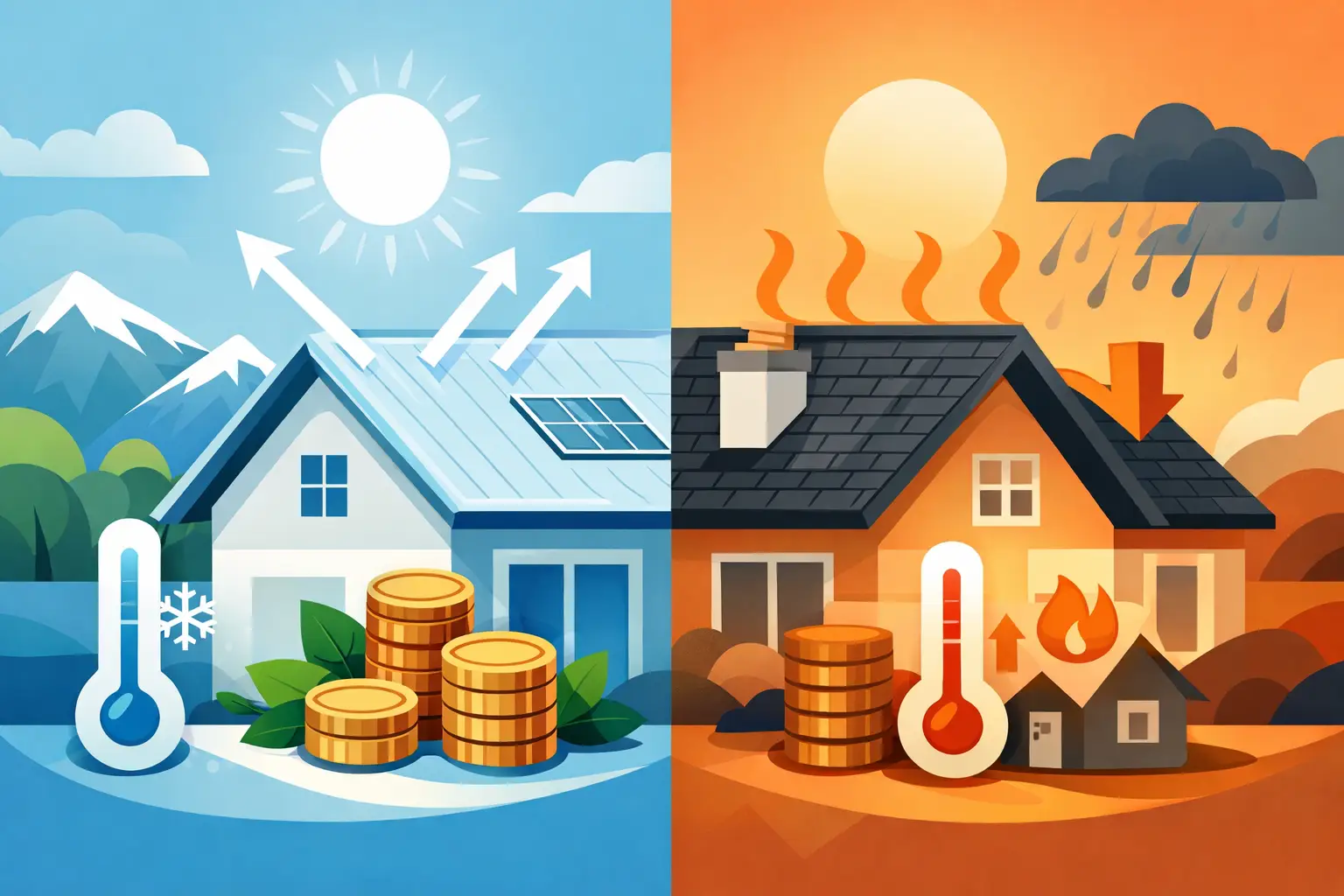
A roof that absorbs the afternoon sun can reach temperatures far above the outdoor air temperature. For property owners in Nevada and Northern California, that heat affects more than comfort. It can increase cooling demand, accelerate material aging, and add stress to an already demanding roofing system. The cool roof vs traditional roofing decision comes down to how a roof handles sunlight, weather exposure, building use, and long-term maintenance.
A cool roof is not automatically the right answer for every building. Traditional systems can be an excellent fit when the material, slope, insulation, climate, and budget align. The right choice is the one that protects the structure, controls lifecycle costs, and performs reliably through intense sun, wind, snow, and temperature swings.
What Makes a Roof “Cool”?
Cool roofing is designed to reflect more sunlight and absorb less heat than a conventional dark-colored roof. Reflective coatings, light-colored membranes, and certain metal finishes can all create a cool roof surface. On commercial low-slope roofs, this often means a white or light-colored single-ply membrane or an elastomeric roof coating installed over a qualifying existing system.
The key measures are solar reflectance and thermal emittance. Solar reflectance describes how much sunlight the roof surface sends back rather than absorbs. Thermal emittance describes how effectively the surface releases absorbed heat. Together, these properties help lower roof-surface temperatures.
Traditional roofing generally includes darker asphalt shingles, built-up roofing, modified bitumen, or darker membrane systems. These products absorb more solar heat, although performance varies substantially by material, color, installation quality, insulation levels, and ventilation. A traditional roof is not necessarily a poor roof. It simply manages solar heat differently.
Cool Roof vs Traditional Roofing: The Real Differences
The most visible difference is surface temperature. Under direct summer sun, a reflective roof can run significantly cooler than a dark roof. That can reduce heat transfer into conditioned spaces, particularly in commercial buildings with large, low-slope roof areas and limited overhead insulation.
For a warehouse, retail facility, office building, or multifamily property, lower roof temperatures may help reduce cooling costs and create a more stable interior environment. The benefit is usually strongest when the building has high air-conditioning demand, broad roof exposure, and a roof assembly that allows surface heat to affect the interior.
A cooler surface can also support roof longevity. UV radiation and repeated thermal expansion and contraction contribute to cracking, seam stress, and premature material wear. Reflective systems reduce heat buildup at the roof surface, which may lessen those stresses over time. That does not eliminate the need for inspections or maintenance. Drains still clog, penetrations still require attention, and seams still need professional evaluation.
Traditional roofing often has advantages in appearance, product selection, and cold-weather performance. Dark architectural shingles remain a popular residential choice because they complement many home styles and provide dependable protection when properly installed. On steep-slope homes, ventilation, attic insulation, underlayment, flashing details, and shingle quality can have as much impact on performance as roof color.
Energy Savings Depend on the Building
It is reasonable to expect a cool roof to help with summer cooling in hot, sunny areas. It is not reasonable to assume every property will see the same savings. A poorly insulated building with a large flat roof may see a more noticeable improvement than a well-insulated home with a steep, shaded roof.
Commercial properties are often strong candidates because the roof area is large relative to the building footprint. Low-slope roofs also receive sustained direct sunlight, and a reflective coating can sometimes restore an aging roof without the cost and disruption of a full tear-off. When the existing roof is dry, structurally sound, and suitable for restoration, a coating may extend service life while improving reflectivity.
Residential savings can be more variable. A light-colored shingle or reflective metal roof may reduce attic heat gain, but local weather, tree cover, ductwork location, insulation depth, and HVAC efficiency all affect results. Homeowners should evaluate the complete roof and attic system rather than expecting color alone to solve high energy bills.
Winter is part of the equation in higher-elevation communities. A dark roof may absorb helpful solar warmth on clear cold days, while a reflective roof limits that heat gain. In Nevada and Northern California, the intense summer sun often makes cool roofing attractive, but snow exposure, ice dam risk, insulation, ventilation, and roof slope still deserve careful consideration. Heat tape or targeted snow-management measures may be more relevant to winter performance than roofing color alone.
Upfront Cost and Lifecycle Value
Cool roof products can cost more upfront than some conventional options, especially when comparing premium membranes, coatings, or specialty metal finishes with basic dark materials. However, the purchase price is only one part of the decision.
A roof that reduces cooling load, limits UV damage, and remains serviceable longer can offer better lifecycle value. This is especially true when a commercial roof can be restored with a properly specified coating instead of removed and replaced. Restoration is not a shortcut. It requires a thorough inspection to confirm the substrate, drainage, seams, flashing, moisture condition, and structural deck are appropriate for the system.
Traditional roofing can offer strong value when replacement is necessary or when a building does not benefit enough from reflectivity to justify a higher initial investment. Quality asphalt shingles, metal roofing, modified bitumen, and other conventional systems can provide long-lasting protection when matched to the building and installed with proper details.
The costly choice is often not cool versus traditional. It is choosing a system based only on initial price, then facing leaks, premature aging, or avoidable replacement years earlier than expected.
Which Roof Type Fits Your Property?
For many commercial low-slope properties, cool roof membranes and coatings are worth serious consideration. They are particularly practical where summer heat, high cooling demand, and large roof areas put pressure on operating costs. A reflective coating may also be a sound option for an existing roof that has remaining structural integrity but needs renewed weather protection.
For residential properties, the answer depends more heavily on roof design and appearance goals. A cool metal roof can provide excellent durability and reflectivity. Light-colored shingles may offer a middle ground for homeowners who want the familiar look of asphalt while reducing heat absorption. In some cases, a traditional dark shingle roof paired with strong attic insulation and balanced ventilation is the practical choice.
Buildings with significant shade, limited air conditioning, heavy insulation, or cold-weather priorities may see less energy benefit from a cool roof. Facilities with chronic ponding water, damaged decking, saturated insulation, or failing flashing need repairs before any coating or surface upgrade is considered. Reflectivity cannot correct drainage failures or hidden moisture problems.
Installation Details Matter More Than Color Alone
A reflective roof only performs as intended when the entire system is installed correctly. On commercial roofs, that includes substrate preparation, seam treatment, flashing integration, drain details, and coating thickness where applicable. On homes, it includes underlayment, ice and water protection where needed, ventilation, flashing, and proper fastening for wind exposure.
Maintenance also protects the investment. Dirt, debris, and biological growth can reduce a cool roof’s reflectivity over time. Periodic cleaning and inspections help preserve performance. Traditional roofs need the same disciplined attention, especially after wind events, heavy snow, or seasonal temperature changes.
An experienced contractor should assess the roof’s current condition, building use, local climate exposure, insulation, drainage, and budget before recommending a system. Product selection should follow the inspection, not the other way around.
Make the Choice Based on Your Roof’s Job
Your roof has to do more than look good from the street. It must keep water out, handle UV exposure, manage changing temperatures, and protect the value of the building underneath it. Cool roofing can be a cost-effective, energy-efficient solution for the right property, while traditional roofing remains a durable and dependable option in many applications.
Before committing to either system, schedule a professional evaluation that looks beyond surface color. Mountain Valley Roofing can help property owners identify whether repair, restoration, a cool roof coating, or full replacement will deliver the strongest long-term protection for their specific building.