
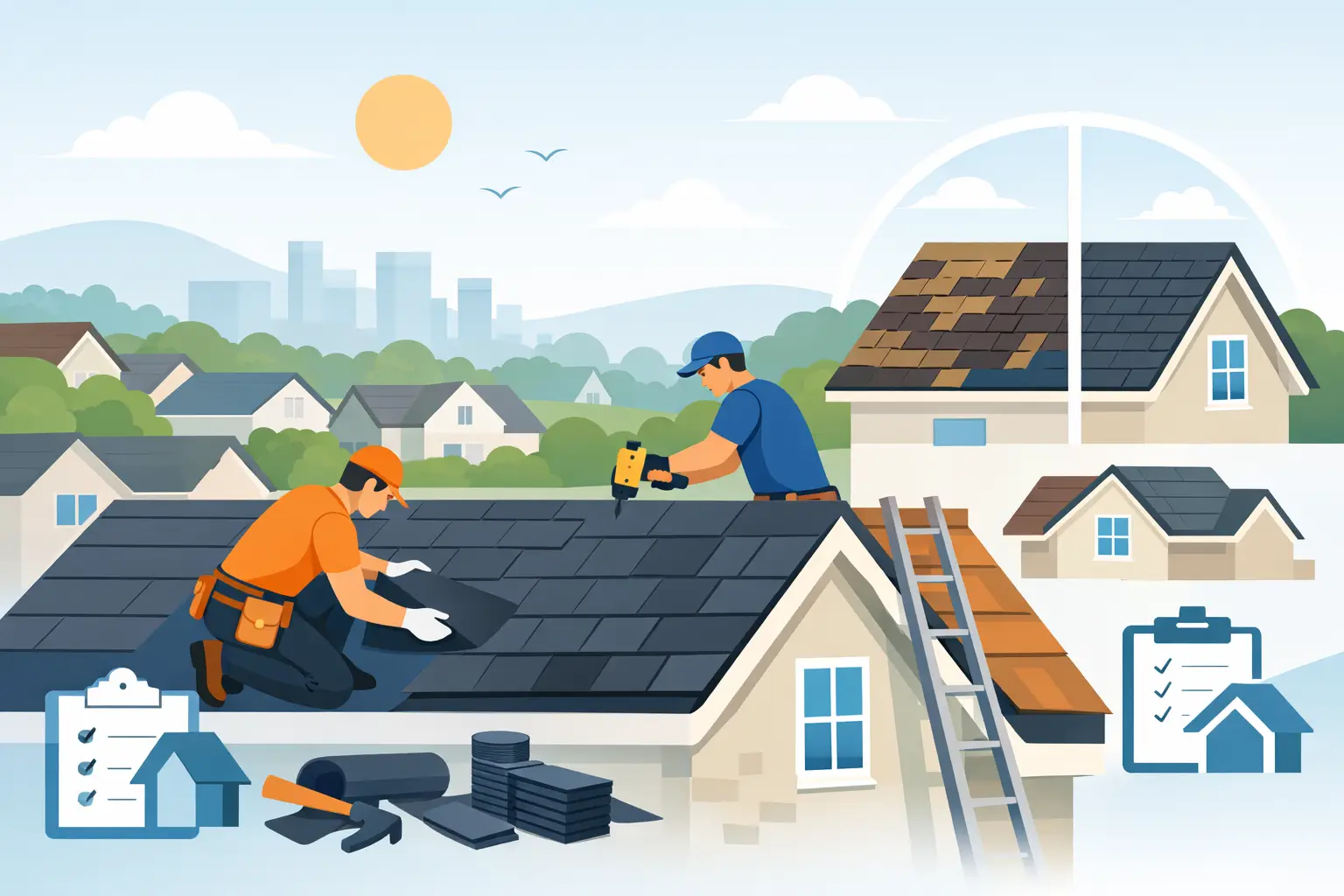
A roof rarely fails all at once. Homeowners often notice the warning signs first: missing shingles after a windstorm, granules collecting in gutters, ceiling stains, curling edges, or repairs that keep returning. This residential roof replacement guide explains how to make a sound decision before water damage, rising energy costs, or a severe weather event turns a manageable project into an urgent one.
Know When Replacement Is the Better Investment
A repair is the right answer when damage is limited and the existing roof still has useful life remaining. A few lifted shingles, a damaged pipe flashing, or a small isolated leak can often be repaired without replacing the entire system. The condition of the decking, underlayment, ventilation, and flashing matters as much as the visible roofing material.
Replacement becomes the more cost-effective choice when the roof is near the end of its expected service life, leaks occur in multiple areas, or shingles are broadly brittle, cracked, curled, or losing granules. Widespread storm damage is another reason to look beyond spot repairs. Replacing an aging roof before repeated leaks damage insulation, framing, drywall, and interior finishes protects the home and can prevent a larger repair bill later.
An experienced inspection should identify whether the problem is the roof covering alone or whether moisture has reached the structure below. A contractor should not recommend a full replacement based only on a quick view from the ground.
Begin Your Residential Roof Replacement Guide With a Full Inspection
The planning process starts with a clear assessment of the existing roof. This includes the condition of shingles or panels, valleys, vents, chimneys, skylights, gutters, flashing, and roof decking. It should also include attic ventilation and insulation, since trapped heat and moisture can shorten the life of a new roof from underneath.
Ask for a written scope that explains what will be removed, what will be installed, and how unexpected conditions will be handled. If damaged decking, dry rot, or inadequate ventilation is discovered after tear-off, the contractor should document the issue and explain the repair before proceeding.
A dependable proposal also identifies the roofing system, underlayment, flashing details, ventilation components, cleanup process, warranty coverage, and projected schedule. Price matters, but a low bid that leaves out essential waterproofing details is not a lower-cost roof in the long run.
Repair, Restoration, or Replacement?
Homeowners sometimes have more than two choices. Depending on the roof type and its condition, restoration work may extend service life without a complete tear-off. This is more common for certain low-slope roofing systems than for aging shingle roofs, but the principle is the same: preserve a sound roof when it makes financial and practical sense.
The decision depends on remaining roof life, the source of water intrusion, local weather exposure, and the long-term plan for the property. If you expect to stay in the home for many years, investing in a durable system and correcting underlying ventilation or drainage problems is often the stronger value.
Choose Materials for the Climate, Not Just the Color
Nevada and Northern California roofs face intense UV exposure, wind, snow loads in higher elevations, temperature swings, and seasonal storms. The best roofing material is the one that fits the roof design, local conditions, budget, and maintenance expectations.
Architectural asphalt shingles remain a practical choice for many homes because they offer reliable water protection, a broad range of colors, and a cost-effective installation. Quality shingles paired with proper underlayment and flashing can provide long-lasting performance on steep-slope roofs.
Metal roofing is worth considering for homeowners who want exceptional longevity, strong wind performance, and a clean look. It can also shed snow effectively when designed for the property, although snow retention systems may be needed above entries, walkways, and other areas where falling snow could create a hazard. Metal generally carries a higher upfront cost, so its value is strongest for owners focused on long service life and low maintenance.
Tile and other premium systems can offer excellent durability, but they may require confirmation that the home structure can support the added weight. Material selection is never only about appearance. The underlayment, edge metal, flashing, ventilation, and installation quality determine whether the finished roof performs as intended.
For homes exposed to high summer heat, ask about energy-efficient and cool roof options. A lighter, more reflective roofing surface can reduce heat absorption, but energy performance also depends on attic insulation, ventilation, and the condition of the building envelope.
Build a Realistic Replacement Budget
Roof replacement costs vary because no two homes have the same roof geometry or scope of work. The total is affected by roof size, slope, number of layers to remove, material choice, accessibility, valleys, dormers, skylights, chimneys, ventilation upgrades, and required decking repairs.
Insurance may help when qualifying storm damage has caused the loss, but normal aging and deferred maintenance are generally not covered. If a claim is involved, document visible damage, keep records of inspections and repairs, and understand your deductible before work begins. A contractor experienced with storm damage can help explain the roofing scope, while the insurance carrier makes the final coverage decision.
Avoid choosing solely by the lowest number on a proposal. Compare like for like. One estimate may include ice and water protection, upgraded underlayment, new flashing, permit handling, and disposal, while another may not. The more clearly the scope is defined, the easier it is to judge value.
Prepare the Home and Job Site
A roof replacement is a major construction project, but preparation limits disruption. Move vehicles out of the driveway and away from the work area so crews have access and falling debris does not damage them. Clear patio furniture, grills, potted plants, and other items around the perimeter of the house.
Inside, remove or secure fragile items hanging on walls and shelves. Tear-off and installation create vibration, particularly in homes with vaulted ceilings or attached garages. If you have pets, plan for the noise and frequent crew movement. Keeping them indoors in a quiet room or arranging care off-site is often the safest option.
Before work begins, discuss access points, gate codes, parking, power availability, and any special concerns such as solar panels, satellite equipment, landscaping, or delicate exterior features. A professional crew should protect the property, maintain an organized work area, and use magnetic cleanup tools to collect nails after the project is complete.
What Quality Installation Should Look Like
The visible shingles or panels are only the top layer of a roof system. After old materials are removed, the roof deck should be inspected for soft spots, rot, delamination, and moisture damage. Damaged sheathing should be replaced before new materials are installed.
Next comes the waterproofing work: underlayment, protective membranes in vulnerable areas, properly integrated flashing, drip edge, pipe boots, and ventilation components. These details are where many leaks begin when workmanship is rushed. Valleys, chimneys, skylights, walls, and roof penetrations deserve particular attention because they direct or interrupt water flow.
Installation timing depends on weather, roof complexity, material availability, and the extent of hidden repairs. A straightforward residential project may take only a few days, while a large or complex home can take longer. Crews should protect exposed areas from weather at the end of each workday rather than leaving the home vulnerable overnight.
Protect the New Roof After Installation
A replacement roof should not be ignored until the next leak. Check the roof and gutters after major storms, keep branches from rubbing against the surface, and remove debris that traps moisture in valleys or behind chimneys. In snowy areas, address ice buildup carefully and avoid using tools that can damage shingles or metal panels.
Attic ventilation and insulation deserve continued attention. Excess attic heat can accelerate shingle aging, while condensation can lead to mold, wood decay, and insulation damage. Annual inspections are especially valuable after high winds, hail, heavy snow, or long periods of intense sun.
A well-planned replacement gives your home more than a fresh appearance. It provides a weather-resistant barrier built around the conditions your property actually faces. Mountain Valley Roofing approaches each project with that long-term protection in mind, because the right roof is one that continues performing long after the installation crew has left.