
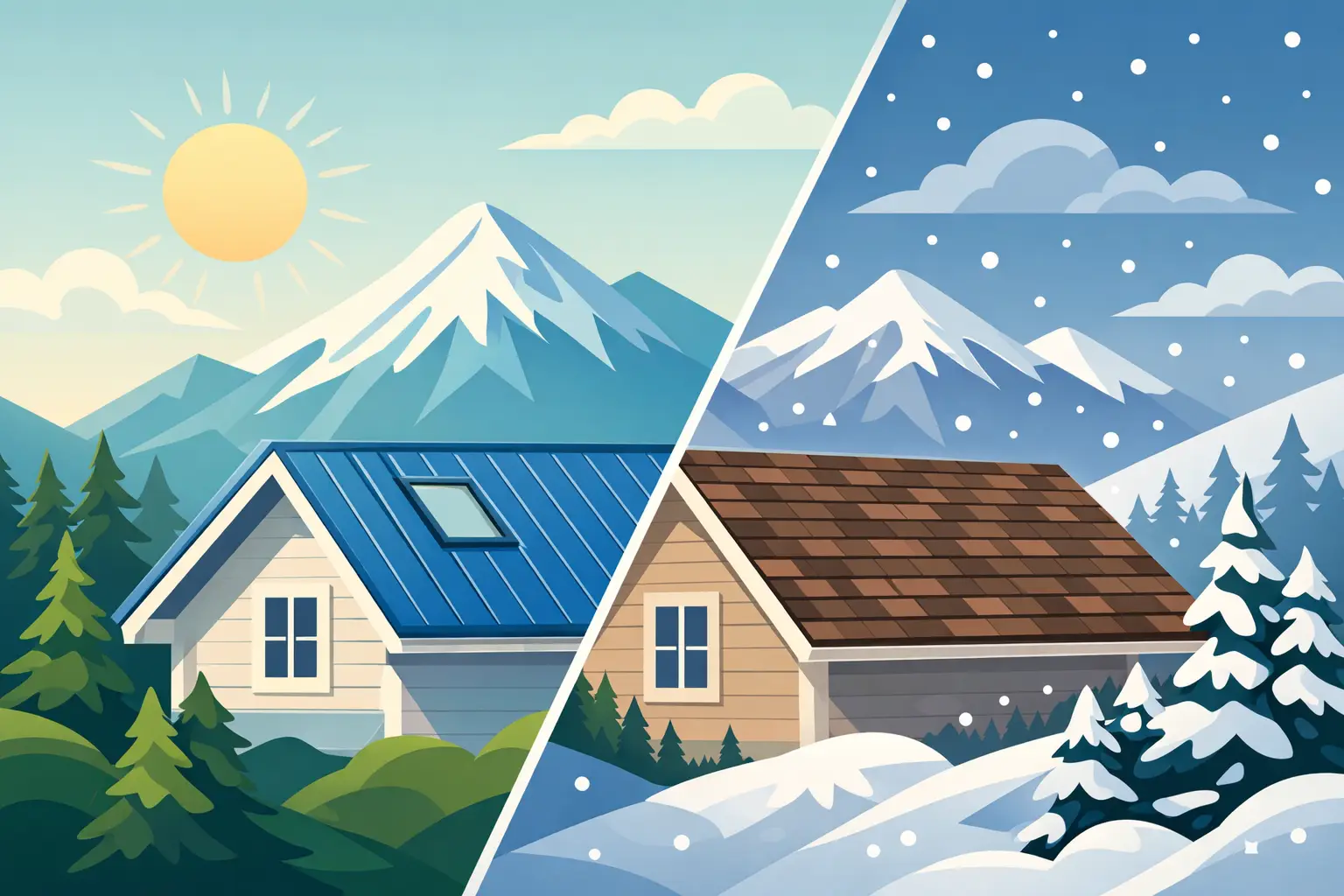
A roof in Nevada or Northern California has to do more than look good from the street. It may face intense UV exposure, high winds, winter snow loads, freeze-thaw cycles, and sudden temperature swings in the same year. When weighing a metal roof versus shingles, the right answer depends on the building, budget, roof design, and how long you plan to own the property.
Metal roofing generally costs more at installation but offers exceptional longevity and weather resistance. Asphalt shingles have a lower upfront cost, familiar appearance, and dependable performance when installed correctly. Neither material is automatically right for every property. The better choice is the one that matches local conditions and provides the strongest long-term value.
Metal Roof Versus Shingles: The Core Difference
The biggest distinction is service life. A quality metal roof can often last 40 to 70 years or longer, depending on the panel type, coating, installation quality, and maintenance. Asphalt shingles commonly last 15 to 30 years, with premium architectural shingles generally outperforming basic three-tab products.
That difference changes the financial picture. Shingles usually make sense for owners who need a cost-effective replacement now, are preparing to sell, or have a home where traditional shingle architecture is the best fit. Metal can be a stronger investment for a long-term owner who wants fewer future replacements, improved snow shedding, and durable protection against sun and wind.
Material alone does not determine roof performance. Flashing, ventilation, underlayment, roof drainage, and workmanship all matter. A high-quality roofing material installed without attention to these details can still develop leaks or premature wear.
Upfront Cost and Long-Term Value
Asphalt shingles are the more affordable option at the start. Material costs are lower, installation is generally faster, and repairs can be straightforward when a limited area is damaged. For many homeowners, that lower initial investment is the deciding factor.
Metal roofing requires a larger upfront investment, particularly for standing seam systems. However, it may reduce the number of full roof replacements needed over the life of the building. Metal can also hold up well against cracking, curling, and granule loss caused by heavy sun exposure.
The practical question is not simply, “Which roof costs less?” It is, “What will this roof cost over the years I expect to own this property?” A property owner planning to remain in place for decades may find that metal delivers better lifecycle value. An owner managing a shorter-term real estate decision may reasonably choose architectural shingles and invest the savings elsewhere.
Insurance, energy use, and maintenance should also be part of the calculation. These factors vary by carrier, roof design, insulation levels, and local climate, so they should be evaluated for the individual property rather than assumed.
Weather Resistance in Nevada and Northern California
Regional weather is where roof selection becomes more specific. High-elevation communities may see substantial snow, while lower-elevation areas face prolonged heat and intense UV exposure. Wind events, seasonal storms, and wildfire concerns can affect both residential and commercial properties.
How Metal Performs
Metal roofing is highly resistant to wind when properly engineered and installed. Its smooth surface helps shed snow, which can reduce the weight that remains on the roof after a storm. That benefit is valuable in mountain areas, though snow guards may be necessary over entrances, walkways, decks, and other places where sliding snow could create a hazard.
Metal is noncombustible, an advantage in areas where fire resistance is a serious consideration. It also resists UV damage well, especially with quality factory-applied coatings designed to maintain color and protect the panel finish.
One trade-off is that metal systems require precise installation. Panel layout, fasteners, expansion and contraction, penetrations, and flashing details need experienced attention. Improperly installed metal can create noise, loose panels, oil canning, or water intrusion issues that are difficult to correct later.
How Shingles Perform
Modern architectural shingles can provide reliable wind resistance and strong water protection when installed as a complete system. They are available in impact-resistant and fire-rated options, making it possible to tailor the roof to regional risks and code requirements.
Shingles do not shed snow as readily as metal, which can be useful or problematic depending on the roof structure and conditions. Retained snow may add roof load, but it does not create the same sudden slide risk found on a smooth metal surface. In heavy-snow areas, proper attic ventilation, insulation, ice-and-water protection, and snow management remain essential regardless of roofing material.
Constant sun exposure is often harder on asphalt shingles over time. Heat can accelerate aging, while UV rays can contribute to brittleness and granule loss. Selecting a quality shingle, appropriate color, and proper ventilation helps improve performance.
Energy Efficiency Is More Than Roof Color
Metal roofs are often associated with energy efficiency because reflective finishes can reduce solar heat gain. A light-colored or cool-rated metal roof may help keep the roof surface cooler under direct sun, which can reduce cooling demand in certain buildings.
Shingles can also support energy-efficient performance. Cool roof shingles are available in reflective colors and can be effective when combined with adequate attic insulation and ventilation. A dark roof, poor insulation, blocked vents, or air leaks in the building envelope can undermine the benefits of either material.
For commercial facilities, the discussion may shift away from shingles and toward coatings, single-ply membranes, or other systems designed for low-slope roofs. Metal and asphalt shingles are primarily choices for sloped roof assemblies. Installing shingles on a roof with insufficient slope can lead to drainage problems and void manufacturer requirements.
Appearance, Repairs, and Maintenance
Shingles offer the broadest range of traditional residential looks. They work well with many neighborhood styles and can be replaced in sections after localized wind or impact damage. The challenge is color matching. As existing shingles age and fade, a new repair area may remain visible.
Metal offers clean lines and a distinct architectural appearance. Standing seam panels suit modern homes, mountain properties, barns, and commercial buildings, while metal shingles and stone-coated metal products can create a more traditional look. Because metal can last for decades, it is also a good fit for owners who want to avoid repeated tear-offs.
Both roof types need periodic inspection. For shingles, inspections should look for lifted tabs, missing granules, cracked sealant, damaged flashing, and exposed nail heads. For metal, the focus should include fasteners, sealants, flashing, panel movement, coating condition, and debris around valleys and penetrations.
Maintenance is not a substitute for a sound installation, but it can catch small issues before they become interior leaks, dry rot, insulation damage, or costly structural repairs.
Choosing the Right Roof for Your Property
A metal roof is often the better fit when longevity, snow shedding, wind performance, fire resistance, and reduced replacement frequency are top priorities. It is particularly worth considering for long-term homes, mountain cabins, agricultural buildings, and properties exposed to strong sun or recurring snow.
Architectural shingles are often the better fit when upfront cost, traditional appearance, and practical repairability matter most. They remain a proven roofing choice for many homes, provided the system is selected for the local climate and installed with the correct underlayment, ventilation, and flashing details.
Before making a final decision, have the roof structure, slope, drainage, attic ventilation, local code requirements, and existing damage evaluated. Mountain Valley Roofing helps property owners make that decision based on real site conditions, not a one-size-fits-all recommendation.
The right roof should protect the building through the next storm and continue delivering value long after the installation crew leaves.