
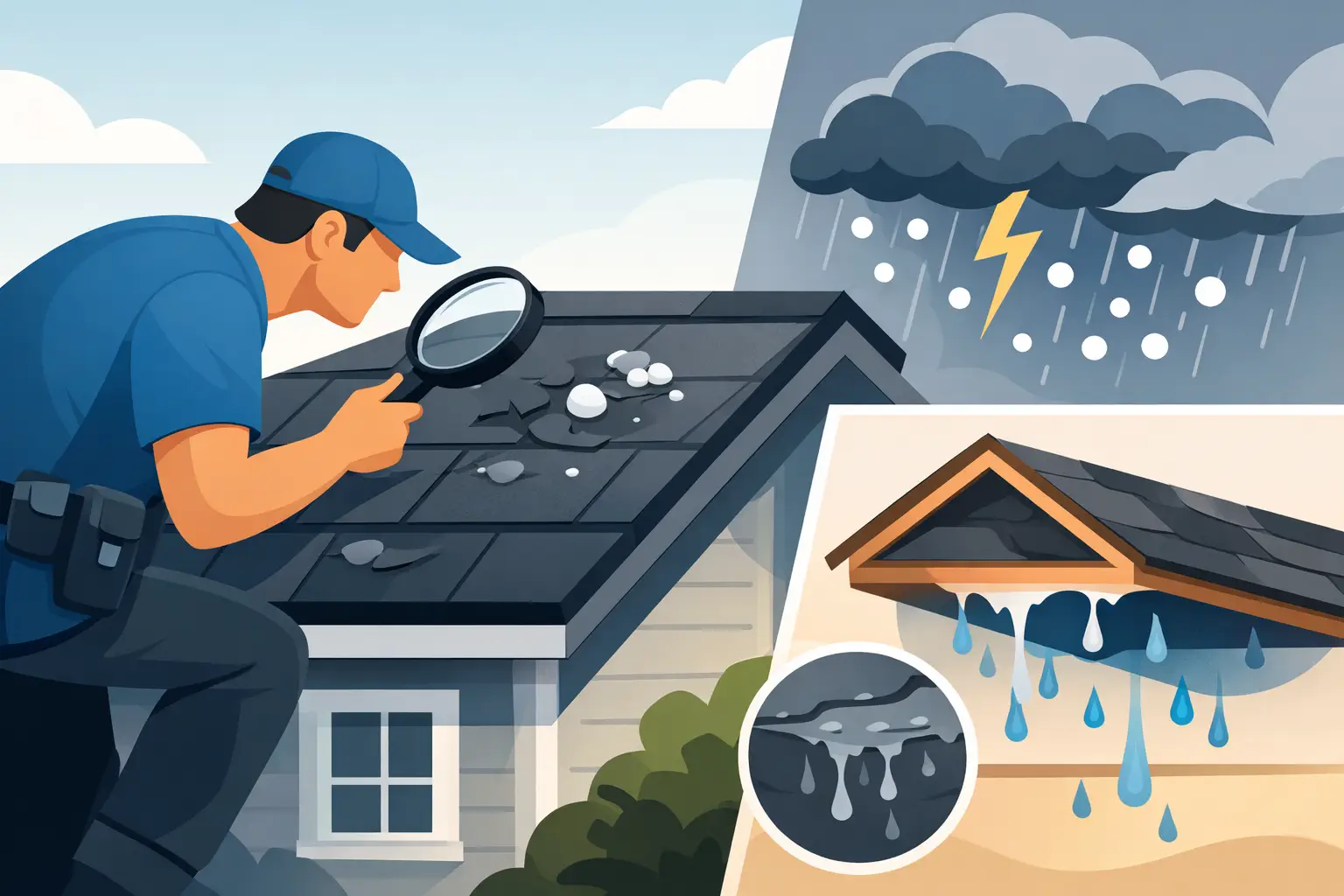
A hailstorm can leave a roof damaged even when there is no water dripping through the ceiling. That is what makes storm damage easy to miss and costly to delay. Knowing how to spot roof hail damage helps property owners identify concerns early, document the storm’s effects, and make sound repair decisions before small impact points turn into leaks, rot, or premature roof failure.
Across Nevada and Northern California, hail may arrive with high wind, heavy rain, intense sun exposure, or rapid temperature changes. Those conditions can compound roof damage. A prompt, careful inspection protects the building envelope and gives you a clearer picture of what needs attention.
Start Safely From the Ground
Do not climb onto a roof immediately after a storm. Wet surfaces, loose granules, hail debris, and wind damage create real fall hazards. Begin with a walk around the property from the ground, using binoculars if needed, and look for changes that were not present before the storm.
Check gutters, downspouts, roof valleys, vents, skylights, flashing, and the areas where roof planes meet. Hail often leaves the most visible clues on exposed metal components, even when the roof covering itself is harder to evaluate.
Look for dented gutters, downspouts, metal fascia, ridge vents, chimney caps, or flashing. These marks do not automatically mean the roof has functional damage, but they confirm that hail hit the property with enough force to warrant a closer inspection. Damage to window screens, siding, fences, air-conditioning equipment, and vehicles can provide useful context as well.
Take clear, date-stamped photos of all visible impacts. Photograph wide views that establish the location, then close-up images that show the detail. If possible, note the date and approximate duration of the storm, along with the size of any hail you observed.
How to Spot Roof Hail Damage by Roof Type
Hail does not affect every roofing system the same way. The roof’s age, material, slope, condition, and prior sun exposure all influence the result. A small hailstone may leave little more than cosmetic marks on one roof while causing meaningful damage to another that is older or already weathered.
Asphalt shingle roofs
On asphalt shingles, hail damage often appears as a dark, round, or irregular impact spot where protective granules have been knocked away. These spots can look like small bruises. The shingle may feel soft or slightly spongy at the impact point because the underlying asphalt has been fractured.
Granule loss is a concern because granules protect the asphalt layer from UV exposure. Once that protective surface is compromised, the shingle can age faster under intense sun and become more vulnerable to cracking. Look for excessive loose granules in gutters or at downspout exits, especially after a storm.
Not every missing granule is hail damage. Normal aging, foot traffic, manufacturing variation, and wind can also cause granule loss. The key distinction is a pattern of fresh, concentrated impact marks across multiple roof areas. A qualified roofer can determine whether the damage is consistent with hail rather than ordinary wear.
Metal roofs
Metal roofing is durable and can withstand demanding weather, but it is not immune to hail. Look for dents or dimples in standing seam panels, corrugated metal, metal shingles, ridge caps, and flashing. Bright sunlight at an angle may make shallow dents easier to see.
Some hail dents are primarily cosmetic and may not affect the roof’s ability to shed water. Others can be more serious, particularly if impacts damage seams, fasteners, protective coatings, penetrations, or flashing details. A dent near a panel seam or around a vent is more concerning than a shallow mark in the middle of an otherwise intact panel.
If the coating has cracked or been removed, the exposed area can be more susceptible to corrosion over time. That matters in high-elevation areas and locations where snow, moisture, and freeze-thaw cycles place additional stress on the system.
Flat and low-slope commercial roofs
Flat and low-slope roofs require a different inspection approach. On single-ply membrane, modified bitumen, built-up roofing, or coated roof systems, hail can create punctures, splits, cracks, fractured seams, or depressions that hold water.
From a safe access point, look for new ponding water, loose edge metal, displaced gravel, torn membrane, damaged drain components, or impact marks around rooftop equipment. Examine the area around HVAC curbs, pipes, skylights, and drains closely. These details are common leak points after storms because they rely on flashing and sealant transitions to remain watertight.
A roof coating can help extend service life and improve UV resistance, but it should still be checked after a significant hail event. Impact damage may be subtle at first, and a small break in the coating can allow moisture to reach the underlying roof assembly.
Check the Interior for Early Warning Signs
Roof hail damage is not always visible from outside, especially on large commercial properties or steep residential roofs. Inside the building, inspect the attic, upper-floor ceilings, walls near rooflines, and mechanical rooms after the storm.
Watch for fresh water stains, damp insulation, musty odors, bubbling paint, peeling finishes, or moisture around skylights and vents. On a commercial building, check for active drips above offices, inventory, electrical areas, and equipment rooms. Even a minor leak deserves attention because trapped moisture can damage insulation, decking, framing, and interior finishes long before it becomes a major visible problem.
Keep in mind that the absence of an interior leak does not prove the roof is undamaged. Hail impacts can weaken materials without creating an immediate opening for water. The next heavy rain, snowmelt event, or freeze-thaw cycle may reveal the problem.
Separate Hail Damage From Normal Roof Wear
A roof near the end of its service life may already have curling shingles, brittle sealant, faded coatings, open seams, or general granule loss. Those are maintenance concerns, but they are not necessarily storm-related. Hail damage tends to have a more random, impact-driven pattern, often accompanied by similar marks on nearby metal and exterior surfaces.
Wind damage can also occur during the same storm. Lifted shingle tabs, missing shingles, displaced flashing, and loose edge metal point more directly to wind. Heavy rain may expose drainage problems or existing weak points. A proper inspection should account for all of these conditions rather than treating every post-storm issue as hail damage.
This distinction matters for repair planning and insurance documentation. It also prevents property owners from paying for work that does not address the actual source of the problem.
What to Do After You Find Possible Damage
If you see signs of impact, avoid temporary fixes that could worsen the issue. Do not pressure wash the roof, scrape off loose material, apply sealant over questionable areas, or walk across brittle shingles or wet membranes. These actions can remove evidence, create new damage, and complicate an insurance claim.
Instead, protect the property from active water intrusion where it is safe to do so, such as moving contents away from a leak or placing a container below a drip. Then arrange a professional roof inspection. An experienced contractor can inspect the covering, flashings, penetrations, drainage components, attic or deck condition, and related exterior elements to determine whether repair, restoration, or replacement is the right solution.
For insurance purposes, keep storm photos, inspection findings, receipts for emergency mitigation, and records of any communication related to the event. File claims promptly when applicable, but do not assume an adjuster’s initial visit is the final word on roof condition. A detailed contractor assessment can help identify damage that is difficult to see from the ground or that requires roofing-specific expertise.
When a Professional Inspection Is Worth It
A professional inspection is strongly recommended after large hail, especially if you see exterior dents, missing shingle granules, damaged vents, active leaks, or impact marks on a metal or low-slope roof. It is also a smart investment for older roofs, properties with skylights, and commercial facilities where a small roof failure can interrupt operations or damage valuable assets.
Mountain Valley Roofing evaluates residential and commercial roofing systems with the region’s sun, snow, wind, and temperature swings in mind. The goal is not to recommend more work than necessary. It is to identify the condition of the roof, stop water intrusion, and provide a durable path forward that protects the property and controls long-term costs.
A roof does not need to be leaking to need attention. After hail, a timely inspection gives you the information needed to protect the system while repairs are still manageable.