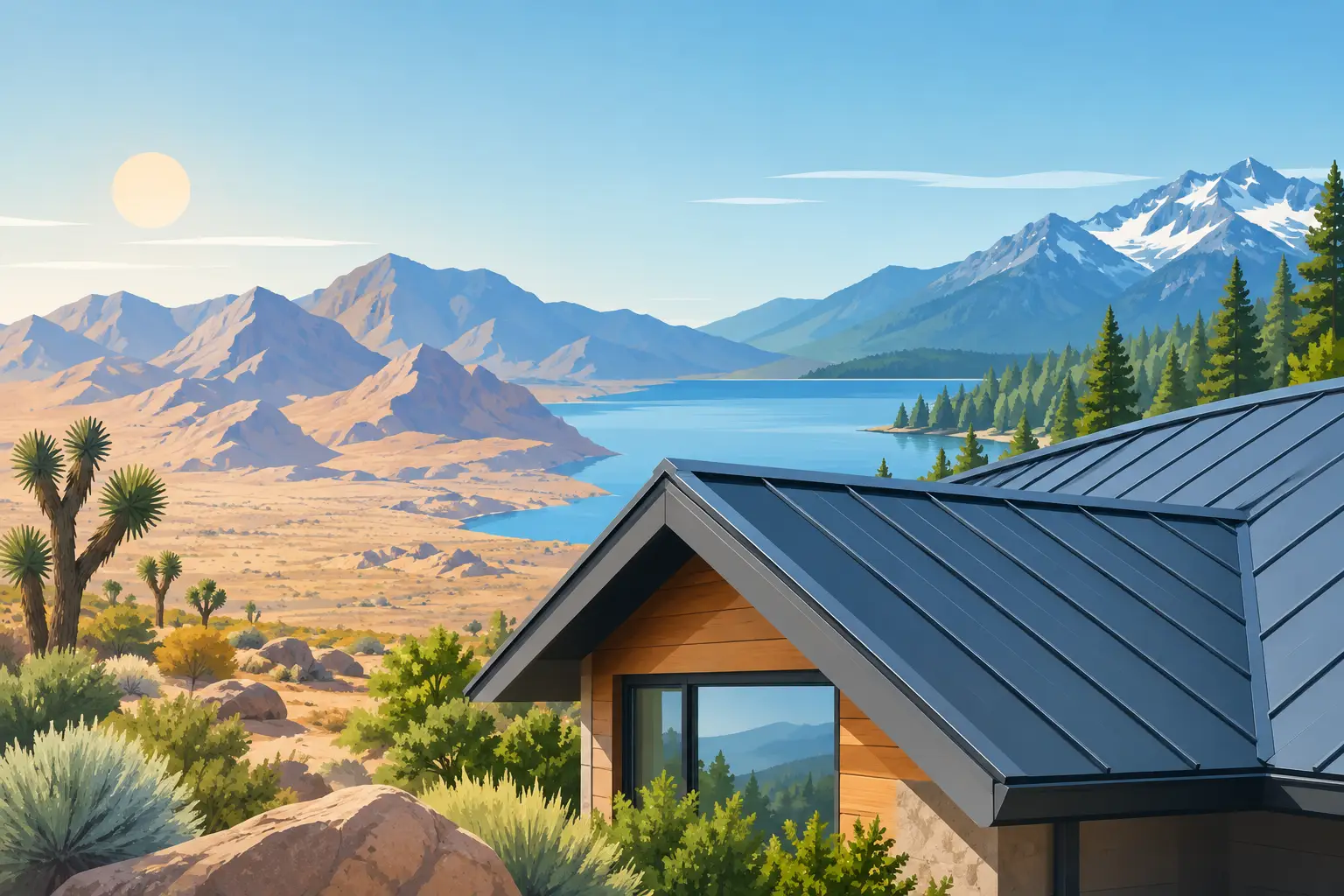
A roof in Nevada or Northern California has to do more than look good from the curb. It has to handle punishing UV exposure, high winds, heavy rain, snow loads, and sharp temperature changes without becoming a source of leaks or repeated repair bills. Metal roofing is a strong option for property owners who want long-term protection, energy efficiency, and dependable performance in demanding conditions.
The right system is not simply a matter of choosing a panel color. Roof slope, building use, local weather exposure, insulation, drainage, and installation details all affect whether a metal roof delivers the value you expect. A properly designed and installed metal roof can last for decades. A poorly matched system or rushed installation can create problems that are avoidable from the start.
Why metal roofing performs in demanding climates
Metal roofing is built for weather resistance. Quality panels shed water quickly, resist wind-driven rain, and do not absorb moisture the way some roofing materials can. This makes metal especially valuable for homes, commercial facilities, and outbuildings exposed to seasonal storms or snowmelt.
Sun exposure is another major consideration across the region. Many metal roof finishes are highly reflective, helping reduce heat gain at the roof surface. A lighter-color or cool-roof-rated finish can lower cooling demand during hot months, particularly when paired with proper attic ventilation or insulation. Energy savings vary by building design and existing insulation, but reducing rooftop heat absorption is a practical advantage in high-sun areas.
Metal also performs well through temperature swings. Panels expand and contract as temperatures change, so the roofing system must be designed to accommodate movement. Standing seam panels use concealed clips that allow this movement while maintaining weather protection. That detail matters. A roof is only as reliable as the fastening, flashing, underlayment, and transition work supporting it.
Choosing the right metal roofing system
Not every metal roof is intended for the same application. The best choice depends on the property, its slope, its exposure, and the owner’s goals for appearance, maintenance, and service life.
Standing seam metal roofing
Standing seam is one of the most durable and polished metal roofing options for residential and commercial properties with suitable slopes. The fasteners are concealed beneath raised seams, limiting the number of exposed penetrations across the roof field. This design provides a clean appearance and reduces a common maintenance point found on exposed-fastener systems.
Standing seam is often a worthwhile investment for property owners focused on longevity and premium weather performance. It can cost more upfront than simpler panel systems, but its concealed fastening and ability to manage thermal movement make it a strong fit for many long-term roof replacements.
Exposed-fastener metal panels
Exposed-fastener panels are commonly used on garages, workshops, agricultural buildings, storage facilities, and certain commercial structures. They can be cost-effective and durable when installed correctly. However, the screws and washers remain visible and require periodic inspection because fasteners can loosen over time or gaskets can wear under sun exposure.
This does not make exposed-fastener metal a poor choice. It makes maintenance more important. For a building where budget and utility are the primary concerns, it can provide reliable protection at a lower initial cost. For a highly visible home or a building where minimal long-term maintenance is the priority, standing seam may be the better fit.
Metal shingles, tiles, and stone-coated profiles
Property owners who want the durability of metal but prefer a more traditional appearance can consider metal shingles, metal tile profiles, or stone-coated steel. These systems can complement homes designed around shingle, shake, or tile aesthetics while offering improved resistance to fire, wind, and impact compared with many conventional materials.
The trade-off is that these systems have more individual components and installation details than large panel systems. Contractor experience is essential, particularly around valleys, penetrations, walls, skylights, and roof-to-roof transitions.
Installation details determine roof performance
A metal roof panel does not stop leaks by itself. Weather protection comes from the complete roofing assembly. That includes deck condition, underlayment, panel layout, flashings, sealants, fasteners, ventilation, and drainage.
Before a replacement, the roof deck should be inspected for moisture damage, dry rot, and weak areas. Covering deteriorated decking with new metal only hides a structural problem until it becomes more expensive to repair. Damaged fascia, trim, or framing should also be addressed before the new roofing system is installed.
Flashing deserves special attention. Chimneys, vent pipes, skylights, valleys, wall intersections, and changes in roof slope are all areas where water concentrates. These details need to be fabricated and installed for the specific roof, not treated as an afterthought. Properly integrated flashing protects the areas most likely to fail when storms arrive.
Metal compatibility is equally important. Dissimilar metals can react when moisture is present, leading to corrosion. Fasteners, flashings, gutters, and accessories should be selected to work together. In snow country, snow guards may be necessary to manage sliding snow and protect entryways, walkways, equipment, and landscaping below.
Metal roofing for commercial buildings
Metal can be an excellent option for commercial properties, especially on sloped roofs, canopies, equipment shelters, and retrofit projects. It offers a professional appearance, strong wind performance, and a long service life when the system is properly engineered for the building.
For low-slope or flat commercial roofs, metal is not always the best primary roof covering. Single-ply membranes, modified bitumen, or restoration coatings may provide a more practical solution depending on drainage, penetrations, and the condition of the existing roof. In some cases, metal panels are part of a broader exterior upgrade while the low-slope roof receives a coating or membrane system designed for that application.
Facility managers should look beyond installation cost alone. The real comparison includes expected service life, maintenance requirements, energy performance, business disruption, and the consequences of a leak. A roofing contractor should evaluate the entire building envelope and recommend the system that makes operational and financial sense.
Maintenance protects the investment
Metal roofs are low maintenance, not maintenance-free. A scheduled inspection helps identify minor issues before they turn into interior damage. This is especially useful after wind events, hail, heavy snow, or periods of intense rain.
During an inspection, a qualified roofing professional should check panel condition, seams, fasteners, flashing, sealant joints, roof penetrations, gutters, and drainage paths. Debris should be removed from valleys and gutters so water can move off the roof as intended. Tree branches rubbing against panels should be trimmed back to prevent finish damage and debris buildup.
For exposed-fastener systems, fastener condition is a priority. For standing seam systems, inspections should focus on seams, clips, flashings, and areas around accessories. Any scratched or damaged finish should be evaluated promptly to prevent corrosion from gaining a foothold.
When metal roofing is worth the investment
Metal roofing tends to make the most sense when a property owner plans to hold the building for the long term, wants stronger performance in severe weather, or needs to improve energy efficiency and curb appeal at the same time. It is also a practical choice for properties in wildfire-prone areas when paired with a complete fire-conscious roofing and exterior strategy.
It may not be the right answer for every roof. Complex rooflines, low slopes, existing structural concerns, and limited budgets can change the recommendation. That is why a thorough inspection comes before product selection. The goal is not to sell the most expensive roof. It is to install the system that will protect the property reliably for years to come.
Mountain Valley Roofing helps property owners evaluate roofing conditions, repair underlying issues, and select weather-resistant systems suited to Nevada and Northern California. A careful assessment now can prevent the kind of roof problem that disrupts a home, facility, or business when the weather turns.