A roof rarely fails without giving property owners a warning. The top signs of roof aging often begin as small changes in appearance or performance, then become leaks, interior damage, and costly disruption when severe weather arrives. In Nevada and Northern California, intense UV exposure, high winds, snow loads, freeze-thaw cycles, and sudden temperature swings can speed up that process.
For homeowners, a timely inspection can protect the house, insulation, and interior finishes. For commercial property owners and facility managers, it can prevent tenant complaints, equipment damage, business interruptions, and premature replacement. The key is knowing what normal weathering looks like and when it has crossed into a problem that needs professional attention.
Top Signs of Roof Aging to Watch For
Curling, cracking, or missing shingles
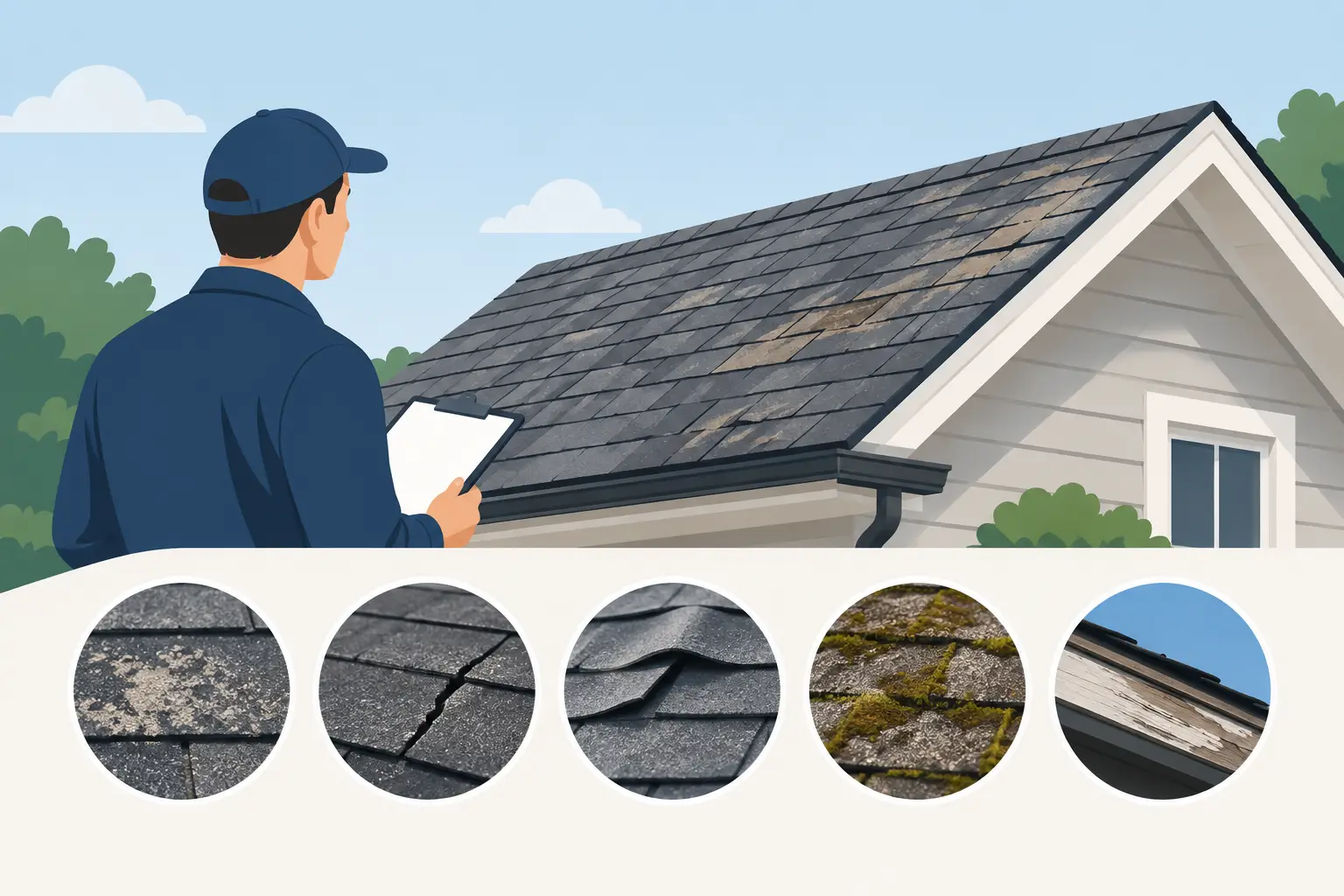
Shingles become less flexible as they age. On a residential roof, you may see corners curling upward, edges lifting, cracks across the surface, or shingles that have blown off entirely. These conditions expose the layers beneath the shingles to water and wind.
A few damaged shingles after a storm may be a targeted repair. Widespread curling or cracking, however, usually indicates that the roof system is reaching the end of its serviceable life. Replacing isolated shingles on a heavily aged roof may stop a short-term leak, but it will not restore the durability of the surrounding material.
Granules collecting in gutters or at downspouts
Asphalt shingles are coated with protective granules that help shield the roof from UV radiation and weather. A small amount of granule loss is normal, particularly after installation or heavy rain. Excessive granules in gutters, splash blocks, or at the base of downspouts are different.
When the darker asphalt beneath the granules becomes visible, the shingles lose protection against Nevada’s intense sun. They can dry out faster, become brittle, and absorb more heat. This is one of the clearest signs that a shingle roof should be evaluated before the next major weather event.
Bald spots, blisters, and surface deterioration
Not every aging roof is covered in shingles. Low-slope commercial roofs, modified bitumen systems, and membrane roofs can show wear through blisters, surface cracking, open seams, punctures, or areas where the protective coating has worn thin. Ponding water can make these issues worse by stressing seams and allowing moisture to find a path below the surface.
On a flat or low-slope roof, even a small defect can affect a large area of insulation or decking if it goes unnoticed. A roof coating or restoration system may be a cost-effective option when the existing roof is structurally sound and moisture has not saturated the underlying materials. If there is extensive wet insulation, membrane failure, or deteriorated decking, replacement may be the more dependable long-term solution.
Damaged flashing and failing sealant
Many leaks begin at roof transitions, not in the center of the field roof. Flashing around chimneys, skylights, wall intersections, vents, HVAC curbs, and plumbing penetrations handles movement and directs water away from vulnerable areas. Over time, metal flashing can corrode or pull loose, while sealants can shrink, crack, and separate.
These details deserve attention because they are exposed to repeated expansion and contraction. A roof may still look sound from the ground while aging sealant or loose flashing allows water into the building during wind-driven rain or snowmelt. Prompt repairs at these points can often extend the useful life of an otherwise serviceable roof.
Stains, damp spots, or peeling paint indoors
A water stain on a ceiling is not always directly below the leak. Water can travel along framing, electrical lines, insulation, or a roof deck before it becomes visible inside. Damp drywall, peeling paint, a musty odor, or discoloration around skylights may all signal a roofing or building-envelope issue.
Interior evidence should never be ignored simply because the stain dries after the weather improves. Intermittent leaks still introduce moisture into materials where mold, rot, and structural deterioration can develop. For commercial facilities, inspect above ceiling tiles and around rooftop equipment as well, especially after storms.
Sagging areas and soft roof decking
A visible sag, a low area that holds water, or a spongy feel underfoot is a more serious warning. It can indicate compromised decking, long-term moisture exposure, inadequate drainage, or structural movement. On a residential roof, do not walk on a suspected weak area. On a commercial roof, restrict access and schedule an evaluation.
This is not a condition to solve with a surface patch alone. The damaged materials beneath the roofing system need to be identified and repaired. Dry rot repair and carpentry may be necessary before a new roofing assembly can provide reliable protection.
Moss, algae, and debris that hold moisture
Moss and algae are more common in shaded or moisture-prone areas, especially in parts of Northern California. While algae may be primarily cosmetic at first, moss can retain moisture against shingles and lift their edges as it grows. Leaves, pine needles, and branches can create the same problem by trapping water and blocking drains or gutters.
Cleaning must be done carefully. Aggressive pressure washing can remove shingle granules, damage membranes, and shorten roof life. A professional can recommend a roof-safe cleaning approach while checking whether organic growth is masking more significant wear.
Rising cooling costs or uneven indoor temperatures
Roof aging can affect more than waterproofing. Damaged materials, degraded coatings, insufficient insulation, and unsealed penetrations can increase heat gain during hot weather and heat loss during colder months. A building that is suddenly harder to cool or has uncomfortable upper-floor rooms may have an issue at the roof level.
This is especially relevant for properties exposed to strong summer sun. Reflective cool roof systems and properly selected coatings can reduce surface temperatures and improve energy performance, but the existing roof must first be assessed for moisture, adhesion, and remaining service life.
Why Roof Age Is Only Part of the Picture
A roof’s installation date matters, but age alone does not determine whether it needs replacement. Material type, installation quality, ventilation, maintenance history, drainage, weather exposure, and past repairs all affect how long a roof performs. Two roofs installed in the same year can be in very different condition.
A south-facing shingle roof exposed to relentless sun may age faster than a shaded roof. A commercial membrane roof with clear drains and regular maintenance may outlast a neglected system of the same age. That is why a condition-based inspection is more useful than relying solely on a manufacturer lifespan estimate.
When to Repair, Restore, or Replace
The right solution depends on the extent of the damage and the condition of the full roofing system. Repairs make sense when problems are isolated, the roof remains dry below the surface, and the surrounding materials are still in good condition. Addressing damaged flashing, a few missing shingles, a puncture, or an open seam early can prevent a larger expense.
Restoration may be appropriate for qualifying low-slope roofs with an intact substrate and manageable surface wear. Coatings can renew UV protection, seal minor vulnerabilities, and extend roof life without the cost and disruption of a full tear-off. They are not a shortcut for roofs with widespread moisture damage or failing structure.
Replacement becomes the practical choice when deterioration is widespread, repairs are recurring, leaks have saturated insulation or decking, or the roof can no longer provide dependable weather protection. A planned replacement gives owners the opportunity to improve drainage, insulation, ventilation, and energy efficiency rather than waiting for an emergency.
Make Inspections Part of Property Protection
A professional roof inspection is worthwhile after major wind, hail, or snow events, but seasonal maintenance should not depend on a storm. Commercial properties benefit from scheduled inspections that identify blocked drains, membrane wear, loose flashings, and rooftop equipment issues before they disrupt operations. Homeowners should inspect from the ground regularly and schedule a professional evaluation when they notice any of the warning signs above.
Mountain Valley Roofing helps property owners evaluate roof condition with practical recommendations based on the system, the climate, and the building’s long-term needs. The goal is not to recommend replacement by default. It is to identify the work that will protect the property and deliver the best value over time.
A roof that looks merely weathered may still have years of useful service left. A roof that looks acceptable from the ground may be one hard storm away from a leak. Acting when the first signs appear gives you more choices, more control over costs, and a better chance of keeping your property protected.