A roof can carry a surprising amount of snow – until it cannot. Wet, compacted snow is much heavier than fresh powder, and repeated storms can add load faster than homeowners or facility teams expect. Knowing how to remove roof snow safely helps protect the roof structure, prevent ice dams, and reduce the risk of leaks when temperatures begin to rise.
The goal is not to scrape every inch of snow from the roof. The goal is to reduce excessive weight and keep meltwater moving off the building without damaging shingles, metal panels, membranes, flashing, or gutters.
When Roof Snow Needs Attention
Not every snowfall requires snow removal. A light layer of dry snow is usually not a concern on a sound, well-maintained roof. The situation changes after several storms, during a warm-up cycle, or when snow becomes saturated with rain or melting ice.
Pay attention to visible warning signs. Doors or windows that suddenly stick, new cracks in interior drywall, sagging ceilings, unusual creaking, or persistent roof leaks can indicate that the building is under stress. On commercial properties, ponding water around drains, compressed insulation, ceiling stains, and snow buildup around rooftop equipment deserve prompt attention.
Ice dams are another reason to act. They form when heat escaping from the building melts roof snow, then the water refreezes near colder eaves. The ice blocks drainage, forcing meltwater beneath shingles or into roof transitions. Snow removal can reduce the supply of melting water, but it will not solve the underlying heat-loss or ventilation issue by itself.
How to Remove Roof Snow Safely From the Ground
For most homes and many low-slope buildings, the safest approach is to work from the ground with a roof rake. A roof rake has a long extension handle and a wide, nonmetal blade designed to pull snow down in controlled sections.
Start at the roof edge and pull snow straight down, working across small areas rather than trying to clear the entire roof at once. Stand well back from the falling snow path. Snow can slide off in dense, heavy sheets, especially from metal roofs and steeper slopes.
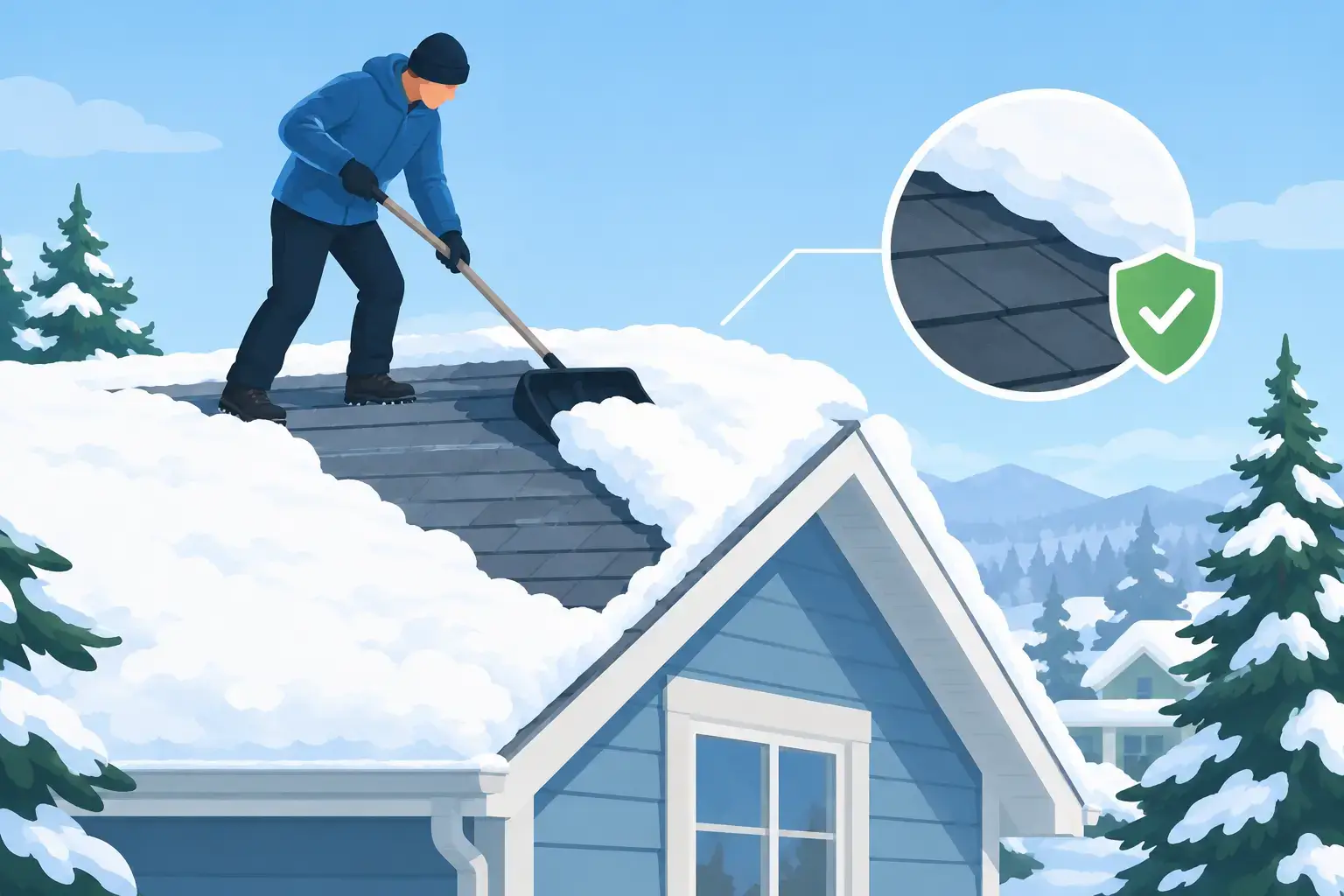
Leave a thin layer of snow behind. Trying to expose the roofing surface can tear shingles, scrape protective granules, puncture single-ply membranes, or damage coatings. A few inches of remaining snow is far less costly than a damaged roof system.
Work carefully around valleys, skylights, plumbing vents, solar equipment, gutters, and roof transitions. These areas are more vulnerable to damage and are often where water enters when flashing has been disturbed. Never strike, chop, or pry at ice with a shovel, hammer, axe, or sharp tool.
If you are clearing snow from a driveway, walkway, or parking area at the same time, do not pile it against the building. Stacked snow can hold moisture against siding, block drainage, and create a heavier meltwater problem at the foundation.
Why Climbing Onto a Snowy Roof Is a Poor Trade-Off
Walking on a snow-covered roof creates two immediate risks: a fall for the person on the roof and damage to the roof itself. Snow conceals skylights, vents, weak spots, changes in pitch, and icy surfaces. Even experienced property owners can lose footing quickly when conditions shift.
There is also a structural concern. Adding a person’s weight to an already overloaded roof may not be wise, particularly on older buildings, broad low-slope commercial roofs, patio covers, carports, or areas where drifting has created uneven load concentrations.
Avoid using a snowblower on a roof. Avoid pressure washing, salt, calcium chloride, and open-flame methods to melt snow or ice. Chemical deicers can stain or corrode metal, harm landscaping, and accelerate deterioration in certain roofing materials. Heat can damage membranes and create sudden water movement that finds its way into existing roof defects.
Handle Ice Dams Without Damaging the Roof
Ice dams can look like a surface problem, but their cause is often inside the attic or building envelope. Inadequate insulation, air leaks around light fixtures or attic hatches, poor ventilation, and heat loss near roof penetrations can all contribute to uneven melting.
The immediate priority is to remove loose snow above the eaves with a roof rake, while staying safely on the ground. This reduces the water feeding the dam. If water is already entering the building, protect interior finishes, move valuables away from the leak, and document visible damage for repair or insurance purposes.
Do not chip the ice away from shingles or metal edges. Ice removal can bend gutters, pull flashing loose, and strip the surface of roofing materials. A qualified roofing professional can evaluate the dam, manage the immediate moisture risk, and identify whether repairs, insulation improvements, ventilation corrections, or heat tape installation would provide a more lasting solution.
Snow Load Is Not the Same on Every Roof
A roof’s snow risk depends on more than total snowfall. Wet snow may weigh several times more than powder, and wind can drift snow into deep pockets along parapet walls, valleys, roof-mounted equipment, or transitions between roof elevations.
Low-slope commercial roofs require particular attention because snow may remain in place longer and meltwater has fewer paths to drain. Drains, scuppers, and gutters must stay clear enough to move water once temperatures rise. A blocked drain beneath a heavy snowpack can lead to ponding, leaks, and unnecessary stress on the roof deck.
Steep residential roofs may shed snow naturally, but that does not eliminate risk. Sliding snow can damage gutters, tear off snow guards, block exits, or fall onto vehicles and people below. Establish a clear drop zone, keep children and pets away from it, and avoid parking beneath roof edges during thaw conditions.
When to Call a Professional for Roof Snow Removal
Professional service is the right choice when snow is deep, packed, drifting unevenly, or difficult to reach safely from the ground. It is also the better decision when there are signs of structural movement, active leaks, a large ice dam, damaged gutters, or a roof surface that could be easily punctured.
Facility managers should call for help when rooftop drains, HVAC curbs, skylights, or parapet details are buried. These conditions require a careful plan, not a rushed crew with shovels. On flat and low-slope systems, workers need to know where seams, drains, weak areas, and rooftop equipment are located before snow removal begins.
A qualified contractor uses methods suited to the roof system and the snow load. That may include staged removal to avoid creating imbalance, protected walk paths, non-damaging tools, drain clearing, and a follow-up inspection for hidden storm damage. The cost of professional removal is often far lower than repairing a torn membrane, crushed gutter, interior water damage, or compromised roof deck.
Mountain Valley Roofing helps property owners across Nevada and Northern California address snow-related roofing risks with practical removal, inspection, repair, insulation, and heat tape solutions. Regional experience matters because mountain snow, wind-driven drifts, freeze-thaw cycles, and intense sun can all affect the roof differently.
Prevent the Next Snow Problem Before Winter
The best time to prepare for snow is before the forecast calls for it. Schedule a roof inspection to identify loose flashing, worn sealants, open seams, damaged shingles, clogged drains, and weak gutter connections. Small maintenance issues become much more expensive once snow and ice trap water on the roof.
For homes, attic insulation and air sealing can reduce uneven melting that leads to ice dams. For commercial buildings, preventive maintenance should include drain cleaning, inspection of membrane seams and penetrations, and confirmation that rooftop equipment curbs are properly sealed. Snow retention systems may also be appropriate on certain sloped metal roofs where uncontrolled sliding snow creates a hazard.
Snow removal should protect the roof, not become the source of its next repair. When conditions are questionable, keep people off the roof, reduce snow from the ground where possible, and bring in experienced help before a heavy load or hidden ice problem turns into water damage.