
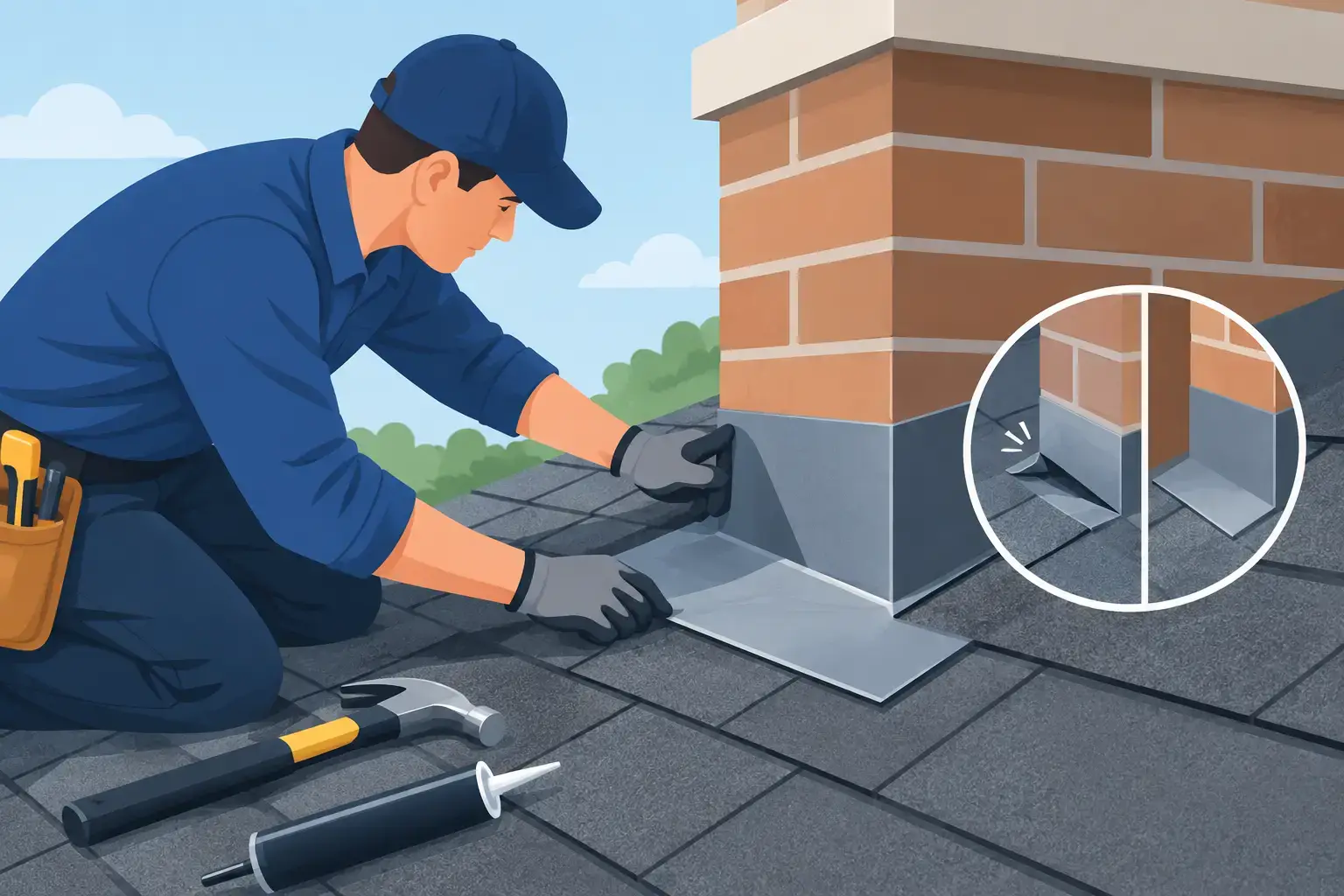
Loose flashing is one of those small roof problems that can turn into interior water damage without much warning. To fix loose roof flashing before it leaks, the repair must address more than the lifted metal itself. The fasteners, sealant, surrounding roofing material, and drainage path all need to be evaluated together.
Flashing protects the places where a roof changes direction or meets another surface. That includes chimneys, walls, skylights, vents, valleys, and pipe penetrations. When flashing pulls away, cracks, or loses its seal, wind-driven rain and melting snow can reach the roof deck, insulation, and framing below.
Why Roof Flashing Comes Loose
Roof flashing is built to handle weather, but Nevada and Northern California conditions can be demanding. Intense UV exposure dries and breaks down sealants. High winds can lift exposed edges. Snow, ice, and repeated freeze-thaw cycles can move materials gradually over time. A flashing issue may also result from aging fasteners, improperly installed components, or movement where dissimilar materials meet.
On a residential shingle roof, loose step flashing may appear along a sidewall or chimney. On a low-slope commercial roof, the concern may be loose counterflashing, an open termination bar, or failed sealant at a curb or penetration. The visible symptom may look minor, but the repair method depends on the roofing system underneath it.
A flashing problem is especially urgent when you see water stains on a ceiling, damp insulation, peeling paint near an exterior wall, or visible gaps around roof penetrations. By the time water appears indoors, moisture may already have traveled beyond the original entry point.
When You Can Fix Loose Roof Flashing Safely
A property owner may be able to make a short-term repair when the flashing is accessible from a stable ladder position, the roof is dry, and the issue is limited to a small section of exposed metal or sealant. This is not the time to work on a steep roof, walk on brittle shingles, or attempt a repair during wind, rain, snow, or extreme heat.
For a minor, accessible issue, start by clearing away leaves, dirt, and loose old sealant. You need a clean surface to see whether the flashing is still sound. Check for rust, bent metal, holes, cracked joints, and loose fasteners. If the metal is damaged or the roof material around it is deteriorated, sealing over the problem will not provide a lasting repair.
If a small flashing edge has lifted but the metal remains in good condition, it may be possible to re-secure it with roofing-compatible fasteners and apply a high-quality exterior roofing sealant at the exposed edge. Use materials designed for the specific roof system. A product that works around a metal vent may not be compatible with asphalt shingles, modified bitumen, TPO, PVC, or a roof coating system.
Avoid driving fasteners through a location that will create a new water path. Fasteners should be properly placed and sealed, not used as a shortcut to force damaged flashing flat. Excess sealant is not a substitute for correct flashing overlap, drainage, and attachment.
How Professionals Fix Loose Roof Flashing
A durable repair begins with finding out why the flashing loosened. Professional roofers inspect the entire transition, not only the section that looks open. Water can enter at one point and show up several feet away, particularly on low-slope roofs or beneath layered shingles.
Inspection of the roof assembly
The first step is checking the flashing, adjacent roofing material, fasteners, underlayment, and substrate. On commercial properties, the inspection also considers roof drains, scuppers, parapet walls, expansion joints, HVAC curbs, and other penetrations. Poor drainage can keep water against flashing and accelerate sealant failure.
For homes, a roofer may inspect valleys, chimney cricket areas, siding interfaces, skylights, pipe boots, and attic ventilation. If water has reached the deck, the repair may require removal of roofing materials to replace wet or rotted wood before new flashing is installed.
Removal and replacement when needed
Sometimes loose flashing can be reset and sealed. More often, long-term protection requires replacing the affected section. Step flashing, for example, must be integrated correctly with each shingle course. It cannot simply be face-sealed and expected to manage runoff for years.
Counterflashing around a chimney or wall may need to be reattached into a properly prepared joint. On single-ply and modified bitumen roofs, flashing membranes must be welded or adhered according to the system requirements. The details matter because transitions are where roofs are most likely to fail when installation is rushed.
Sealing and testing the repair
Once flashing is installed or secured, compatible sealants are used only where they belong. The repair should preserve the roof’s natural drainage path rather than trap water behind a bead of caulk. A qualified contractor can then check for open seams, lifted edges, or nearby weak points that could cause the next leak.
Repairs That Often Fail Too Soon
The most common failed repair is applying caulk over a visible gap without correcting the cause. Sealant has a role in roofing, but it is a maintenance item. Sun exposure and movement eventually cause it to crack or pull away. If flashing is loose because fasteners failed, the substrate is deteriorated, or the metal was incorrectly installed, new caulk alone will not solve the problem.
Another mistake is using incompatible materials. Some asphalt-based products can damage certain single-ply membranes. Some sealants do not adhere well to dusty, oxidized, wet, or oily surfaces. Mixing metals without considering corrosion can also shorten the life of the repair.
Property owners should also be cautious about covering flashing with roof cement or coating simply to stop an active leak. On a properly specified restoration project, coatings can extend roof life and improve UV resistance. But coating over failed flashing details without preparation can hide ongoing moisture damage and make future repairs more difficult.
When to Call a Roofing Contractor
Call for professional service if the flashing is near a chimney, skylight, wall, valley, HVAC unit, or other complex roof detail. The same applies if the roof is steep, the leak has reached the interior, there is visible rot, or the flashing has loosened across more than a small area.
Commercial property managers should schedule an inspection promptly when loose flashing appears around rooftop equipment or parapet walls. These areas are exposed to wind and ponding water, and a localized failure can affect insulation, operations, and tenant spaces below. Planned repair is usually far more cost-effective than emergency leak response and interior restoration.
For older roofs, repeated flashing repairs can also be a signal that the roofing system needs a broader maintenance plan, restoration, or replacement evaluation. The right answer depends on the roof’s age, remaining condition, drainage, and the type of system in place. A repair-first approach is worthwhile when the roof is otherwise sound. When multiple details are failing, a more comprehensive solution may protect the property better over time.
Protect Flashing With Routine Maintenance
The best way to reduce flashing failures is through regular roof inspections, especially after high winds, heavy snow, hail, or major temperature swings. Keep gutters, drains, and valleys clear so water does not back up at vulnerable transitions. Trim branches that scrape roof surfaces, and address loose shingles, cracked sealant, and damaged pipe boots before the next storm tests them.
For commercial roofs, documented maintenance helps facility teams budget for repairs before they become disruptions. For homeowners, an annual inspection can identify small problems while they are still straightforward to correct.
A loose piece of flashing may look like a quick fix, but its condition often tells a larger story about how water is moving across the roof. Mountain Valley Roofing can evaluate the detail, recommend the right repair for the roof system, and help protect your property from the damage that starts where roof components meet.