A single roof leak above production equipment, inventory, or electrical systems can disrupt far more than a maintenance schedule. For facility owners and managers, an industrial roof retrofit is often the practical middle ground between recurring repairs and a costly full replacement. The right retrofit restores protection where the existing roof still has usable life, while addressing the conditions that cause leaks, heat gain, and weather-related deterioration.
In Nevada and Northern California, industrial roofs face intense UV exposure, high summer temperatures, wind, snow loads in mountain areas, and wide temperature swings. Those conditions can dry out membranes, open seams, weaken flashings, and accelerate ponding-water damage. A retrofit should not be treated as a cosmetic coating job. It is a building-envelope decision that must begin with the roof’s current condition, drainage performance, and the needs of the operation below.
What an Industrial Roof Retrofit Actually Does
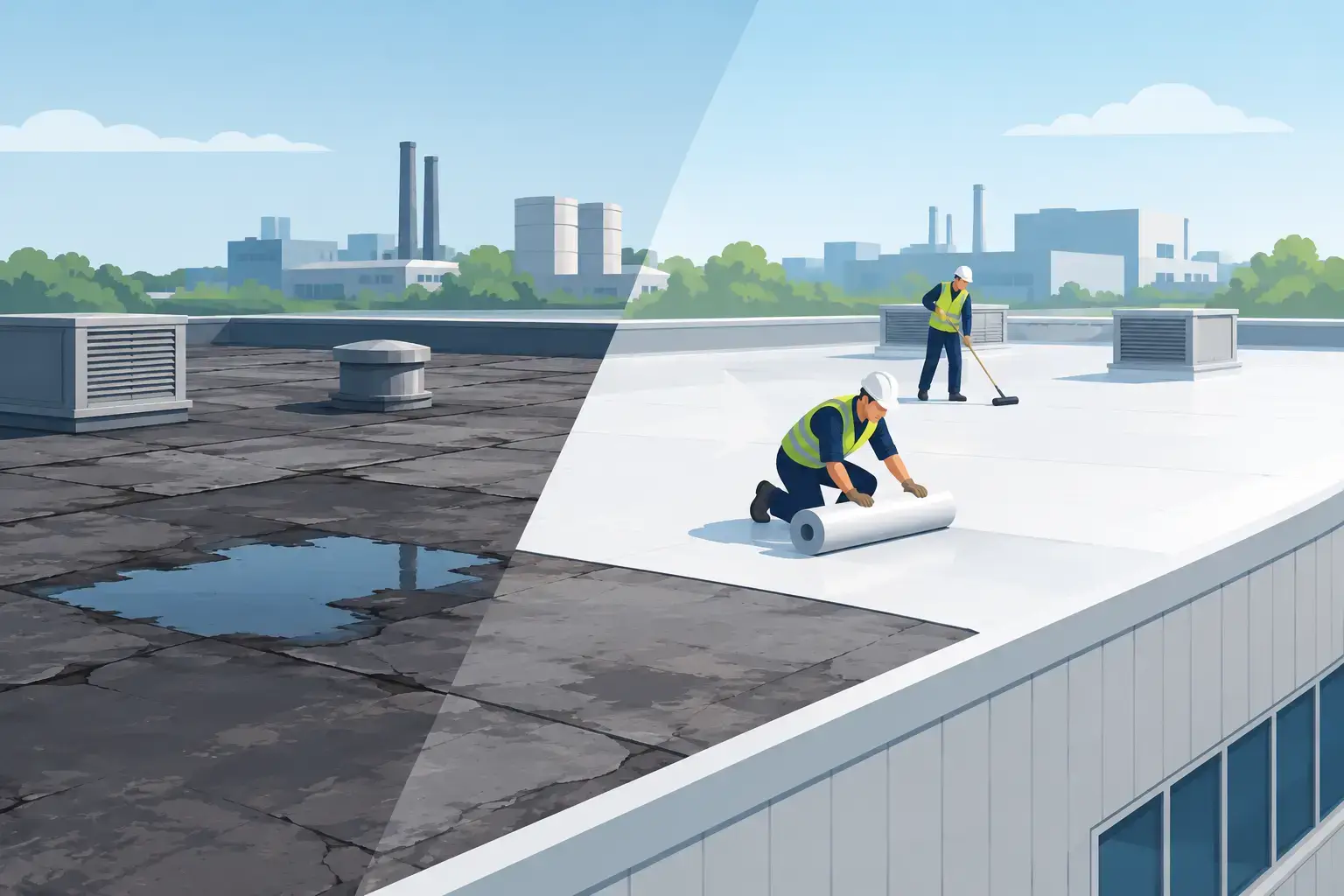
An industrial roof retrofit upgrades an existing roofing system without automatically removing every layer down to the deck. Depending on the roof and its condition, the work may include targeted repairs, replacement of failed flashing and penetrations, reinforcement of seams, installation of insulation, a new single-ply membrane, or a fluid-applied coating system.
The goal is to extend service life and improve performance at a lower cost and with less disruption than a full tear-off. That can be a strong value when the roof deck is sound, moisture has not spread through the assembly, and the existing system can support the selected retrofit approach.
Retrofit work is not a shortcut around necessary replacement. If saturated insulation, widespread membrane failure, structural deterioration, or multiple unstable roof layers are present, covering the problem can trap moisture and create larger expenses later. A thorough inspection is what separates a cost-effective restoration plan from a temporary patch.
Signs Your Facility May Need a Retrofit
Industrial roofs rarely fail all at once. Most show a pattern of smaller warning signs before a major leak or wind event exposes the full extent of the problem. Repeated repairs in the same areas, cracked or split membrane surfaces, loose seams, blistering, exposed fasteners, and deteriorated edge metal all deserve attention.
Inside the building, stained ceiling areas, wet insulation, unusual humidity, mold odors, and rising cooling costs can also point to roof-related issues. Water does not always enter directly above the visible stain. It can travel along decking, insulation, conduit, or structural members before appearing indoors, which is why professional leak investigation matters.
A roof that has reached the later part of its expected service life is another reason to evaluate retrofit options before an emergency occurs. Planned work gives owners more control over budgeting, material selection, scheduling, and protection of equipment or tenants. Emergency replacement after a major failure rarely offers the same flexibility.
Retrofit, Restoration, or Replacement?
The best option depends on the condition of the existing roof, not simply its age. A relatively young roof with isolated damage may only need repairs and a maintenance plan. A roof with an intact substrate but worn surface may be a good candidate for restoration with a commercial coating. A roof with widespread wet insulation or compromised decking may require full replacement.
Coating systems can provide a reflective, weather-resistant surface that helps reduce heat absorption and protects the roof from UV exposure. They are especially useful when the roof has been properly repaired, cleaned, dried, and prepared. However, a coating cannot correct poor drainage, replace failed structural components, or permanently bridge active movement at damaged seams and penetrations.
A membrane retrofit may make more sense for facilities that need a new, durable waterproofing layer over a suitable existing assembly. Single-ply systems can offer strong performance on many low-slope industrial roofs, but attachment method, wind exposure, rooftop equipment, drainage, and local code requirements must all be considered.
The Evaluation Comes Before the System
Choosing a retrofit system before understanding the roof is backwards. A qualified roofing contractor should inspect the membrane, flashings, curbs, drains, scuppers, edge conditions, and accessible underside of the roof deck. Where moisture is suspected, diagnostic testing can help determine whether insulation remains dry enough for a retrofit or must be removed.
Drainage deserves particular attention. Standing water can accelerate surface wear, increase loading, and reveal low areas that compromise long-term performance. In some cases, improving drainage may involve clearing and repairing drains, adding tapered insulation, correcting localized depressions, or modifying scuppers. The roofing material matters, but water management often determines whether that material reaches its intended lifespan.
Facility use also affects the recommendation. A warehouse with few penetrations has different needs than a manufacturing plant with exhaust units, process piping, skylights, and frequent rooftop traffic. Rooftop equipment creates vulnerable transition points. A durable retrofit plan accounts for those details with properly designed flashings, walk pads where appropriate, and clear maintenance access.
Energy Efficiency Is Part of the Return
On large industrial buildings, the roof receives hours of direct sun every day. A reflective cool-roof surface can reduce roof temperatures and limit heat transfer into the building, helping lower cooling demand during hot weather. The actual savings depend on insulation levels, HVAC performance, building use, roof color, local climate, and utility costs, so no contractor should promise a fixed number without evaluating the facility.
Adding insulation during a retrofit can further improve thermal performance. This may be particularly valuable when a building has insufficient insulation or when a reroofing project provides an opportunity to improve slope and drainage at the same time. The trade-off is added cost and, in some cases, the need to adjust curbs, edge details, and rooftop equipment elevations.
For many property owners, the value is broader than energy savings alone. Better temperature control can support employee comfort, protect stored materials, reduce strain on HVAC equipment, and help create a more predictable operating environment.
Plan the Work Around Operations
Industrial roofing work should protect the building as carefully as it protects the roof. Before work begins, establish how deliveries, production schedules, tenant access, ventilation equipment, and sensitive inventory will be handled. Dust, odors, noise, and temporary access restrictions may be manageable, but they should not be surprises.
A well-planned retrofit can often be completed in phases so critical operations remain active. The schedule should account for weather windows, staging areas, safety requirements, and daily cleanup. Clear communication between the roofing crew, facility manager, and on-site staff reduces downtime and makes it easier to respond if conditions uncovered during the project require a change in scope.
Documentation also matters. Keep inspection findings, moisture test results, repair records, material information, warranty details, and photographs of completed work. These records support future maintenance decisions and can be useful during property transactions, insurance discussions, or capital planning.
Protect the Investment After Installation
A retrofit extends roof life, but it does not eliminate the need for maintenance. Drains need to remain clear. Flashings around new or modified equipment should be inspected. Storms, high winds, snow accumulation, and trade work on the roof can all create damage that is less expensive to address early.
A practical maintenance program typically includes scheduled inspections, debris removal, minor repairs, and close attention to seams, penetrations, and drainage components. Facilities in high-wind, heavy-snow, or extreme-sun locations may benefit from more frequent reviews. The cost of routine inspections is small compared with water damage, business interruption, and premature replacement.
Mountain Valley Roofing approaches industrial roofing with the same priority that facility managers do: protect the building, control long-term costs, and keep operations moving. The right retrofit is not necessarily the least expensive option on day one. It is the system and scope that address the roof’s actual condition and provide dependable performance through the weather your facility faces.
Before the next leak forces an urgent decision, schedule a professional roof evaluation and build a plan around the remaining life of your existing system. A clear assessment now can preserve options, protect your operation, and turn a failing roof into a manageable capital investment.