
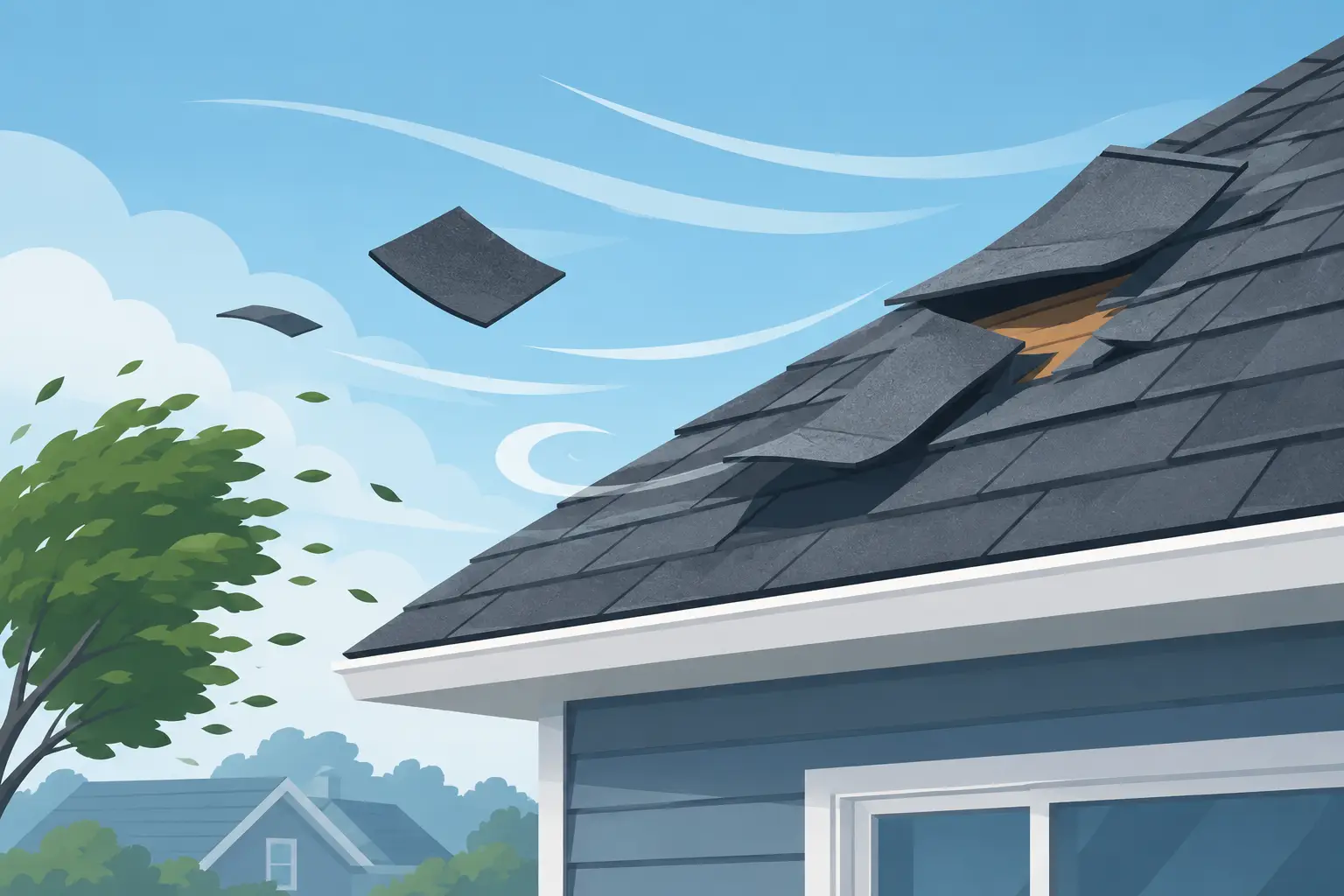
A roof can look perfectly normal from the driveway after a windstorm while a few loosened shingles are already creating a path for water. So, does wind lift shingles? Yes. Strong gusts can catch shingle edges, break their seal, pull fasteners loose, or tear shingles away entirely. The risk is greatest at roof edges, ridges, valleys, and around penetrations, where wind pressure is concentrated.
For homes and commercial properties in Nevada and Northern California, wind damage often arrives with sudden temperature changes, heavy rain, snow, or blowing debris. Addressing it early protects the roof deck, insulation, interior finishes, and the long-term value of the property.
How Wind Lifts Shingles
Shingles are designed to overlap and shed water. Once installed, their adhesive strips and fasteners work together to keep each course secured against normal weather conditions. Wind becomes a problem when it flows over the roof surface and creates uplift pressure beneath exposed shingle tabs or edges.
A strong gust does not need to remove an entire shingle to cause damage. It may lift the lower edge just enough to break the adhesive bond. After that seal is compromised, future wind events have an easier path under the shingle. The movement can bend, crease, crack, or eventually tear it loose.
Roof geometry matters. Wind tends to exert the most force along eaves, rakes, corners, hips, and ridges. A roof that performs well across its broad central field may still sustain localized damage at these high-pressure areas. Multi-level roofs, steep slopes, and roofs exposed to open terrain can face more severe uplift than sheltered structures.
Why Some Shingle Roofs Are More Vulnerable
Wind damage is not always a sign that the entire roof was poorly installed. Every roof has a practical wind limit, and extreme storms can damage even a well-built system. Still, several conditions increase the chance that wind will lift shingles.
Age and weathering weaken the system
As asphalt shingles age, they lose flexibility. Constant sun exposure dries the asphalt, temperature swings cause repeated expansion and contraction, and the adhesive strips may no longer create a dependable seal. Granule loss and surface cracking are additional signs that the shingles may be nearing the end of their useful service life.
This is especially relevant in high-desert and mountain climates, where intense UV exposure, freezing nights, snow load, and summer heat can all affect roofing materials over time. An older roof may withstand moderate wind for years, then show damage during a storm that a newer, properly installed system would handle more effectively.
Installation details make a major difference
Correct fastening is one of the most important defenses against wind uplift. Nails must be placed in the manufacturer-required nailing zone, driven flush rather than overdriven, and installed in the correct number for the roof’s slope and wind exposure. Fasteners placed too high may fail to secure the overlapping shingle course. Fasteners driven through the shingle can reduce holding power.
Starter shingles, underlayment, drip edge, ridge cap shingles, and flashing also play critical roles. If these components are missing, poorly secured, or deteriorated, wind can exploit the weakest point in the roof system. Quality workmanship is not just about how the roof looks when it is new. It determines how it performs years later under demanding weather.
Existing damage gives wind a starting point
A cracked shingle, loose ridge cap, failing sealant, or lifted flashing can become an entry point for wind. Tree limbs and windblown debris can also scar shingles or dislodge granules, reducing their ability to resist future storms. Small defects tend to grow because water and wind repeatedly work at the same vulnerable area.
Signs Wind Has Lifted Your Shingles
Some signs are visible from the ground, while others require a close professional inspection. Do not climb onto a roof after a storm, particularly if shingles may be loose or wet. A qualified roofer can inspect the system safely without causing additional damage.
Watch for these warning signs after high winds:
- Shingles that appear raised, curled, creased, cracked, or missing
- Bare spots where granules have worn away or accumulated in gutters and downspouts
- Loose ridge caps, damaged flashing, or metal edging that has pulled away
- Water stains on ceilings, damp insulation, or leaks around skylights and vents
- Pieces of shingles, nails, or roofing material found around the property
Not every lifted shingle is easy to see. A shingle can settle back into place after a gust while retaining a broken seal or hidden crease. That damage may not leak immediately, but it can reduce the roof’s wind resistance and shorten its service life.
What to Do After a Windstorm
Start with a safe visual check from the ground. Look at rooflines, gutters, ridge areas, and the landscaping around the building. Take clear photos of anything that appears damaged, including fallen debris or shingles found on the ground. Documentation can be useful if an insurance claim becomes necessary.
If water is entering the property, move valuables away from the affected area and contain drips where possible. Avoid puncturing ceilings or attempting temporary roof repairs without appropriate training and safety equipment. A small mistake around damaged shingles can turn a limited repair into a larger water intrusion issue.
Schedule a professional inspection promptly when shingles are missing, visibly lifted, or creased, or when the property has experienced unusually strong winds. A thorough inspection should assess more than the obvious damage. It should include roof edges, valleys, penetrations, flashing, attic ventilation, decking condition, and signs of moisture beneath the roofing materials.
Can Lifted Shingles Be Repaired?
Often, yes. If wind damage is limited to a small, defined area and the surrounding roof remains in good condition, a targeted repair can restore protection at a cost-effective price. The damaged shingles can be removed and replaced, compromised fasteners corrected, and adjacent components inspected for hidden problems.
Repair becomes less practical when shingles are brittle, widespread areas have lost adhesion, matching replacement shingles are unavailable, or the roof is near the end of its service life. In those cases, repeated spot repairs may only delay a larger failure. A replacement can provide a more dependable weather-resistant system and an opportunity to improve underlayment, ventilation, flashing, and edge protection.
For commercial buildings with steep-slope shingle sections, the same principle applies: repair isolated storm damage when the system has useful life remaining, but evaluate replacement when repairs become frequent or water risk affects operations. The right decision depends on the condition of the full roof assembly, not simply the number of visible shingles on the ground.
Preventing Future Wind Damage
No roof is completely immune to severe weather, but preventative maintenance reduces the chance that minor issues become major losses. Keep gutters clear so water can drain correctly, trim branches that could strike the roof, and have aging roofs inspected before storm season. Regular inspections are particularly valuable after winters with snow accumulation or summers with extended heat exposure.
When replacing a roof, select materials rated for the property’s wind exposure and ensure the entire assembly is installed to manufacturer specifications and applicable code requirements. Higher-quality shingles and enhanced fastening patterns may cost more upfront, but they can provide worthwhile protection in exposed locations. The best system balances wind resistance, UV performance, energy efficiency, budget, and expected service life.
A roof should not have to wait for a visible leak to earn attention. If wind has lifted shingles, prompt evaluation can prevent a loose tab or broken seal from becoming damaged decking, interior repairs, and unnecessary disruption. Mountain Valley Roofing helps property owners assess storm-related roofing issues and determine whether a focused repair, restoration strategy, or replacement offers the most durable path forward.