A roof failure at an occupied apartment property rarely stays contained above the ceiling. One active leak can disrupt tenants, damage finishes, create emergency costs, and put pressure on property staff to find a fix quickly. This apartment roof replacement case study follows a representative multifamily reroofing project in Nevada and Northern California conditions, where strong sun, wind, snow exposure, and major temperature swings all influenced the final plan.
The property owner did not need the lowest initial bid. They needed a weather-resistant roofing system, clear communication for residents, and a project plan that protected the building without creating unnecessary downtime.
The Property and the Roofing Problem
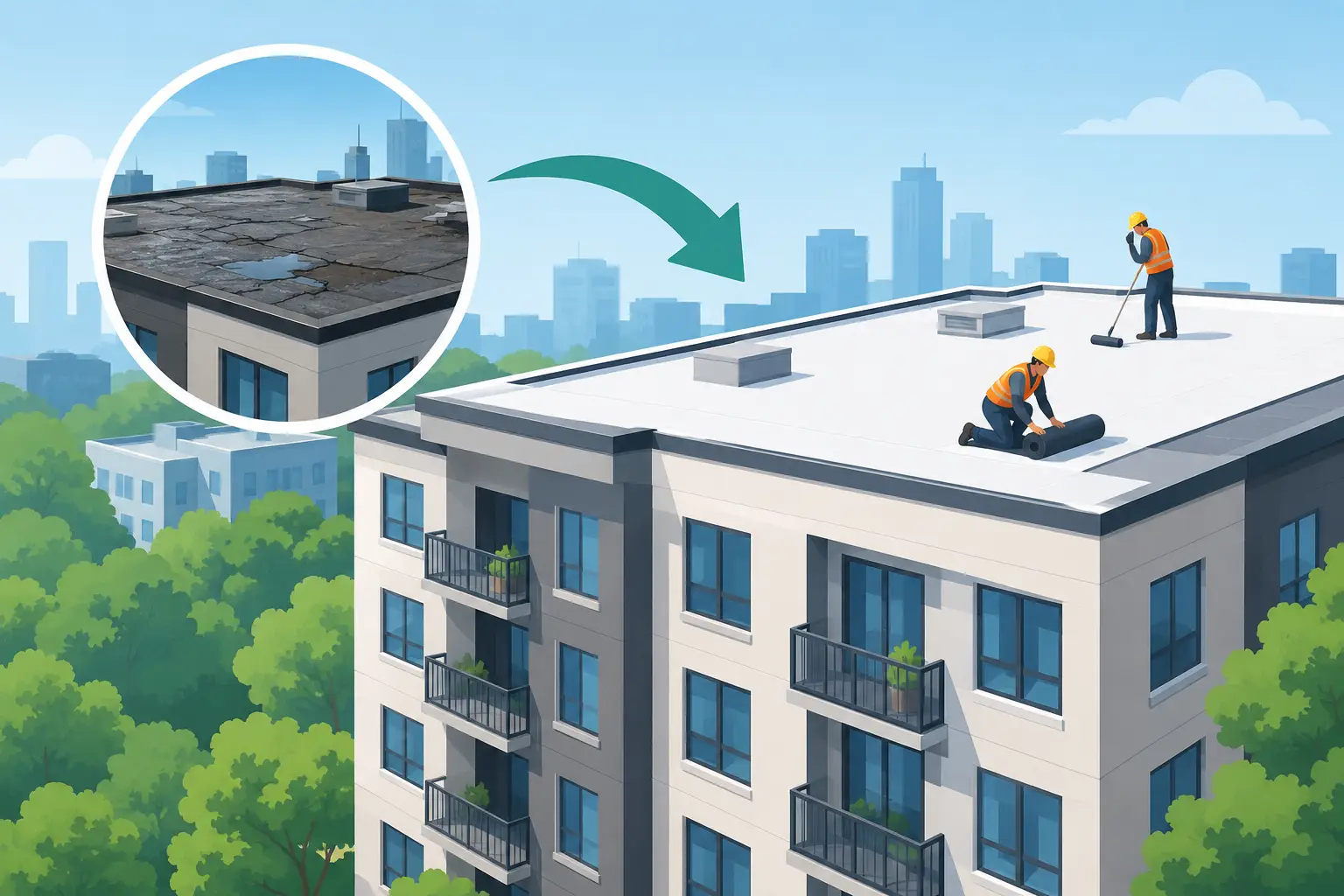
The project involved a three-building apartment community with aging low-slope roofs totaling roughly 32,000 square feet. The existing membrane had reached the end of its useful service life. Patches had accumulated around drains, rooftop equipment, and penetrations, while seams showed signs of separation from years of UV exposure and movement.
Maintenance staff had kept the roofs operational through repair work, but the pattern was changing. Leaks were becoming more frequent after storms, and water staining had appeared in several top-floor units. The owner also faced a familiar budgeting problem: continue spending on reactive repairs or invest in a replacement that could provide predictable protection for years ahead.
An inspection confirmed that replacement was the sound long-term decision. The membrane was worn across broad areas, not just at isolated details. Several sections of insulation had taken on moisture, reducing thermal performance and adding risk beneath the roofing surface. A coating-only restoration was considered, but it would not have addressed the wet materials or the number of failing details below.
That distinction mattered. Roof coatings can be an excellent, cost-effective restoration option when the existing roof remains dry and structurally sound. They are not a cure for widespread moisture intrusion or a failed roofing assembly. Choosing the right solution starts with an honest assessment of roof condition, not a one-size-fits-all recommendation.
Apartment Roof Replacement Case Study: The Plan
The owner selected a full tear-off and replacement approach, completed in phases to limit disruption across the occupied community. The proposed system included removal of the existing membrane and wet insulation, installation of new insulation where needed, a durable single-ply membrane, reinforced flashing at penetrations, and improved drainage detailing around rooftop equipment.
The system selection balanced several priorities. The roof needed strong UV resistance for high-elevation sun exposure, reliable waterproofing through seasonal weather, and reflective performance that could help reduce heat gain at the top floor. It also needed to be serviceable. Apartment properties have HVAC contractors, cable providers, maintenance teams, and other trades accessing the roof over time, so vulnerable details had to be protected from routine foot traffic.
Before work began, the roofing team documented existing conditions, mapped each building section, and coordinated with property management on access, parking, safety zones, and resident notices. This preconstruction work was not a formality. It was the difference between a controlled project and one that created confusion for tenants and staff.
Phasing Around Occupied Buildings
Each building was divided into manageable roof sections. Crews removed and replaced only the amount of roofing that could be dried in and made watertight within the working day. Weather forecasts were reviewed daily, and temporary protection materials were kept ready in case conditions changed.
Residents received advance notices explaining when work would occur near their building, what noise to expect, and where crews and materials would be staged. Property managers had a single point of contact for questions and schedule updates. That communication reduced complaints and allowed staff to address concerns before they became larger disruptions.
The project also required attention to debris control. Tear-off work can create loose material, dust, and noise, particularly around upper-floor units. Ground crews maintained clean work areas throughout the day, protected landscaping where needed, and used controlled debris handling rather than allowing waste to accumulate around the property.
What the Inspection Revealed After Tear-Off
The most valuable information often appears once the old roofing system comes off. In this project, the tear-off confirmed moisture-damaged insulation near several drains and around one mechanical curb. It also exposed deteriorated wood blocking at a small number of edge details.
Those conditions were documented and reviewed with the owner before corrective work moved forward. The needed repairs were limited, but addressing them at that stage prevented the new roof from being installed over weak or wet components. A roof system is only as dependable as the substrate and details beneath it.
This is where a low initial estimate can become expensive. A contractor that does not plan for realistic existing-condition findings may treat them as an afterthought. A qualified roofing contractor establishes clear procedures for documenting concealed damage, explaining options, and completing repairs correctly before new materials are installed.
Results That Matter to Property Owners
The replacement gave the owner more than a new membrane. It created a more manageable property asset.
First, the building had a continuous, properly detailed waterproofing system instead of a collection of aging repairs. New flashing at penetrations, walls, drains, and equipment curbs reduced common leak points. Drainage areas were corrected so water could move off the roof more effectively, helping reduce standing water and premature material wear.
Second, the reflective roof surface and renewed insulation improved the building envelope at the top floor. Actual energy savings vary with insulation levels, HVAC operation, shading, occupancy, and utility rates, but the owner now had a roof assembly better suited to limiting solar heat gain than the aged system it replaced.
Third, the owner gained a clearer maintenance path. The project closed with documentation of the installed system, repair locations, drainage areas, and roof-access considerations. Instead of waiting for the next interior leak, property staff could schedule regular inspections and address small issues before they affected tenants.
The work was completed in phases without requiring residents to relocate. There was noise and visible activity, as there will be on any tear-off project, but disciplined scheduling, daily cleanup, and proactive communication kept the impact controlled.
Lessons for Apartment Owners and Managers
A roof replacement decision should not begin only after repeated leaks have damaged interiors. Apartment roofs deserve routine inspections, especially after major wind, snow, or storm events. Warning signs such as recurring repairs, open seams, ponding water, blistering, deteriorated flashing, or higher cooling demands should be evaluated before they become an emergency.
It also pays to compare proposals beyond the total price. Ask what the contractor found during the inspection, whether moisture testing was performed, how the project will be phased, and how tenant communication will be handled. Confirm what is included for insulation, flashing, edge metal, drainage corrections, rooftop equipment details, and concealed damage procedures.
A replacement is not always the only answer. If the existing roof is dry, secure, and still has useful life, restoration or a commercial coating system may extend performance at a lower upfront cost. If the roof has widespread leaks, saturated materials, or failing details, replacement often delivers the better lifecycle value.
For multifamily properties, roof work is ultimately tenant protection work. A durable system, installed with careful attention to details and backed by a practical maintenance plan, helps protect apartments, budgets, and the reputation of the property itself. Mountain Valley Roofing approaches these projects with that long-term responsibility in mind: solve the immediate problem correctly, then help the roof stay dependable through the seasons ahead.