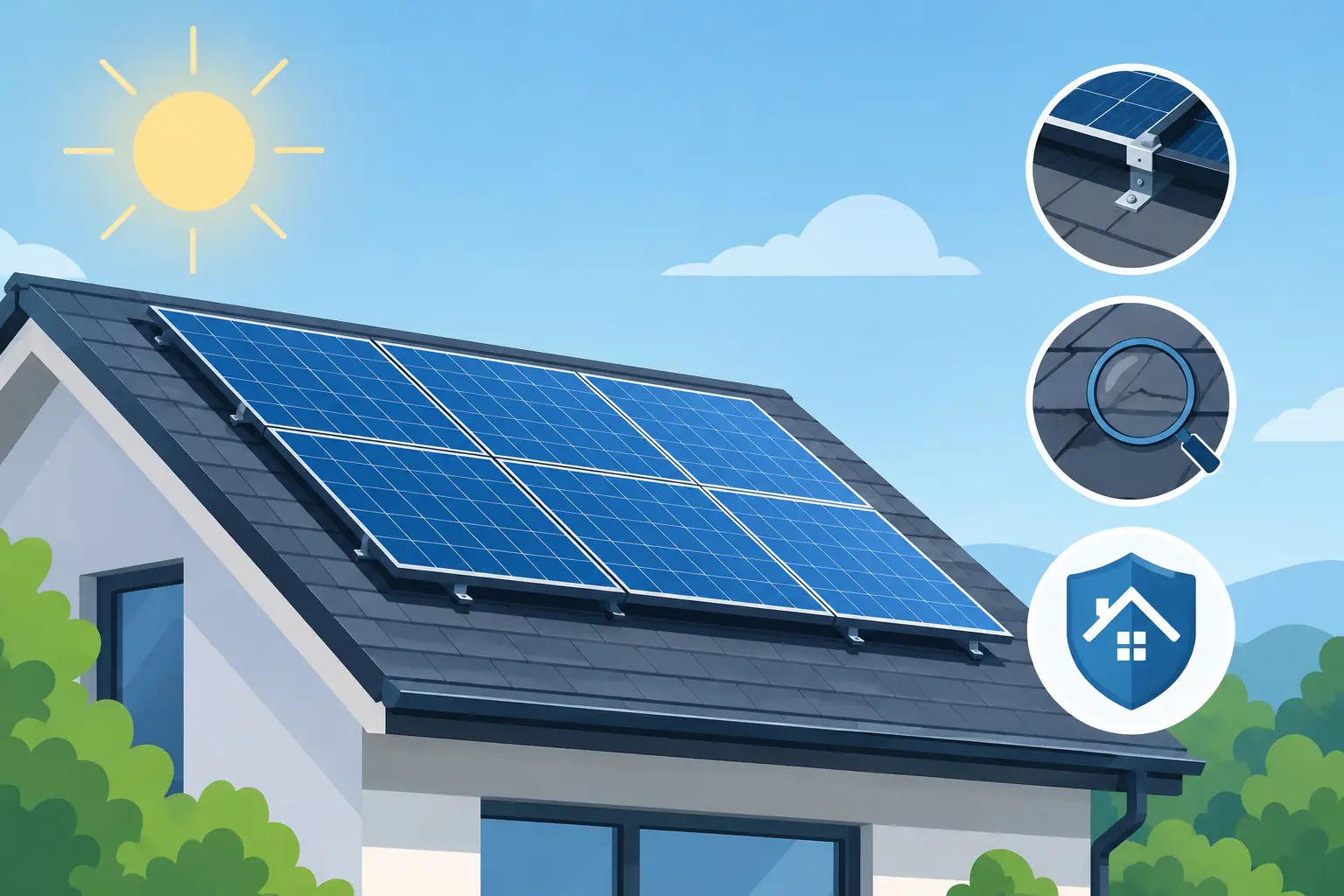
A solar array can reduce energy costs for a home or commercial property, but it also changes how the roof must perform. So, do solar panels damage roofs? Not when the roofing system is sound, the mounting method is appropriate, and the installation is handled with careful attention to waterproofing. Problems usually come from poor planning, rushed penetrations, or putting panels on a roof that was already nearing the end of its service life.
For property owners in Nevada and Northern California, this decision deserves extra care. Intense UV exposure, high winds, snow loads, freeze-thaw cycles, and major temperature swings can all test both the roofing system and the solar installation. A panel system should support long-term energy savings without creating leaks, maintenance obstacles, or an early roof replacement.
Do Solar Panels Damage Roofs When Installed Correctly?
A properly installed solar system should not damage a roof. Solar panels are mounted to a structural support system, not simply attached to shingles or roofing membrane. Qualified installers locate roof framing, use engineered mounting hardware, and seal penetrations with flashing designed to direct water away from vulnerable areas.
The concern is valid because most rooftop solar systems require attachment points. Every penetration through a roofing system must be properly detailed. If fasteners miss framing, flashing is incomplete, sealants fail, or incompatible materials are used, water can get beneath the roof covering. That can lead to staining, deck deterioration, insulation damage, mold, and expensive repairs.
The panels themselves are not usually the problem. In fact, they can shield covered portions of the roof from direct sunlight and hail exposure. The risk lies in the condition of the roof before installation and the quality of the work around the mounts, wiring, drainage paths, and roof access areas.
Start With the Roof, Not the Solar Proposal
Before approving a solar project, have the roof inspected by an experienced roofing contractor. This step is especially important for roofs that are more than 10 to 15 years old, have a history of leaks, show curling or missing shingles, or have worn membrane seams and flashing details.
Installing solar panels over an aging roof can create a costly timing problem. When the roof needs replacement later, the panels and racking may need to be removed and reinstalled before roofing work can begin. That adds labor, coordination, and potential delays to what could have been a straightforward replacement.
A roof inspection should identify whether the existing system has enough remaining service life to justify a solar installation. It should also assess the deck, drainage, penetrations, vents, skylights, edges, and areas with previous repairs. For a commercial low-slope roof, the inspection should include membrane condition, seam integrity, ponding water, flashing height, and the location of mechanical equipment.
If replacement or restoration is already needed, completing that work first is usually the better investment. A new, weather-resistant roof system gives the solar installer a dependable foundation and gives the property owner a clear record of roof condition before the array is installed.
Where Solar-Related Roof Problems Begin
Solar-related leaks rarely appear because panels are sitting on top of a roof. They usually trace back to installation details that were missed or poorly maintained.
Improperly sealed penetrations
Mounting brackets must be secured to structural framing or an approved structural system. Each attachment point needs compatible flashing and waterproofing that work with the specific roof material. A bead of sealant alone is not a long-term flashing solution, particularly under Nevada sun or repeated freeze-thaw conditions.
Incompatible roofing and mounting materials
Metal, asphalt shingles, tile, modified bitumen, TPO, PVC, and other roofing systems require different attachment and flashing approaches. Using the wrong hardware can compromise the roof covering, create galvanic corrosion on certain metal systems, or void manufacturer warranty coverage.
Blocked drainage and difficult access
Panels should not interfere with gutters, roof drains, scuppers, valleys, or areas where snow and debris naturally collect. On commercial roofs, arrays also need clear pathways for maintenance, inspections, equipment service, and emergency access. If water cannot drain freely, ponding can accelerate roof deterioration.
Existing roof defects
Solar installation can make an old problem harder to find and repair. A small leak near a prior patch, failed pipe flashing, or worn shingle field may become concealed by racking and panels. That is why a documented inspection before installation matters so much.
Roof Type Changes the Plan
There is no single solar mounting approach that works for every building. The roof system should guide the design.
Asphalt shingle roofs commonly use flashed attachments fastened into rafters. The key is correct placement and integration with the shingle courses so water continues to shed properly. Tile roofs require additional care because individual tiles can crack if walked on or handled incorrectly. Depending on the system, tiles may need specialized hooks, replacement flashing, or carefully fitted components.
Metal roofs can be excellent solar candidates. Standing-seam metal panels may allow clamp-based mounts that avoid roof penetrations altogether, provided the system is engineered for the roof profile and wind conditions. Corrugated or exposed-fastener metal roofs often require a different attachment strategy and close attention to fastener condition and seal integrity.
For commercial flat and low-slope roofs, solar arrays may use penetrated or ballasted systems. Ballasted systems limit roof penetrations but add weight, so the building structure must be evaluated. Penetrated systems can be secure and effective when each detail is properly flashed and tied into the membrane manufacturer’s requirements. Neither option should be selected on price alone.
Protect Warranties Before Work Starts
Roof warranties and solar warranties are separate documents, and both deserve review before installation. Some roof manufacturers require approved mounting methods or specific flashing details to preserve warranty coverage. Others may require a certified contractor to inspect or perform work around penetrations.
Ask who is responsible if a leak develops beneath or near the solar array. A clear answer should identify whether the solar installer, roofing contractor, or another party handles diagnosis, panel removal, repairs, and reinstallation. Vague responsibility can turn a simple repair into a frustrating dispute.
For commercial properties, document the roof condition with photos and written findings before work begins. Facility managers should also keep system drawings that show attachment locations, wire runs, roof drains, and access pathways. This information makes future maintenance faster, safer, and more cost-effective.
Maintenance Still Matters After Installation
Solar panels do not make a roof maintenance-free. The space beneath and around the array should be inspected as part of the property’s regular roofing program. Debris can collect along lower panel edges, in valleys, around drains, and near gutters. In snowy areas, snow retention and sliding patterns may also change after panels are added.
A roofing professional can check flashings, exposed fasteners, membrane seams, drainage, and nearby roof surfaces without disturbing the electrical equipment. The solar provider can address panel performance, wiring, inverters, and mounting components. Coordinating these inspections helps catch small issues before they become interior water damage.
Mountain Valley Roofing recommends treating the roof and solar array as connected building systems. The roof protects the building, while solar equipment depends on that protection to remain stable and productive for years.
Questions to Ask Before Installing Solar Panels
Before signing a contract, ask whether the installer has experience with your specific roof type and whether the proposed mounting system is approved by the roof manufacturer. Confirm how attachments will be flashed, how drainage will remain clear, and whether structural capacity has been reviewed.
Also ask for a plan for future roof repairs or replacement. Know who will remove and reinstall the panels, what that work may cost, and how quickly it can be scheduled if an urgent leak occurs. These details are far more valuable than a general promise that the installation is “roof-safe.”
Solar panels can be a smart, energy-efficient addition to a property with a healthy, properly prepared roof. Schedule a professional roof inspection first, address needed repairs or replacement before panels go on, and insist on installation details built for the climate your roof faces every season.