
A low-slope roof is only as dependable as the system beneath its surface. When comparing built up vs modified bitumen roofing, property owners are usually weighing two proven asphalt-based systems that have protected commercial buildings for decades. Both can deliver long service life, strong waterproofing, and reliable performance in Nevada and Northern California. The better choice comes down to the building, the roof layout, climate exposure, budget, and how the roof will be maintained.
Built Up vs Modified Bitumen: The Core Difference
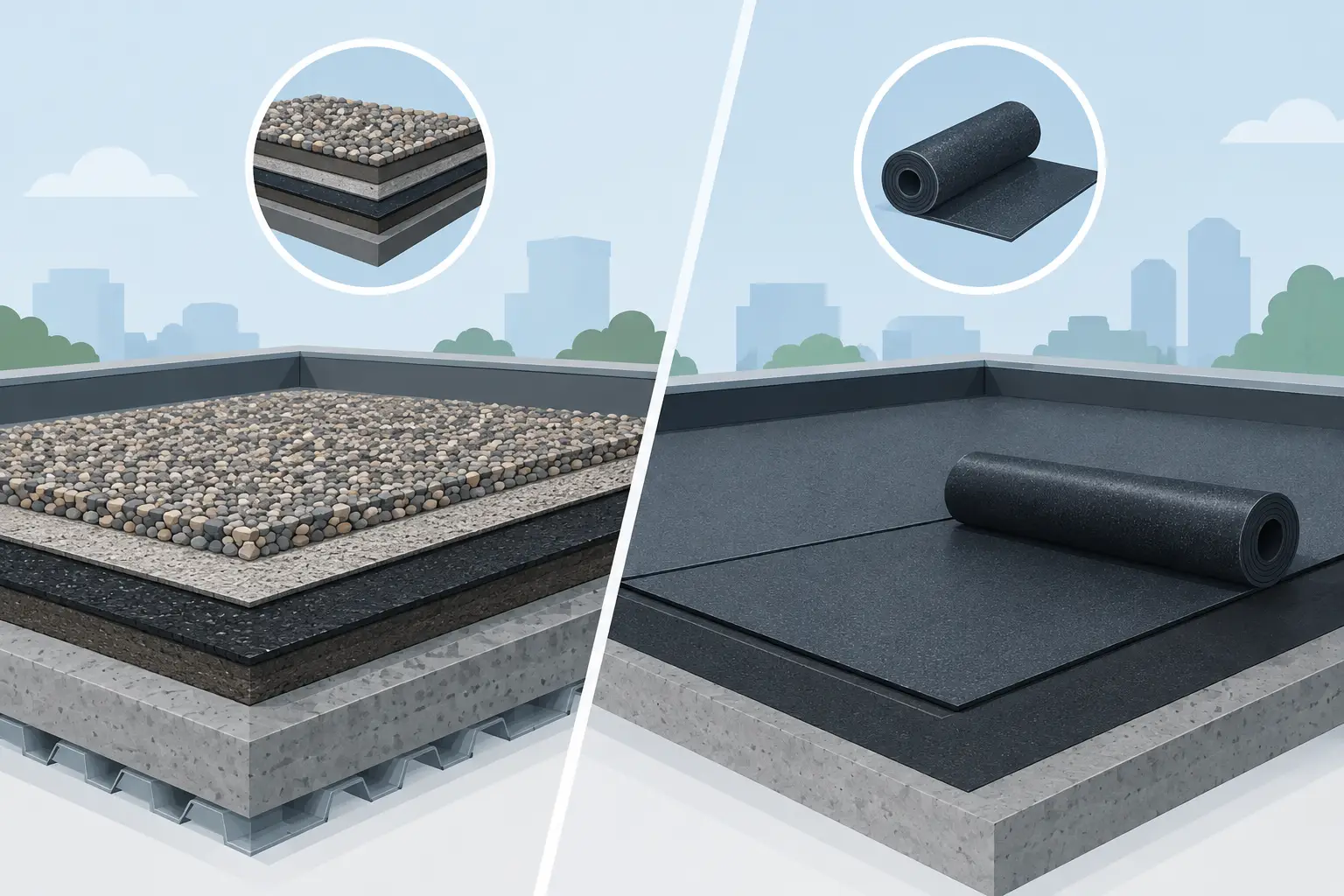
Built-up roofing, often called BUR, is a multi-ply system created by alternating layers of bitumen and reinforcing felts. A contractor builds the roof in place, then finishes it with a protective surfacing such as gravel, mineral cap sheets, or a reflective coating. The result is a thick, layered roof assembly with built-in redundancy.
Modified bitumen is also an asphalt-based roofing system, but it uses factory-manufactured sheets strengthened with polyester or fiberglass reinforcement. The asphalt is modified with polymers to improve flexibility, strength, and temperature performance. These membranes are typically installed in one or two plies using heat welding, cold adhesive, self-adhering sheets, or hot asphalt.
The distinction matters because BUR relies on multiple field-applied layers, while modified bitumen relies on engineered membrane sheets. Both can be excellent low-slope roofing options when designed and installed correctly.
Why Built-Up Roofing Remains a Proven Commercial Option
BUR has earned its reputation through long-term performance. Its layered design provides multiple barriers against water intrusion. If the top layer is damaged, the layers below can still offer meaningful protection while repairs are scheduled. For large commercial roofs, this redundancy is a practical advantage.
A traditional gravel-surfaced BUR system also provides strong resistance to foot traffic, hail, and incidental mechanical damage. That can make it well suited to roofs with HVAC equipment, service pathways, or frequent maintenance activity. The aggregate surface shields the asphalt from ultraviolet exposure and helps create a durable wear layer.
BUR is not without trade-offs. It can be heavier than other low-slope systems, which means the existing deck and structure need to be evaluated before installation. Installation is also more labor-intensive and may involve hot asphalt or other heated materials. Odor, staging requirements, and site access can affect the project plan, especially for occupied buildings.
For a facility with a broad, uncomplicated roof area and a need for a durable, redundant system, BUR can still be a cost-effective long-term choice. It is particularly valuable when the building owner prioritizes puncture resistance and proven performance over a lighter-weight assembly.
Where Modified Bitumen Stands Out
Modified bitumen offers many of the strengths associated with asphalt roofing while providing greater flexibility in installation and system design. Its polymer-modified asphalt helps the membrane remain more flexible during temperature changes, an important consideration in regions that see hot summers, freezing nights, wind, and snow.
Because the membrane is manufactured in controlled conditions, thickness and reinforcement are consistent from roll to roll. Seams are carefully sealed during installation, creating a continuous waterproofing surface. When heat-welded, modified bitumen seams can form a very secure bond. Self-adhered and cold-applied systems can also be useful where open-flame work or strong odors are a concern.
Modified bitumen can be installed with a smooth surface, mineral-granulated cap sheet, or reflective coating. A light-colored cap sheet or coating can improve solar reflectivity, reduce roof-surface temperatures, and help manage cooling demands during intense summer sun. For commercial property owners, that may support energy-efficiency goals while preserving the benefits of an asphalt-based roof.
The material is often easier to repair in localized areas than a loose-gravel BUR roof. It can also be a practical option for roofs with numerous penetrations, curbs, drains, and transitions, provided the flashing details are executed carefully. Complex details are where experienced installation makes the difference between a roof that merely looks finished and one that remains watertight.
Durability Depends on More Than the Membrane
Neither system wins automatically on service life. A properly installed and maintained BUR or modified bitumen roof can perform well for many years. Premature failure usually traces back to drainage problems, poor flashing work, neglected repairs, trapped moisture, or unsuitable material selection rather than the basic system category alone.
BUR’s multiple layers can offer exceptional durability against punctures and heavy use. Modified bitumen offers strong tensile performance, flexibility, and dependable seam strength when installed according to manufacturer specifications. The right choice depends on the risks facing the particular property.
For example, a roof exposed to regular maintenance traffic may benefit from BUR’s heavy-duty surface or from modified bitumen with designated walk pads. A building with substantial seasonal movement, changing temperatures, or numerous detailed penetrations may favor the flexibility and installation versatility of modified bitumen. In both cases, positive drainage is essential. Standing water accelerates wear and exposes every weak point in the roofing assembly.
Installation Methods and Project Conditions
Built-up systems are generally installed using hot asphalt or cold-applied adhesives between reinforcing plies. Modified bitumen can be torch-applied, hot-applied, cold-applied, or self-adhered. Each method has practical implications for scheduling, safety planning, odor control, and the building’s daily operations.
Torch-applied modified bitumen is effective when handled by qualified roofing professionals with strict fire-safety procedures. Cold-applied and self-adhered options can reduce flame-related concerns and may be preferable for sensitive sites or buildings where operations cannot be interrupted. However, these systems still require dry, properly prepared substrates and suitable weather conditions.
A roof replacement is also an opportunity to address insulation, drainage, edge metal, skylight curbs, and deteriorated decking. Choosing a membrane without correcting those conditions can limit the value of the investment. A thorough inspection should determine whether restoration, targeted repair, recover installation, or full tear-off is the soundest path.
Cost: Look at Lifecycle Value, Not Just Initial Price
Initial cost varies with roof size, access, tear-off needs, insulation upgrades, detailing, attachment method, and surfacing. A simple roof with clear access will cost less per square foot than a roof crowded with equipment, parapet walls, drains, and penetrations. Material price alone does not tell the full story.
BUR may require more labor and heavier materials, while modified bitumen can offer installation efficiencies depending on the chosen application method. Yet a lower upfront number is not necessarily the better value if it leaves drainage deficiencies, poorly detailed flashings, or inadequate protection against the property’s climate conditions.
The most cost-effective roof is one that reduces emergency repairs, protects the interior, holds up to weather exposure, and can be maintained without unnecessary disruption. For some buildings, a reflective coating over an appropriate asphalt-based system can also extend service life and improve energy performance. Coatings are not a cure for widespread wet insulation, failed seams, or structural issues, but they can be a smart restoration option when the underlying roof remains sound.
Maintenance Makes Either System Last Longer
Both BUR and modified bitumen benefit from regular inspections. At minimum, roofs should be checked after severe storms and as part of a scheduled maintenance program. Attention should focus on drains, scuppers, flashing edges, seams, penetrations, rooftop equipment, and signs of surface damage.
Gravel on a BUR roof should remain evenly distributed, particularly around drains and high-traffic areas. Modified bitumen roofs should be inspected for open seams, cracking, blisters, punctures, and granule loss on cap sheets. Small defects are typically less expensive to correct before moisture reaches the insulation or deck.
Property owners should also control unauthorized foot traffic and avoid allowing other trades to make uncoordinated rooftop penetrations. A new conduit, curb, or equipment support can become a leak source if it is not properly flashed into the roofing system.
Choosing the Right Asphalt-Based Roof
Built-up roofing is often a strong fit for large, durable commercial assemblies where layered redundancy and surface toughness are priorities. Modified bitumen is often a strong fit when flexibility, detailed flashing work, reflective surfacing, and multiple installation methods are valuable. There is meaningful overlap between the two, and both systems can be tailored to the building’s needs.
The right decision starts with an on-roof evaluation, not a generic product recommendation. Mountain Valley Roofing evaluates roof condition, drainage, building use, climate exposure, and long-term maintenance needs before recommending a system. A roof should be selected to protect the property for the years ahead, not simply to solve the next leak.