
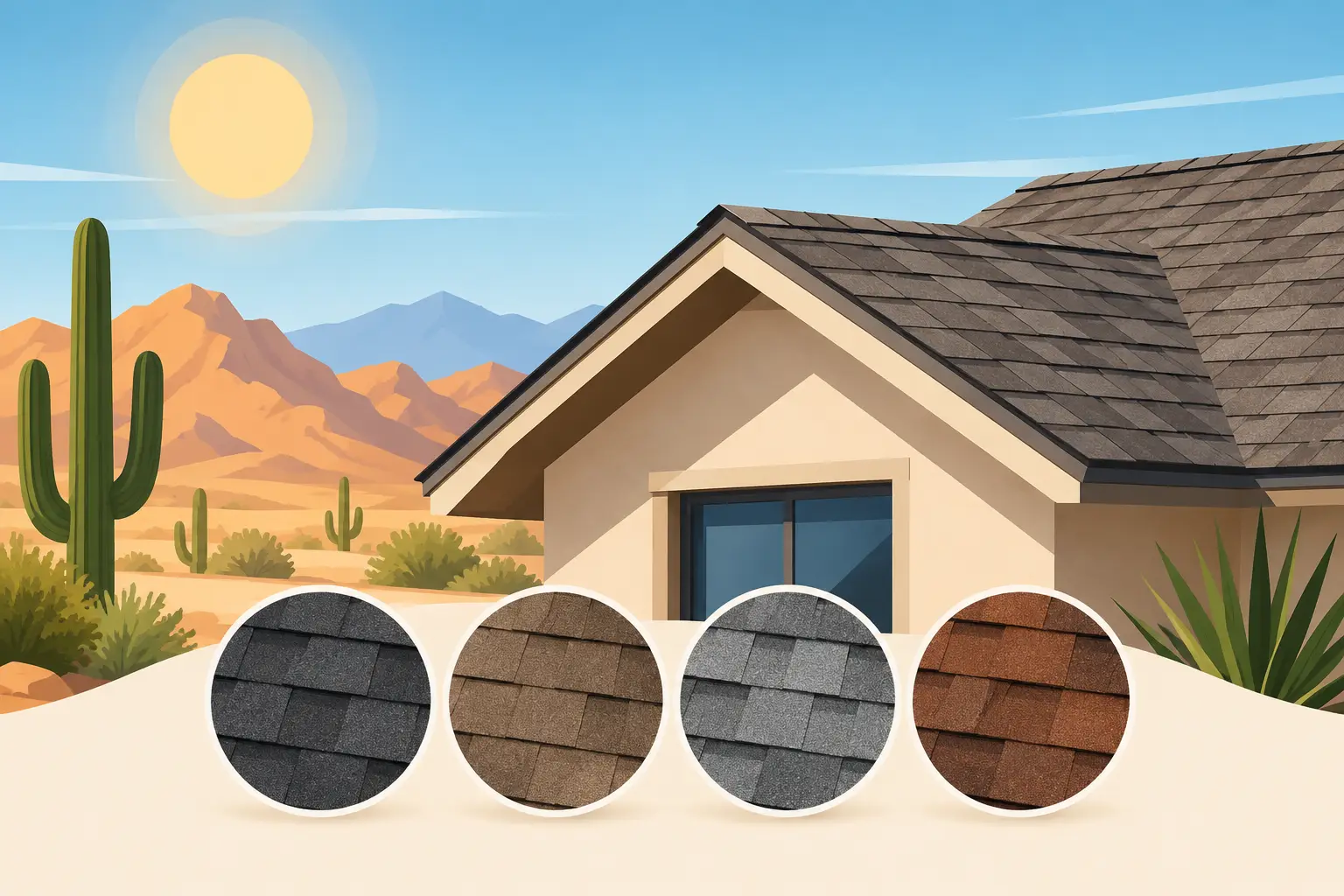
A roof in Nevada or Northern California can absorb extreme heat for hours, then cool rapidly after sunset. That daily expansion and contraction is hard on every component of the roofing system. The best shingles for desert heat are not simply the thickest or most expensive option. They are shingles selected for UV exposure, heat management, wind performance, and the way the entire roof is built beneath them.
For many homes, a quality architectural asphalt shingle remains a practical, cost-effective choice. The key is choosing the right grade and pairing it with proper ventilation, underlayment, flashing, and installation. A roof that looks good on installation day but cannot manage summer heat will age faster, lose granules, and become more vulnerable to leaks.
What Desert Heat Does to a Shingle Roof
Desert sun is more than uncomfortable. Ultraviolet radiation steadily breaks down the asphalt oils that help shingles remain flexible and weather-resistant. High surface temperatures can accelerate that aging process, particularly on dark roofs with limited ventilation.
As shingles heat up, they expand. As temperatures fall overnight, they contract. Over years, this movement can contribute to curling, cracking, lifted edges, and weakened seal strips. Wind adds another challenge in exposed areas, where a compromised shingle edge can become an entry point for rain.
Heat also affects the space below the roof deck. When an attic traps excessive heat, the underside of the roof can become much hotter than it should be. That places added stress on shingles, decking, insulation, and HVAC equipment. A durable roof is a system, not just a surface material.
Best Shingles for Desert Heat: The Strongest Options
Architectural asphalt shingles with a fiberglass mat
For most pitched residential roofs, architectural asphalt shingles are the strongest overall value. Also called dimensional or laminated shingles, they are built with multiple layers that provide more thickness and definition than basic three-tab shingles. That added construction generally improves durability and wind resistance.
Look for products built on a fiberglass mat rather than an older organic mat. Fiberglass shingles are lighter, resist moisture well, and perform reliably under high heat when installed correctly. They are available in a wide range of colors and price points, making them a sensible choice for homeowners who want long-lasting protection without moving to a premium roofing material.
Not every architectural shingle offers the same performance. A contractor should compare the manufacturer warranty, wind rating, impact rating, and approved installation requirements rather than selecting based on appearance alone.
Solar-reflective or cool-rated shingles
A light-colored roof is not the only way to reduce heat absorption. Some shingle lines use reflective granules designed to reflect more solar energy than conventional dark shingles. These products can help lower roof surface temperatures and reduce heat transfer into the attic.
Solar-reflective shingles are often worth considering when energy efficiency is a priority, especially on homes with limited shade or large roof areas facing direct afternoon sun. They can offer a more traditional shingle appearance while improving solar reflectance.
There is a trade-off. Cool-rated colors may limit the available palette, and the upfront cost can be higher than standard shingles. Still, the potential for lower cooling demand and reduced thermal stress can make the investment worthwhile in a hot, sunny climate.
Class 4 impact-resistant shingles
Desert heat is not the only weather concern. Nevada and Northern California properties may also face wind, hail, heavy rain, and occasional snow. Class 4 impact-resistant shingles are designed to better withstand impacts that can crack or bruise standard shingles.
These shingles do not make a roof damage-proof, and they should not be chosen for impact protection alone. However, they can be a strong option for owners looking for a higher-performing roof that addresses several regional risks at once. The added cost may be justified for properties in exposed areas or for owners focused on long-term replacement value.
Color Matters, but It Is Not the Whole Answer
Lighter shingles generally reflect more sunlight than darker shingles, which can help reduce heat gain. In an open desert setting, choosing a lighter gray, tan, beige, or weathered blend can be a practical energy-efficient decision.
That said, color is only one part of roof performance. A poorly ventilated light roof can still run hot. A properly designed darker roof with effective ventilation and high-quality materials may perform better than a low-grade light shingle system.
Curb appeal also matters. The best color should work with the home’s exterior while supporting the owner’s energy and maintenance goals. For commercial buildings or homes with low-slope sections, a reflective membrane or roof coating may deliver greater heat reduction than shingles can provide.
The Roof Components That Protect Shingles From Heat
The shingle is visible, but the materials beneath it often determine whether the roof delivers its expected service life. Underlayment creates a secondary layer of moisture protection and should be selected for the roof’s climate, slope, and exposure. Quality flashing at valleys, walls, chimneys, skylights, and penetrations is equally important because intense sun can age sealants and expose weak details.
Ventilation deserves close attention. A balanced system typically allows cooler air to enter at the soffits and warmer air to exit near the ridge. This helps control attic temperature and moisture while reducing heat buildup below the roof deck. Ventilation must be designed around the home’s layout, insulation, and existing openings. Simply adding more vents without a plan does not always solve the problem.
A high-temperature-rated ice and water barrier may also be appropriate in vulnerable areas, particularly where roofing transitions, valleys, or penetrations face heavy water flow. In regions that receive winter weather, the roof still needs to address snow and ice conditions as well as summer heat.
Why Installation Quality Is a Major Factor
Even the best shingle product can fail early if it is installed without attention to fastening patterns, nail placement, deck condition, and manufacturer specifications. In hot climates, seal strips need correct placement and adequate time to bond. Improper nailing can leave shingles more susceptible to wind uplift and thermal movement.
Before replacement, the roof deck should be inspected for soft spots, dry rot, moisture damage, and uneven areas. Installing new shingles over a compromised deck only hides the issue temporarily. Roof edges, drip metal, ventilation, and flashing should be treated as part of the scope, not optional add-ons.
This is also why the lowest bid is rarely the lowest long-term cost. A complete, correctly installed system can prevent the repeat repairs and premature replacement that come from cutting corners on materials or labor.
When Shingles May Not Be the Best Choice
Shingles are designed for sloped roofs. If a roof has a low slope, ponding water, or extensive flat areas, a membrane system, metal roofing, or coating solution may be more appropriate. Applying shingles outside their intended slope range can create drainage problems and reduce the system’s lifespan.
Metal roofing is highly durable and can reflect substantial solar heat when finished with an appropriate coating. It comes with a higher initial investment and can require different detailing around penetrations and transitions. For certain residential and commercial properties, the longer service life and energy performance may make that trade-off worthwhile.
For aging commercial roofs that remain structurally sound, restoration coatings can sometimes extend service life without the cost and disruption of a full replacement. The right choice depends on roof design, condition, budget, building use, and future ownership plans.
Plan for Maintenance After Replacement
Desert conditions make routine roof inspections worthwhile. Windblown debris, damaged flashing, cracked sealant, exposed fasteners, and early granule loss are easier and less costly to address before water reaches the deck or interior.
A professional inspection after severe weather and at regular intervals can identify small issues while repair options are still straightforward. Property owners should also keep gutters and drainage paths clear, trim branches that rub against the roof, and avoid walking on shingles during the hottest part of the day.
The right roof for desert conditions starts with a clear assessment of the property, not a one-size-fits-all product recommendation. Mountain Valley Roofing can help property owners evaluate shingle options, ventilation, roof condition, and the details that will protect the investment through years of sun, wind, and changing weather.