
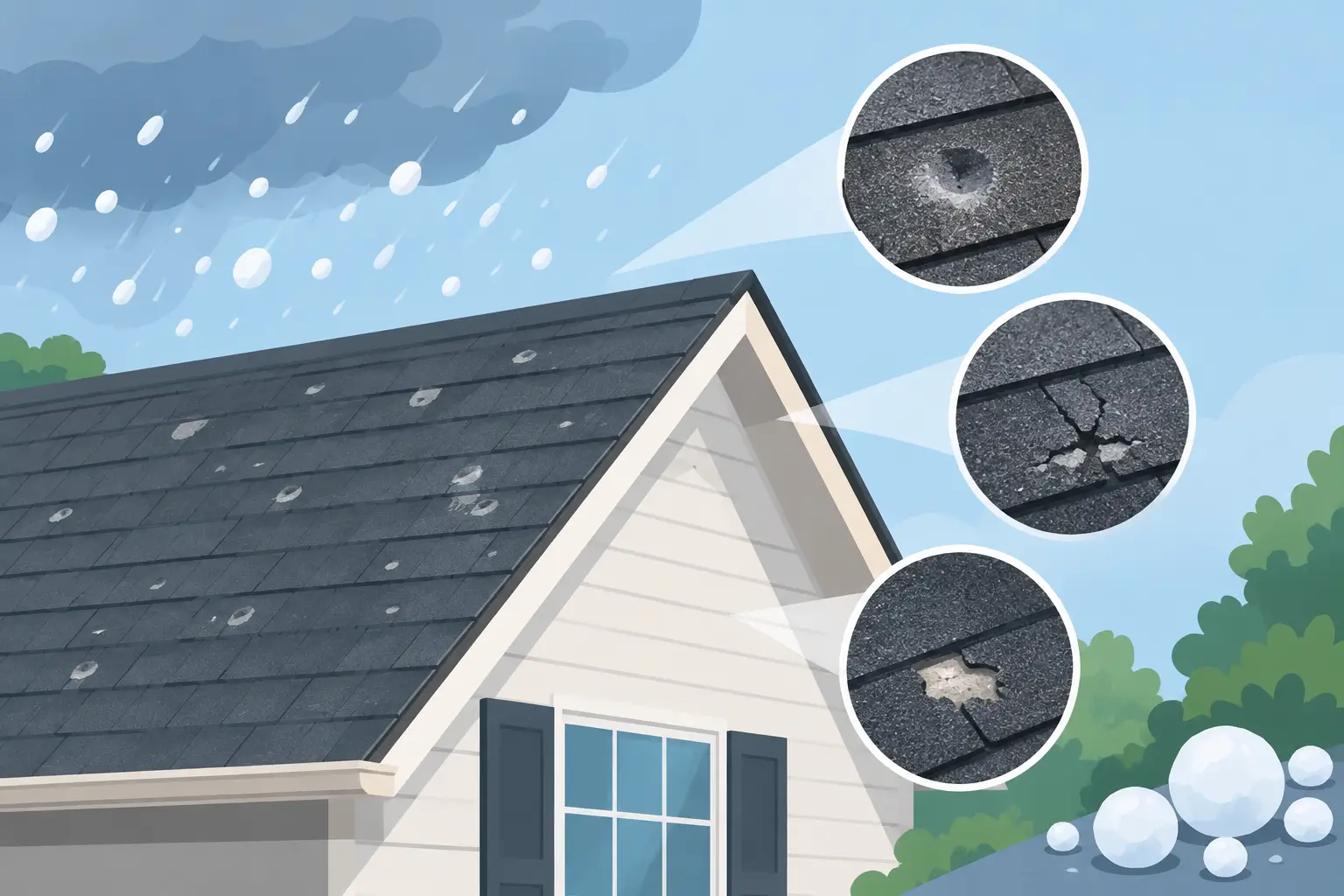
A hailstorm can leave a roof looking unchanged from the ground while creating damage that shortens its service life. Knowing the best hail damage warning signs helps homeowners, property managers, and facility teams act before a minor impact issue becomes an active leak, interior damage, or premature replacement.
Hail damage is not always dramatic. The size, density, wind direction, roof slope, and roofing material all affect the result. In Nevada and Northern California, a roof may also be managing intense UV exposure, wind, snow, and sharp temperature swings. A surface weakened by hail has less margin for the next weather event.
Best Hail Damage Warning Signs to Look For
The first clues are often found around the property rather than on the roof itself. Damaged gutters, dented metal vents, cracked skylight covers, marked air-conditioning equipment, or chipped exterior paint can indicate that hail hit with enough force to affect roofing materials. These signs do not prove roof damage, but they justify a closer inspection.
On an asphalt shingle roof, look for dark, circular areas where protective mineral granules have been knocked loose. These marks may feel soft to the touch, expose the asphalt beneath the granules, or appear in random patterns across multiple slopes. Unlike normal aging, which tends to create broad and consistent granule loss, hail impacts are usually concentrated and irregular.
You may also notice cracked, fractured, or bruised shingles. A bruise can be difficult to see because the shingle may remain intact on the surface. Under pressure, however, the impacted area can feel softer than the surrounding material. That damaged spot can eventually crack, shed granules, and allow water to reach the roof deck.
Metal roofing and metal roof components show hail differently. Dents in panels, flashing, valleys, vents, gutters, and pipe boots are common. Some shallow dents are primarily cosmetic, especially on heavier-gauge metal panels. However, dents near seams, fasteners, panel laps, flashing transitions, or protective coatings require attention. A small impact at a vulnerable detail can compromise waterproofing even when the field of the roof is still sound.
For low-slope commercial roofs, warning signs can include punctures, splits, scuffs, displaced gravel, cracked coatings, and damaged seams. Hail can fracture a coating system or create small openings in single-ply membranes that are not visible from the ground. Water may enter slowly, travel beneath the membrane or insulation, and appear inside the building far from the actual impact point.
Check Roof Accessories and Drainage Components
Roof accessories often reveal storm severity faster than shingles or membranes. Examine roof vents, turbine vents, ridge vents, metal caps, flashing, gutters, downspouts, and skylights from a safe position on the ground. Fresh dents, cracked plastic, chipped paint, or broken seals are meaningful evidence after a hail event.
Gutters deserve particular attention. Hail can dent the gutter face, loosen hangers, crack seams, and affect downspout connections. If drainage is disrupted, water may overflow along eaves, soak fascia boards, or collect near the foundation. On commercial properties, blocked or damaged drains can lead to ponding water, added roof load, and accelerated membrane deterioration.
Skylights and sun tubes should be inspected for cracked glazing, damaged domes, broken trim, or failing seals. Even if the glazing does not shatter, a hail strike can weaken the perimeter seal and create a future leak path. Interior staining around a skylight shaft is a reason to schedule an inspection promptly.
What Hail Damage Looks Like Inside the Building
Interior symptoms usually mean the roof system needs professional attention without delay. Water spots on ceilings, damp insulation, peeling paint, musty odors, or drips after rain can point to a compromised roof. On commercial buildings, watch for stained ceiling tiles, moisture near rooftop equipment penetrations, wet inventory areas, or changes in indoor humidity.
It is worth remembering that hail damage and an indoor leak may not appear at the same time. A hail strike may weaken the roof in spring, while the leak becomes visible only after summer storms, snowmelt, or a period of standing water. Waiting for water to enter the building can turn a repairable issue into damage involving insulation, decking, framing, electrical components, or finishes.
Why a Ground-Level Check Is Not Enough
Property owners should avoid climbing onto a roof after a storm. Wet surfaces, loose granules, hidden punctures, and damaged materials create real fall hazards. More importantly, many hail-related issues cannot be confirmed without close inspection by someone who understands how specific roofing systems perform.
A qualified inspection should assess the complete roof assembly, not only obvious dents. That includes shingles or membrane surfaces, seams, flashings, penetrations, drainage, edge metal, skylights, and areas where water is most likely to collect. For commercial roofs, the inspection should also consider whether moisture may have entered the insulation or substrate below the surface.
This matters because not every mark is hail damage. Blistering, manufacturing defects, foot traffic, installation errors, thermal movement, and ordinary wear can resemble storm impacts. An experienced roofing contractor can separate those conditions and recommend the most cost-effective path forward, whether that is a targeted repair, restoration, coating work, or replacement.
What to Do After a Hailstorm
Start by documenting the date of the storm and taking clear ground-level photographs of visible damage. Include dents on gutters, vents, metal equipment, siding, and other exterior components. If safe to do so, photograph fallen branches, broken skylight material, or granule accumulation near downspouts.
Next, arrange a professional roof inspection before making assumptions about the scope of damage. Avoid temporary patches unless there is an active leak and the work is performed safely. Improper repairs can interfere with a thorough assessment and may create additional problems at seams, flashing, or roof penetrations.
If damage is confirmed, keep inspection notes, photographs, repair proposals, and storm-related records organized. Insurance claim support can be valuable when covered storm damage is involved, but the proper repair decision should be based on the roof’s actual condition, age, material, and remaining service life. A roof with localized damage may only need repair. A roof with widespread impacts, aging materials, or multiple failed details may be better served by restoration or replacement.
Protect the Roof Before the Next Storm
Hail cannot be prevented, but regular maintenance reduces the risk that an impact becomes a costly failure. Keeping drains clear, securing loose flashing, repairing worn seals, maintaining coatings, and addressing minor leaks promptly all strengthen the roof’s ability to handle severe weather.
For facilities with low-slope roofs, scheduled inspections are especially valuable after major storms and before wet or snow-prone seasons. Coatings and restoration systems can extend the life of eligible roofs, but only after the existing surface and underlying components have been properly evaluated. Applying a coating over hidden moisture or active damage will not solve the underlying problem.
Mountain Valley Roofing helps residential and commercial property owners identify storm-related issues and make practical decisions based on roof condition, building needs, and long-term cost. A timely inspection after hail gives you a clear picture of what happened overhead and the opportunity to protect the property before the next storm tests it again.