
A low-slope roof can look simple from the ground, but it has one demanding job: keep water out despite standing moisture, intense sun, wind, and sharp temperature swings. This torch down roofing guide explains why modified bitumen remains a trusted choice for many commercial properties and residential flat-roof sections across Nevada and Northern California – and why qualified installation matters as much as the material itself.
What Is Torch Down Roofing?
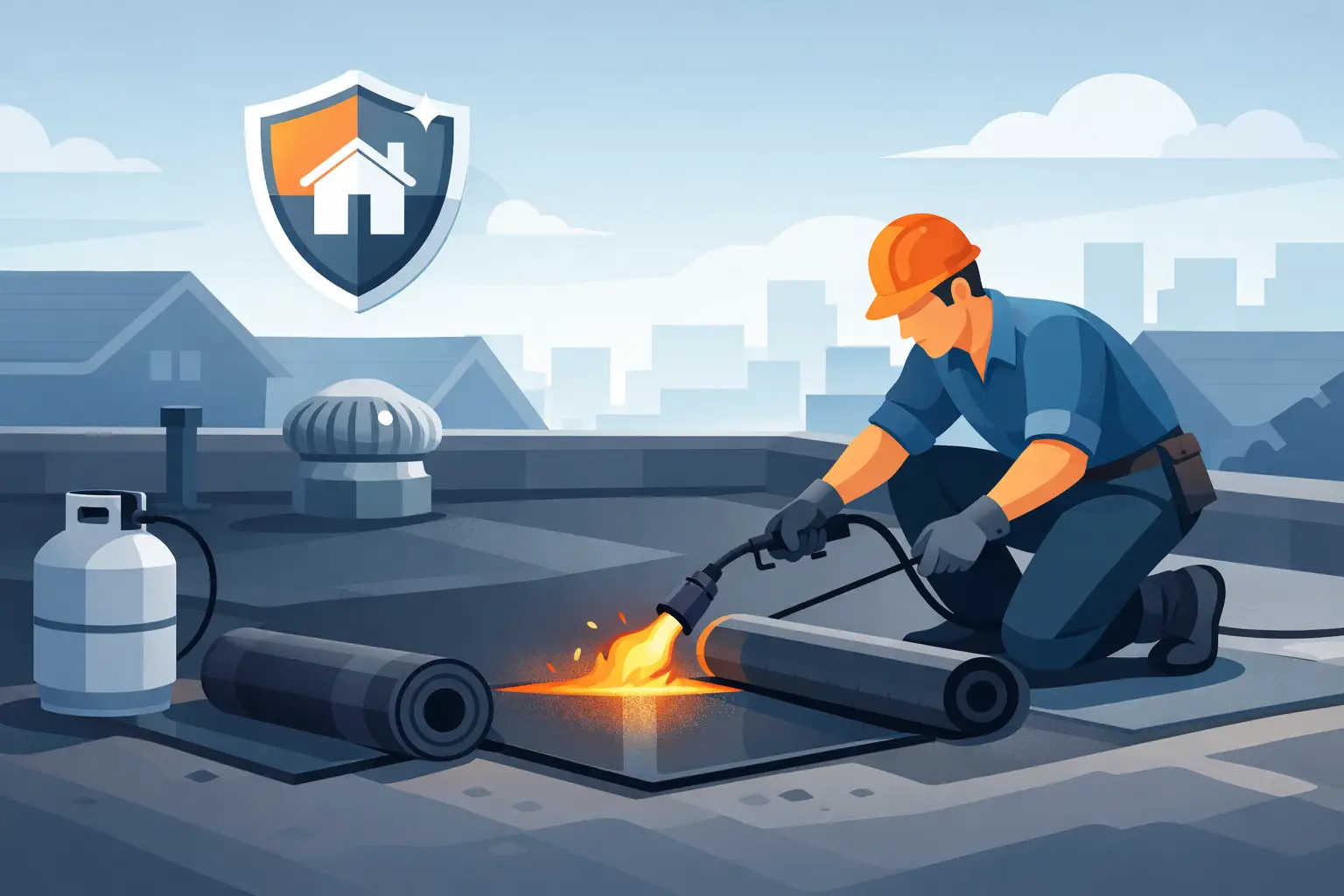
Torch down roofing is a modified bitumen membrane system designed for low-slope and flat roofs. The membrane is manufactured in rolls and applied in overlapping layers. During installation, a trained roofing crew uses a propane torch to heat the underside of the membrane, bonding it directly to the prepared roof surface or an underlying base sheet.
The heat creates a strong, continuous bond at the seams, which are often the most vulnerable areas on low-slope roofs. Once properly installed, the finished roof forms a durable waterproof barrier that resists rain, wind, and daily exposure.
Modified bitumen is asphalt-based, but it is reinforced and improved with polymers for greater flexibility and strength. Two common formulations are APP and SBS. APP membranes are typically installed with a torch and perform well under UV exposure. SBS membranes are more rubber-like and flexible, which can be valuable where a roof experiences movement or colder conditions. The right system depends on the building, roof design, local climate, and budget.
Why Property Owners Choose Torch Down Roofing
Torch down roofing has earned its place because it solves practical problems on low-slope roof areas. It is commonly used on commercial buildings, multifamily properties, garages, patio covers, additions, and residential roof sections that do not have enough pitch for conventional shingles.
A properly specified system offers strong waterproofing because its seams are heat-welded rather than simply adhered. It also stands up well to foot traffic when maintenance crews need rooftop access for HVAC equipment, drains, solar components, or other building systems. That durability can be especially useful for commercial properties where access and service activity are routine.
UV resistance is another important advantage in high-sun areas. A granulated cap sheet can shield the membrane from sunlight and physical wear. Reflective cap-sheet options may also help reduce surface temperatures and support better energy performance. However, reflectivity varies by product and color, so it should be evaluated as part of the full roofing specification rather than assumed.
Torch down systems are also repairable. A skilled roofer can often address localized damage, worn flashings, or small seam concerns without replacing the full roof. That does not mean every aging roof is a repair candidate. If moisture has spread beneath the membrane or the roof has reached the end of its service life, replacement may provide the better long-term value.
Where Torch Down Roofing Works Best
Torch down roofing performs best on low-slope applications with positive drainage and a sound roof assembly beneath it. The roof does not have to be perfectly flat, but it must be designed to move water toward drains, scuppers, or gutters. No roofing material benefits from water sitting in the same area for extended periods.
For a small residential addition or detached garage, a modified bitumen roof can provide reliable weather protection with a clean, low-profile appearance. On commercial buildings, it can be a practical option for select roof areas, especially when durability, repairability, and a proven installation method are priorities.
Still, it is not automatically the best answer for every low-slope roof. Single-ply systems such as TPO or PVC may be better suited to large commercial roofs where highly reflective surfaces, broad sheet widths, or particular chemical-resistance needs are part of the decision. Roof coatings can be cost-effective when an existing roof is still structurally sound and qualifies for restoration. A professional inspection should identify whether repair, restoration, or replacement will deliver the strongest lifecycle value.
A Torch Down Roofing Guide to Installation Quality
The term “torch down” can make the process sound straightforward. It is not a do-it-yourself project. Open-flame application near roof decking, walls, vents, and flashing details requires trained installers, proper fire-safety procedures, and close post-work inspection.
A durable installation begins with substrate preparation. The deck or existing approved roof surface must be clean, dry, stable, and properly sloped. Rotten decking, loose materials, trapped moisture, and poor drainage must be corrected before new membrane is installed. Covering these problems only hides them temporarily.
The roofing crew then installs the appropriate base layer, insulation, or separation components required by the system design. Membrane rolls are carefully aligned, heated, and overlapped to create fully bonded seams. Flashings at walls, curbs, pipes, drains, and roof edges receive special attention because these transitions are common leak locations.
After application, experienced crews inspect seam bleed-out, edge details, penetrations, and the entire work area. Fire watches are a critical part of responsible torch-applied roofing. The crew checks for signs of smoldering after work is complete, particularly around concealed wood components and wall transitions.
The workmanship behind these details directly affects roof life. A lower initial price is not a savings if it comes from skipped preparation, inadequate flashing, or an installer who treats the roof as a simple roll-and-torch job.
Maintenance That Protects the Investment
Even a well-installed torch down roof needs routine attention. Maintenance is how property owners catch small issues before insulation, decking, interiors, or inventory are affected.
Schedule inspections at least twice a year, as well as after severe wind, heavy snow, hail, or major storms. On commercial buildings, roof inspections should also follow work by other trades. A technician servicing an HVAC unit can accidentally damage a membrane, loosen a flashing, or leave debris that blocks drainage.
During an inspection, look for cracked or lifted flashing, open seams, blisters, punctures, exposed reinforcement, granule loss, and ponding water that remains long after rainfall. Keep drains, scuppers, gutters, and downspouts clear. Branches, loose equipment, and stored materials should not sit directly on the membrane.
Avoid allowing untrained personnel to apply caulk or patch products as a permanent fix. Some materials do not adhere correctly to modified bitumen, and a poorly placed patch can direct water beneath the roof surface. Prompt professional repairs are usually more affordable than waiting for a stain on the ceiling.
Cost, Service Life, and the Factors That Change Both
Torch down roofing costs vary widely based on roof size, access, tear-off requirements, insulation needs, deck repairs, membrane thickness, flashing complexity, and local code requirements. A simple, open roof costs less to complete than a roof with numerous penetrations, parapet walls, rooftop equipment, and deteriorated substrate.
Service life also depends on the system selected and how the roof is maintained. Quality materials and proper installation can provide long-lasting performance, but severe sun exposure, standing water, neglected drains, and repeated foot traffic can shorten that lifespan. A maintenance plan helps protect the investment and gives property owners a documented record of the roof’s condition.
For facilities managers, the decision should focus on total cost of ownership, not installation cost alone. A roof that reduces leaks, avoids operational interruptions, and can be repaired effectively may deliver more value over time than a cheaper system with limited durability.
When to Call a Roofing Professional
Call for an inspection if you see active leaks, interior staining, bubbling membrane, loose edge metal, recurring ponding water, or damaged areas around rooftop equipment. The sooner these concerns are evaluated, the more options may be available. Early repair can prevent the moisture damage that turns a manageable roofing issue into a full replacement project.
Mountain Valley Roofing evaluates low-slope roofing systems with the region’s weather in mind, from harsh summer UV exposure to wind, snow, and freeze-thaw conditions. The goal is not to force one material onto every building, but to recommend a system that protects the property and supports its long-term budget.
A torch down roof is most reliable when it is treated as a complete system: sound deck, proper drainage, compatible materials, skilled flashing work, and regular maintenance. Give those details the attention they deserve, and the roof can provide dependable protection long after the installation crew leaves.