
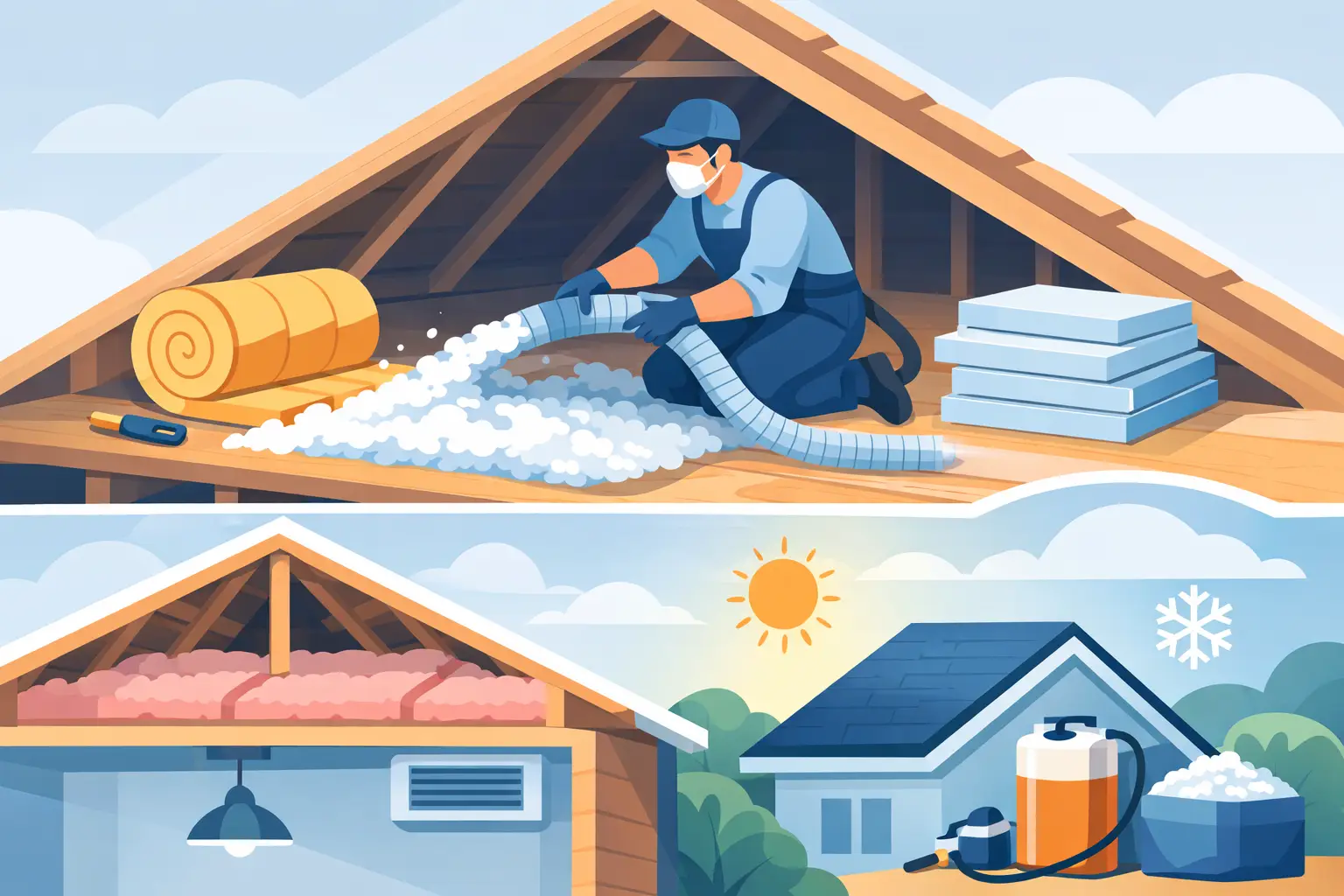
A hot upstairs bedroom in July, cold ceilings in January, and energy bills that keep climbing often point to the same overlooked area: the attic. Knowing how to improve attic insulation is not simply a matter of adding more material. The best results come from treating the attic as part of the home’s full building envelope, where insulation, air sealing, ventilation, and roof condition must work together.
For homeowners in Nevada and Northern California, that balance matters. Intense sun, wind, snow, freezing nights, and sharp temperature swings can expose weak points quickly. A well-insulated attic helps keep conditioned air where it belongs, reduces strain on heating and cooling equipment, and supports a longer-lasting roofing system.
Start With an Attic and Roof Assessment
Before adding insulation, find out what is already in the attic and why it is underperforming. Many homes have insulation that looks adequate from the access hatch but has settled, been compressed around storage areas, or left gaps at the eaves and around framing. Older fiberglass batts are especially prone to gaps, while loose-fill insulation can lose effective depth over time.
Look for uneven coverage, exposed ceiling drywall, darkened insulation near air leaks, rodent activity, damp spots, or insulation that feels matted down. These are signs that simply piling new insulation on top may not solve the underlying problem.
The roof should be evaluated at the same time. A small leak can saturate insulation and reduce its performance dramatically. Roof leaks, condensation, damaged flashing, and inadequate ventilation can also lead to mold, wood rot, and weakened roof decking. Insulation upgrades should protect the home, not conceal an active moisture issue.
A professional assessment is particularly valuable when the attic is difficult to access, the roof has a history of leaks, or the property has ice dams, moisture staining, or unusually high utility costs. Mountain Valley Roofing can evaluate attic and roofing conditions together, helping property owners avoid improvements that create new problems later.
Air-Seal Before You Add Insulation
Air sealing is often the most important part of improving attic performance. Insulation slows heat transfer, but it does not stop warm or cooled indoor air from escaping through openings. If those leaks remain open, new insulation may deliver less comfort and savings than expected.
Common attic air leaks occur around plumbing stacks, electrical wiring, recessed lights, duct penetrations, bathroom fan housings, chimney chases, attic hatches, and the tops of interior walls. In winter, warm indoor air can rise through these gaps into the attic. In summer, hot attic air can contribute to heat gain below.
Seal accessible openings with materials suited to their location and temperature exposure. Small penetrations may be sealed with caulk or low-expansion foam, while larger gaps may require rigid blocking and appropriate sealant. Areas around chimneys, flues, and other heat-producing components require noncombustible materials and proper clearance. This is not a place for guesswork.
Do not overlook the attic access. An uninsulated, unsealed pull-down stair or hatch can act like a hole in the ceiling. Weatherstripping the opening and insulating the cover can make a noticeable difference in comfort near hallways and upper-level rooms.
Choose the Right Insulation for the Space
There is no single best insulation material for every attic. The right choice depends on the existing insulation, attic layout, roof design, budget, ventilation strategy, and whether the attic is vented or conditioned.
Loose-Fill Insulation for Open Attics
Loose-fill fiberglass or cellulose is a practical choice for many unfinished attic floors. It fills around joists, wiring, and irregular framing better than batts, creating more even coverage across an open attic. It is often used to top off existing insulation when the material is dry, clean, and free of major damage.
Cellulose can provide good coverage and is treated for fire resistance, while fiberglass is lightweight and moisture resistant. Either option needs to be installed to a consistent depth, including around edges where insulation is commonly thin.
Batt Insulation for Specific Areas
Fiberglass or mineral wool batts can work well in defined cavities, such as knee walls, attic access covers, or areas where loose fill is not practical. The key is careful installation. Batts should fit snugly without being compressed, folded, or stuffed behind wiring and pipes. Compression reduces the material’s insulating value.
Mineral wool is especially useful where higher heat resistance and sound control are beneficial. It can also be a good option around complex framing, provided it is cut and fitted correctly.
Spray Foam for Complex Air-Sealing Needs
Spray foam combines insulation with air sealing, making it useful in certain roof assemblies and difficult-to-seal areas. Closed-cell foam offers a higher R-value per inch and can help manage moisture when designed correctly. Open-cell foam expands more and may be appropriate in some applications, but it has different vapor and moisture characteristics.
Spray foam is not automatically the best answer for every attic. It costs more than conventional insulation, changes how the roof assembly manages heat and moisture, and should be installed by experienced professionals. A poorly planned foam application can block ventilation pathways or make future roof leak detection more difficult.
How to Improve Attic Insulation Without Blocking Ventilation
A vented attic needs a clear path for outside air to enter at the soffits and exit through ridge, gable, or roof vents. Proper ventilation helps reduce heat buildup and moisture accumulation in the attic. It also supports more stable roof temperatures, which is valuable in climates that see snow as well as summer heat.
When adding loose-fill insulation near the roof edge, install baffles at soffit vents first. These channels keep insulation from falling into the vents while preserving airflow from the eaves upward. Without baffles, insulation can choke off intake ventilation and create conditions that contribute to condensation, overheated shingles, and premature roof wear.
Ventilation is not a substitute for air sealing, and insulation should not be installed as if ventilation does not exist. These systems have separate jobs. Air sealing limits uncontrolled air movement from the living space. Insulation slows heat transfer. Ventilation manages attic heat and moisture.
The right approach depends on the roof design. Some homes use unvented attic assemblies, particularly when spray foam is applied at the roof deck. That design requires careful planning around moisture control, mechanical equipment, and local building requirements. Do not convert a vented attic to an unvented one without a qualified evaluation.
Aim for Coverage That Matches Your Climate
Insulation performance is measured by R-value, which describes resistance to heat flow. Higher R-values generally provide better thermal resistance, but the correct target depends on climate zone, the home’s construction, existing insulation, and applicable code requirements.
In much of Nevada and Northern California, attic insulation levels often need to be substantially higher than what is found in older homes. Rather than relying on a visual estimate, measure the existing insulation depth in several locations. Coverage can vary widely between the center of the attic, exterior edges, and areas disturbed by previous electrical or mechanical work.
Depth markers installed across the attic make it easier to verify even loose-fill coverage. Keep insulation clear of recessed fixtures unless they are rated for direct insulation contact, and maintain all required clearances around heat sources. If ducts run through the attic, inspect their insulation and sealing as well. Leaky or poorly insulated ducts can undermine the gains from an otherwise well-insulated attic.
Protect the Improvement With Ongoing Maintenance
Once the attic is properly air-sealed and insulated, protect the investment. Check the attic after major storms, wind events, or roof repairs. Look for water staining, wet insulation, pest damage, displaced material, and blocked vents. Early detection is less expensive than replacing contaminated insulation and repairing roof decking or framing.
Avoid using the attic as casual storage unless it has a properly built platform. Walking directly on insulation compresses it, while placing boxes across joists creates gaps and weak spots. If storage is necessary, plan it so the insulation depth and ventilation system remain intact.
A better attic is rarely about one product or one afternoon of work. It is about correcting the leaks, moisture risks, and coverage gaps that waste energy and place extra stress on the roof. When the attic and roofing system are evaluated together, homeowners can make improvements that deliver more reliable comfort through every season.