
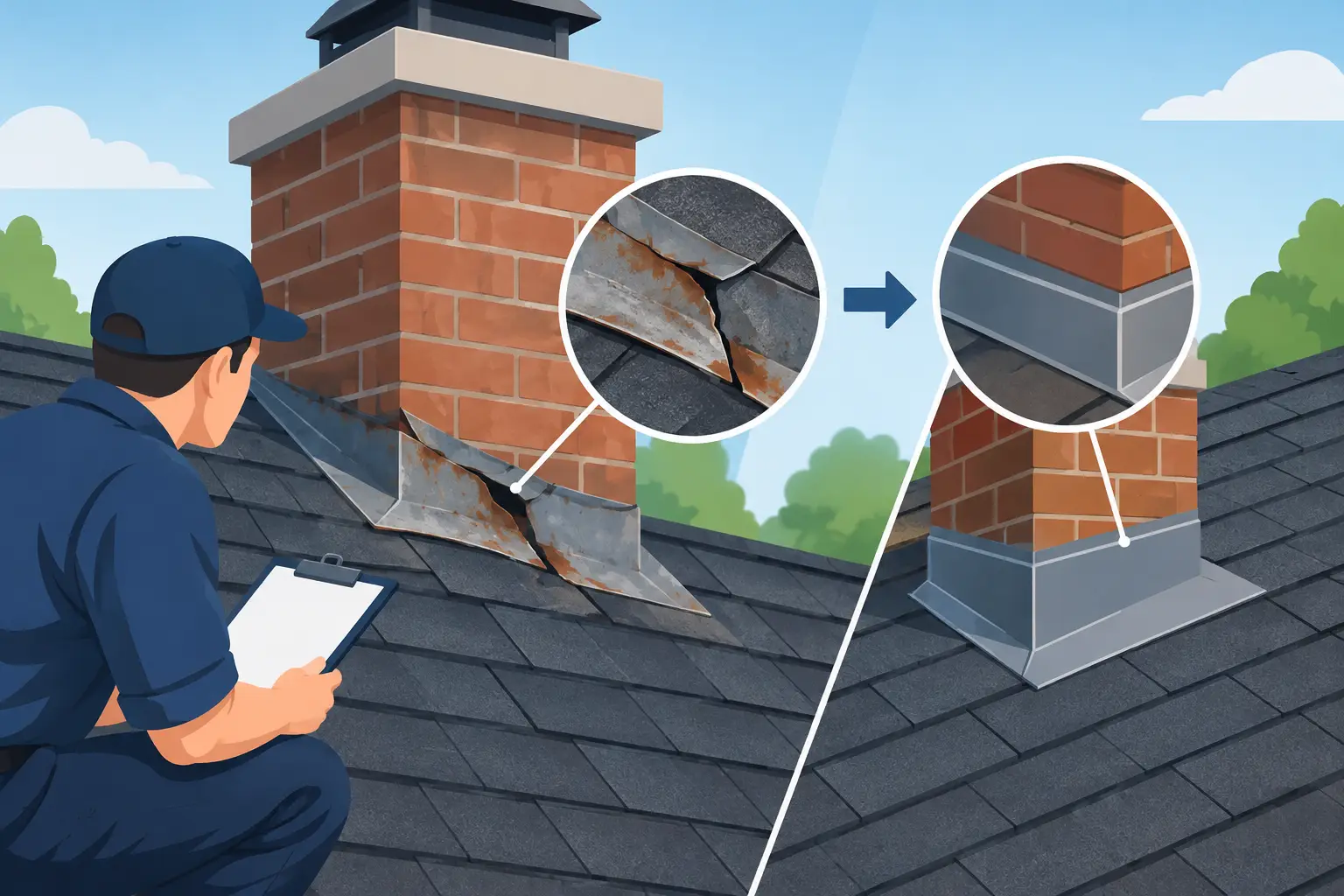
A roof can have years of useful life left and still leak at a chimney, skylight, wall connection, or vent pipe. The usual culprit is flashing: the metal or membrane material that directs water away from vulnerable transitions. Knowing when to replace damaged roof flashing helps property owners stop a small entry point from becoming wet insulation, dry rot, stained ceilings, or a costly interior repair.
Flashing is not an accessory. It is a critical part of the waterproofing system. In Nevada and Northern California, intense UV exposure, high winds, snow loads, freeze-thaw cycles, and sharp temperature swings all place stress on roof penetrations and edges. A prompt inspection and the right repair protect the roof system, the structure below it, and the investment in the property.
What roof flashing does
Flashing is installed wherever the roof meets a vertical surface or an interruption in the roof plane. Common locations include chimneys, plumbing vents, skylights, dormers, roof valleys, HVAC curbs, parapet walls, and the edges of low-slope commercial roofs.
On a shingle roof, flashing may be galvanized steel, aluminum, copper, or another compatible metal layered with the shingles. On flat and low-slope roofs, flashing is often formed from the same membrane as the roof, sometimes with metal edge details and sealants. The material and installation method vary, but the purpose is the same: move water onto the roof surface and safely toward drainage.
When flashing fails, water does not always appear directly below the damaged area. It can travel along roof decking, framing, or insulation before it reaches a ceiling or wall. That is why a visible water stain should be treated as a signal to inspect the entire surrounding roof area, not just the spot inside the building.
When to replace damaged roof flashing instead of repairing it
Not every flashing issue requires full replacement. A small opening in a sealant joint, a loose fastener, or a minor section of lifted flashing can often be repaired if the material remains sound and the surrounding roofing is in good condition. A qualified roofer should correct the cause of the problem, not simply apply more sealant over it.
Replacement is usually the better long-term choice when the flashing is corroded, cracked, punctured, badly bent, or separating from the roof or wall. It is also warranted when repeated repairs have failed, when water has reached the decking or framing, or when the flashing was installed incorrectly from the start.
Age matters, but condition matters more. Metal flashing can last for decades under favorable conditions, while sealants and rubber boots around penetrations often wear out much sooner. If the roof is nearing replacement age, replacing worn flashing as part of the larger project is often more cost-effective than opening and resealing the same area multiple times.
Signs the flashing has reached the replacement point
Some warning signs are easy to spot from the ground or attic. Others require a professional roof inspection, especially on steep slopes or commercial low-slope systems. Watch for these conditions:
- Rust, pitting, holes, flaking coatings, or white oxidation on metal flashing
- Cracks, splits, shrinkage, or brittle surfaces on membrane flashing and pipe boots
- Loose sections, lifted edges, missing fasteners, or flashing that has pulled away from a wall or chimney
- Dried, cracked, or heavily patched sealant around vents, skylights, curbs, or counterflashing
- Water stains, peeling paint, damp attic insulation, musty odors, or visible mold near roof penetrations
- Damaged shingles, membrane seams, or roofing material adjacent to the flashing
A leak after wind-driven rain is particularly telling. Rain that falls straight down may not expose a small flashing failure, but wind can force water beneath an open edge, loose counterflashing, or failing sealant joint.
Why patching is not always the cost-effective answer
A quick patch can be appropriate for a limited, isolated defect. It can also be a temporary measure after a storm while a permanent repair is scheduled. The problem begins when short-term patches become the only maintenance plan.
Roof cement and caulk are frequently used to cover flaws that should have been corrected through proper flashing replacement. These materials can crack in direct sun, lose adhesion during temperature changes, and trap water against metal or roofing materials. On commercial roofs, incompatible materials can also affect membrane performance and complicate future repairs.
Proper flashing work requires careful integration with the roof system. On a shingle roof, that may mean removing and reinstalling surrounding shingles so water sheds correctly. At a chimney, it may involve replacing both step flashing and counterflashing. On a single-ply or modified bitumen roof, the repair may require compatible membrane flashing, welded seams, reinforced corners, or a rebuilt penetration detail.
The upfront cost of doing the work correctly is usually lower than repairing rotted decking, damaged insulation, interior finishes, or structural components later. For commercial properties, it can also help avoid tenant disruption, equipment damage, and unplanned downtime.
Flashing issues that need fast attention
Some damage can wait for a scheduled repair if the roof is dry, the opening is minor, and the area has been professionally stabilized. Other conditions should be addressed quickly because they can worsen with the next storm or snowmelt cycle.
Active leaking is the clearest example. If water is entering the building, staining the ceiling, or collecting around electrical equipment, arrange for emergency service and protect the interior as safely as possible. Do not walk a wet roof or climb onto a steep roof to apply a temporary patch.
Flashing that has blown loose after high wind also deserves immediate attention. Even if the roof has not leaked yet, exposed underlayment, open membrane edges, or lifted metal can allow water intrusion and may create a hazard. The same applies to damaged flashing around skylights, chimneys, and roof-mounted equipment, where a small gap can channel substantial water beneath the roof covering.
In mountain and high-desert areas, ice buildup can expose weaknesses around eaves, valleys, and penetrations. Heat tape, ventilation, insulation, and snow management may be part of the solution, but they do not replace sound flashing. The underlying waterproofing detail still has to perform when snow begins to melt.
Repair or replacement depends on the roof system
The right decision depends on the flashing material, roof type, age of the roof, and extent of moisture damage. A newer shingle roof with one damaged pipe boot may only need that boot and a few surrounding shingles replaced. A roof with corroded chimney flashing and deteriorated shingles nearby may need a larger repair to restore reliable water shedding.
For low-slope commercial roofs, technicians should inspect the flashing at parapet walls, drains, scuppers, equipment curbs, and penetrations. Ponding water, UV exposure, movement around rooftop equipment, and failed seams can all shorten flashing life. In some cases, a targeted repair is enough. In others, a coating or restoration system may extend the roof’s service life if the underlying roof remains structurally sound.
A full roof replacement becomes more practical when flashing failures are widespread, the roof covering is worn out, or moisture has compromised multiple areas. Replacing isolated flashing on a roof that is already failing can spend money without delivering long-term protection.
What a professional flashing inspection should include
A reliable inspection goes beyond looking for obvious holes. The contractor should evaluate the flashing itself, the roof material around it, drainage patterns, sealant condition, attachment methods, and signs of concealed moisture. Attic or interior observations can help identify whether a leak is recent, recurring, or traveling from another location.
For commercial properties, the inspection should also consider rooftop traffic and equipment service. HVAC maintenance crews can accidentally loosen flashing or damage membrane details. A maintenance plan that includes routine roof checks after storms and equipment work helps catch these issues before they become interior leaks.
Mountain Valley Roofing evaluates roof flashing as part of the complete roofing and building-envelope system. That approach helps identify whether a focused repair, a restoration solution, or a larger replacement will provide the best value for the property.
Protect the roof before the next weather event
Damaged flashing rarely improves with time. Sun, wind, water, and seasonal movement turn small gaps into larger failures, especially around the roof’s most vulnerable details. If you have noticed staining, loose metal, cracked sealant, or a leak near a penetration, schedule an inspection before the next storm gives water another way in.
A properly installed flashing repair may be a relatively small project, but it provides one of the most valuable forms of roof protection: keeping water where it belongs, outside the building.