
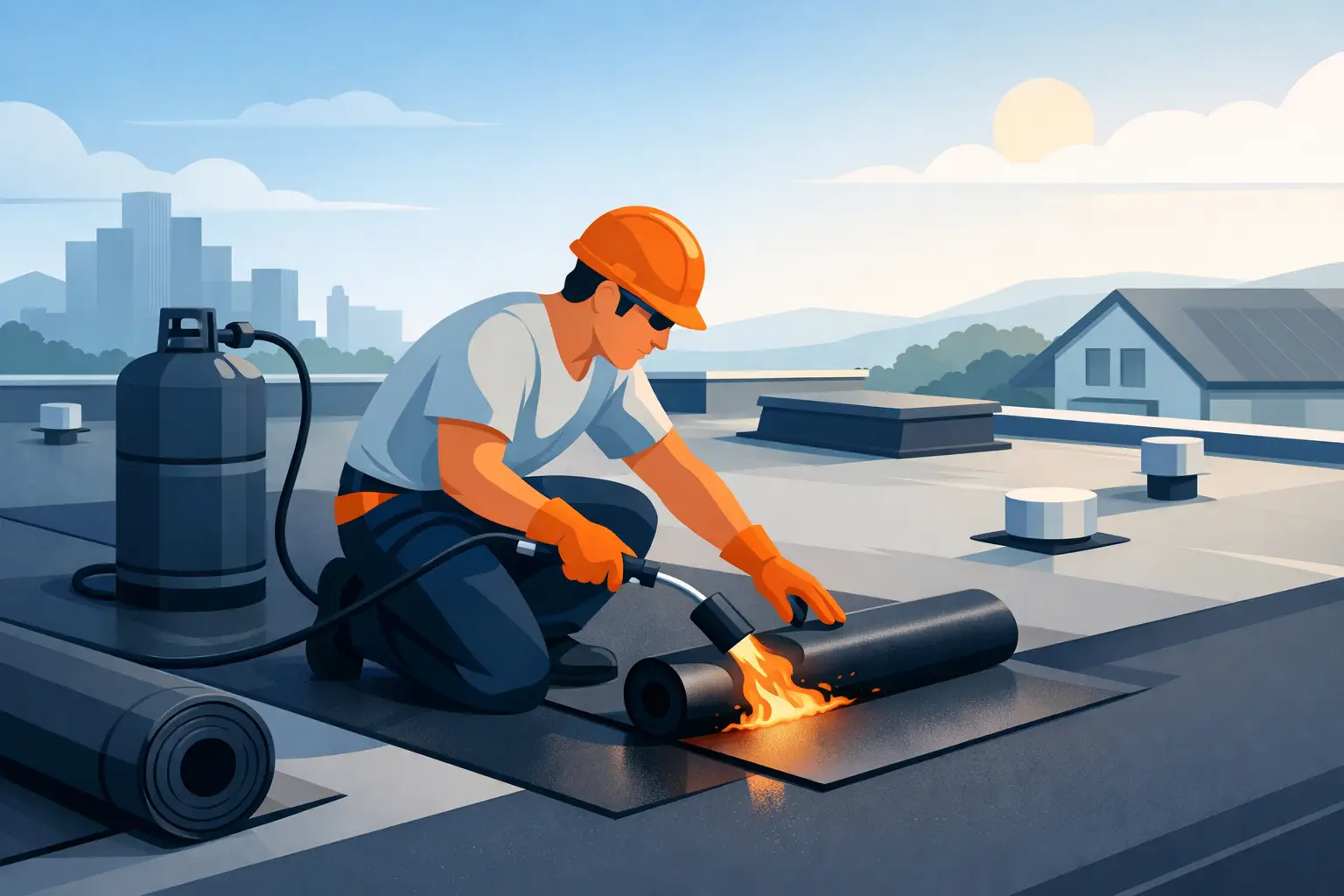
If you own a flat or low-slope building, the roofing material matters more than the brochure claims. Ponding water, UV exposure, snow load, and temperature swings can shorten roof life fast if the system is not built for those conditions. So, what is torch down roofing? It is a heat-applied roofing system designed mainly for flat and low-slope roofs, built to create a durable, waterproof membrane that holds up well under demanding weather.
Torch down roofing is commonly made from modified bitumen sheets. During installation, a roofing torch heats the underside of the membrane so it bonds directly to the roof surface or to a base sheet. Once installed properly, it forms a continuous layer that helps resist leaks, weathering, and surface wear.
For many commercial properties, multifamily buildings, garages, additions, and some residential low-slope sections, that combination of waterproofing and durability makes torch down a practical option. It is not the right fit for every building, but it remains one of the more proven systems for low-slope roof protection.
What is torch down roofing made of?
To understand what torch down roofing is, it helps to look at the material itself. The system uses modified bitumen, which is asphalt reinforced with materials that improve flexibility, strength, and performance. Those sheets are typically manufactured with fiberglass or polyester reinforcement, giving the membrane more dimensional stability and tear resistance.
Most torch down systems are built in layers. There may be a base sheet and then one or more cap sheets installed over it. The top layer is often finished with mineral granules, which help protect the membrane from UV exposure and surface damage.
This layered construction is part of what gives the system its reputation for long-term protection. Instead of relying on a single thin layer, torch down roofing creates a thicker membrane that can handle regular weather stress better than some lighter-duty materials.
How torch down roofing works
The name comes from the installation method. A professional roofer uses an open-flame torch to heat the membrane as it is rolled into place. The heat activates the asphalt-based underside, allowing it to bond to the substrate and create a sealed surface.
That heat-welded bond is one of the main reasons property owners choose this system. When installed correctly, seams are tightly fused, which helps reduce the weak points where water often gets in on low-slope roofs.
Because the installation involves open flame, torch down roofing is not a casual DIY project. It requires trained crews, the right safety protocols, and careful attention around penetrations, edge details, and adjacent materials. Good workmanship makes a major difference in how the roof performs over time.
Where torch down roofing is typically used
Torch down roofing is most often used on flat and low-slope roofs where water drainage is slower than on a steep-slope system. That includes many commercial roofs, porch roofs, detached garages, apartment buildings, covered walkways, and home additions.
In regions like Nevada and Northern California, low-slope roofs can take a beating from intense sun, seasonal storms, wind, and temperature fluctuation. A roof system on that kind of building needs to do more than just cover the deck. It needs to stay watertight, resist UV breakdown, and hold up under repeated expansion and contraction.
That is where torch down often earns its place. It is especially useful when the goal is a strong waterproof membrane on a roof section that would not be a good candidate for shingles.
Key benefits of torch down roofing
One of the biggest advantages is waterproofing. Low-slope roofs are more vulnerable to standing water and slow drainage, so seam strength and membrane integrity matter. A properly installed torch down system provides a solid barrier against moisture intrusion.
Durability is another reason this system stays popular. Modified bitumen membranes are built for exposure. They typically hold up well against sun, rain, and ordinary foot traffic associated with maintenance access.
Torch down roofing can also offer good value over the life of the roof. It is not always the cheapest option up front, but many owners choose it because it balances cost with proven performance. When installed and maintained well, it can deliver dependable service for years without the higher price tag of some specialty systems.
Another practical advantage is repairability. If damage occurs in a localized area, professional repairs are often possible without replacing the entire roof. That can help control costs and extend service life when issues are caught early.
Trade-offs to consider
Torch down roofing is a strong system, but it is not universal. The biggest limitation is slope. It is designed for flat and low-slope applications, not steep residential rooflines where shingles or metal are more appropriate.
Installation safety is another factor. Because it uses open flame, the process requires experienced roofers and strict site control. On some buildings, a different low-slope system may be recommended if fire risk or surrounding conditions make torch application less practical.
Temperature and ventilation details also matter. If the roof assembly is poorly designed, even a good membrane can struggle. Roofing performance is never just about the top layer. Insulation, deck condition, drainage, flashing, and penetrations all affect the result.
There is also the reality that not every torch down product is equal. Material quality varies, and so does workmanship. A durable roof system can still fail early if it is installed over a bad substrate or with weak seam work.
Torch down roofing compared to other flat-roof systems
Property owners often ask how torch down compares to TPO, EPDM, or roof coatings. The answer depends on the building, budget, and performance priorities.
Compared to single-ply membranes like TPO or EPDM, torch down generally offers a thicker, more rugged membrane feel. Many owners like that added substance, especially on roofs that may see maintenance traffic. On the other hand, single-ply systems can be lighter and may offer different energy-efficiency advantages depending on the product color and assembly.
Compared to coatings, torch down is a full membrane system rather than a surface treatment. Coatings can be an excellent restoration option when the existing roof is a good candidate, but they are not a one-size-fits-all substitute for a new waterproofing membrane.
Compared to built-up roofing, torch down can provide similar layered protection with a more streamlined installation approach. For some projects, that makes it a practical middle ground between traditional multi-layer systems and lighter single-ply options.
How long does torch down roofing last?
Service life depends on the product, number of layers, climate, drainage, installation quality, and maintenance history. In many cases, a well-installed torch down roof can last around 15 to 20 years, and sometimes longer under the right conditions.
That said, lifespan is not automatic. Flat-roof systems age faster when drainage is poor, debris is left in place, or small seam issues go unaddressed. Routine inspections make a real difference, especially after storms or heavy seasonal weather.
For owners trying to maximize value, the better question is not just how long it can last, but how well it can perform throughout that life. A roof that stays watertight and serviceable with manageable maintenance usually delivers stronger long-term value than one with a lower upfront price and more frequent problems.
Signs a torch down roof may be a good fit
If your building has a flat or low-slope section and you need a durable, weather-resistant membrane, torch down may be worth serious consideration. It is often a strong option when leak resistance, toughness, and long-term practicality are higher priorities than choosing the lowest initial bid.
It can be especially effective on buildings exposed to harsh sun, seasonal snow, wind, or repeated thermal movement. For owners who want a system with a long track record on low-slope applications, torch down remains a dependable choice.
The best way to know for sure is to evaluate the full roof assembly, not just the surface material. Drainage patterns, substrate condition, insulation needs, rooftop equipment, and building use all affect the recommendation. That is why experienced contractors look at the whole system before proposing a repair, restoration, or replacement.
At Mountain Valley Roofing, that practical approach matters because the right answer is not always the same from one property to the next. Torch down roofing can be an excellent solution, but the best roofing decision is the one that fits your building, your climate, and your long-term maintenance goals.
If you are weighing options for a flat or low-slope roof, think beyond the material name and look at performance where it counts – leak protection, weather resistance, repairability, and service life. That is where a good roof proves its value.