
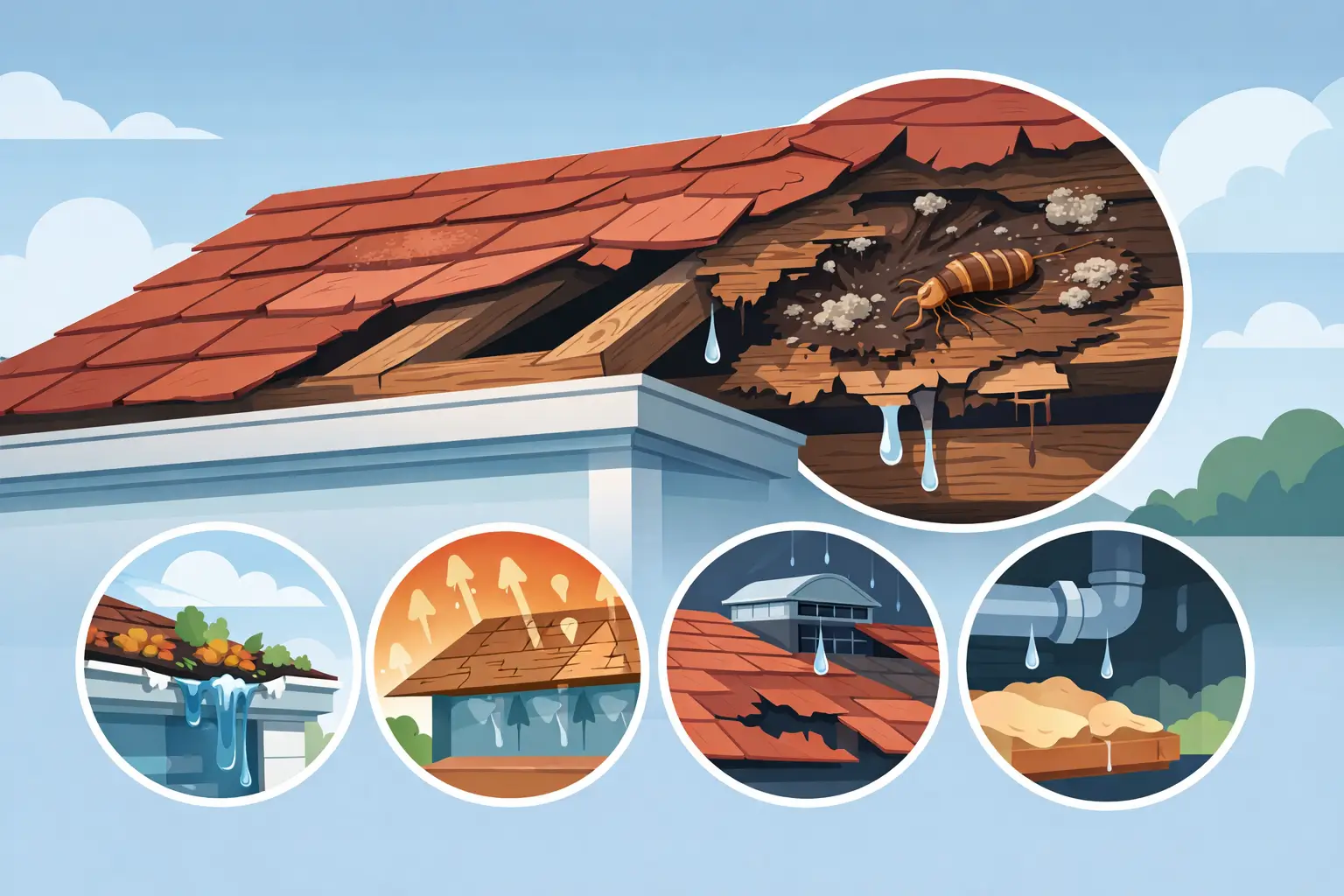
A roof can look sound from the street while moisture is quietly damaging the wood beneath it. So, what causes roof dry rot? Despite the name, dry rot begins with moisture. Water gets into framing, decking, fascia, or trim, then fungi feed on the wood fibers and leave them brittle, cracked, and weak. Left alone, a small leak can become a structural repair.
For homes and commercial buildings in Nevada and Northern California, the risk often comes from a combination of intense sun, wind-driven rain, snow, ice, and large temperature swings. The right repair is not simply replacing damaged wood. It means finding and correcting the path that allowed moisture in.
What Causes Roof Dry Rot?
Roof dry rot occurs when wood stays damp long enough for decay fungi to grow. The fungi break down the structural components that give wood its strength. As the material deteriorates, it may appear darker than surrounding wood, crumble at the edges, split into block-like pieces, or feel soft when probed.
Wood does not have to be soaking wet for this process to start. Repeated wetting, slow drying, and poor ventilation can create the conditions decay needs. A roof leak that only appears during heavy storms can still be enough to damage the roof deck or rafter tails over time.
The most common causes are failed waterproofing details, aging roofing materials, clogged drainage, and moisture trapped in poorly ventilated roof areas. Each can be manageable when addressed early. When ignored, several problems often overlap.
1. Leaks Around Flashing and Penetrations
Flashing is the metal or membrane material that seals transitions around chimneys, skylights, vents, walls, valleys, and other roof penetrations. These areas move differently than the surrounding roof surface as temperatures change. Sealants can crack, fasteners can loosen, and flashing can corrode or pull away.
A failure at one of these details may allow water behind the roofing system without producing an obvious ceiling stain right away. Water can travel along the roof deck or framing before it reaches an interior surface. By the time a stain appears, dry rot may already be developing around the original entry point.
Skylights deserve special attention. Their curb flashing and surrounding roofing must be integrated correctly, not merely sealed at the edges. A skylight that leaks intermittently can damage sheathing and framing long before the glass or interior finish shows a clear warning.
2. Damaged, Worn, or Missing Roofing Materials
Shingles, tiles, metal panels, low-slope membranes, and torch down systems all protect the building by shedding water. When materials crack, blow off, separate at seams, or lose their protective surface, water can reach the underlayment and wood below.
Nevada and Northern California roofs face demanding exposure. Strong UV rays can dry out and age roofing materials. High winds can lift edges and drive rain under vulnerable areas. Winter snow and ice can hold moisture at eaves and valleys. The damage may begin as a few loose shingles or a small membrane split, but the framing below pays the price if repairs are delayed.
The trade-off is straightforward: spot repairs are cost-effective when the roof system is generally in good condition. If failures are widespread or the roof is near the end of its service life, repeated patches may not provide dependable long-term protection.
3. Clogged Gutters and Poor Roof Drainage
Roof water needs a clear route off the building. When gutters, downspouts, scuppers, or drains clog, water can back up beneath roof edges or pond on low-slope surfaces. Overflow repeatedly wets fascia boards, soffits, rafter tails, and exterior wall intersections.
On a residential roof, rotted fascia is often an early sign that gutter maintenance or edge flashing needs attention. On commercial roofs, ponding water can stress seams, penetrations, and drainage components. A flat or low-slope roof should not be assumed to have a drainage problem just because water remains after a storm, but standing water that persists for more than a couple of days warrants professional evaluation.
Cleaning gutters matters, but it is not always the complete fix. Gutters may be undersized, improperly pitched, or missing adequate downspout capacity. Roof drains can also be blocked below the surface where a quick visual check will not reveal the issue.
4. Ice Dams and Snow Accumulation
In higher elevations and colder parts of the region, snow-related moisture can be a major contributor to roof dry rot. An ice dam forms when snow melts on a warmer upper roof area and refreezes near the colder eaves. The resulting ridge can trap meltwater, forcing it under shingles or other roofing materials.
This is not only a roofing problem. Heat loss from the building, insufficient attic insulation, inadequate ventilation, and air leaks around ceiling penetrations can all contribute. Simply removing visible ice may reduce immediate pressure, but it does not correct the underlying condition.
Safe snow removal and properly installed heat tape can help in certain situations. They should be part of a plan based on the roof design, insulation levels, drainage, and local snow load, not a one-size-fits-all response.
5. Poor Attic Ventilation and Interior Moisture
Not every source of roof moisture comes from above. Warm, humid indoor air can rise into an attic or roof cavity through unsealed openings around lights, plumbing stacks, ductwork, and access hatches. When that air meets cold roof decking, condensation can form on the underside of the wood.
Over time, condensation can support fungal growth even if the outer roof covering is intact. Bathrooms, kitchens, laundry areas, and improperly vented exhaust fans are common contributors. In commercial properties, roof cavities above high-humidity operations may need special consideration.
Ventilation helps remove moisture, but it must be designed with the insulation and air-sealing strategy. Adding vents without addressing interior air leaks may not solve the problem. A professional inspection can distinguish a roof leak from condensation damage, which is essential because the repairs are different.
6. Aging or Improperly Installed Underlayment
Underlayment is the secondary water-shedding layer beneath the visible roof covering. It provides valuable protection when wind-driven rain gets past shingles, tiles, or panels. If it has deteriorated, was installed with poor overlaps, or was punctured during installation, water can reach the deck even when the exterior covering appears mostly intact.
Installation details matter at roof edges, valleys, sidewalls, and penetrations. These locations receive concentrated water flow and need materials suited to their exposure. A low initial installation cost can become expensive if critical waterproofing details were skipped or installed incorrectly.
This is one reason repairs should begin with an inspection rather than an assumption. Replacing a few visible shingles without evaluating the underlayment and surrounding deck can conceal the symptom while leaving the cause in place.
7. Delayed Repairs After Storm Damage
Wind, hail, fallen branches, and debris can create openings that are easy to overlook. A lifted shingle, dented flashing edge, punctured membrane, or displaced ridge cap may not cause an immediate leak during dry weather. The next storm can turn that minor damage into a recurring moisture source.
Prompt documentation and temporary protection are especially valuable after a storm. For property owners working through an insurance claim, clear inspection findings can help identify storm-related damage and support a practical repair scope. The priority is preventing additional water intrusion while the permanent repair is planned.
Signs That Roof Dry Rot May Be Present
Dry rot is often hidden, but certain warning signs deserve attention. Watch for soft or flaking fascia, peeling paint near roof edges, sagging roof areas, recurring leaks, musty attic odors, discolored sheathing, or gutters pulling away from the building. Indoors, water stains and cracked drywall can indicate a roof issue, though plumbing or condensation may also be responsible.
A roof that feels spongy when walked on should be treated seriously. Do not climb onto a questionable roof or attempt to probe damaged decking from above. Decayed sheathing may not support weight safely.
How Professionals Repair and Prevent Further Decay
A durable repair starts by locating the moisture source. The affected roofing materials are removed as needed, the deck and framing are inspected, and decayed wood is replaced with sound material. The surrounding waterproofing details must then be rebuilt so water is directed away from the repair.
The scope depends on what is damaged. Localized rot at a fascia board may require carpentry, gutter corrections, and edge flashing work. Extensive deck decay below an aging roof may make a larger replacement or restoration project the better value. Commercial buildings may also benefit from drainage improvements, seam repairs, or a coating system when the existing roof is a suitable candidate.
Preventive maintenance is the practical way to control this risk. Seasonal inspections, gutter and drain cleaning, prompt storm repairs, and attention to attic moisture can extend roof life and reduce the chance of hidden wood damage. Mountain Valley Roofing evaluates both the roofing system and the surrounding building details so repairs address the cause, not just the visible rot.
When water finds a way into a roof, time works against the structure. Scheduling an inspection after recurring leaks, storm damage, or visible wood deterioration gives you the best chance to make a focused repair before a manageable issue turns into major reconstruction.