
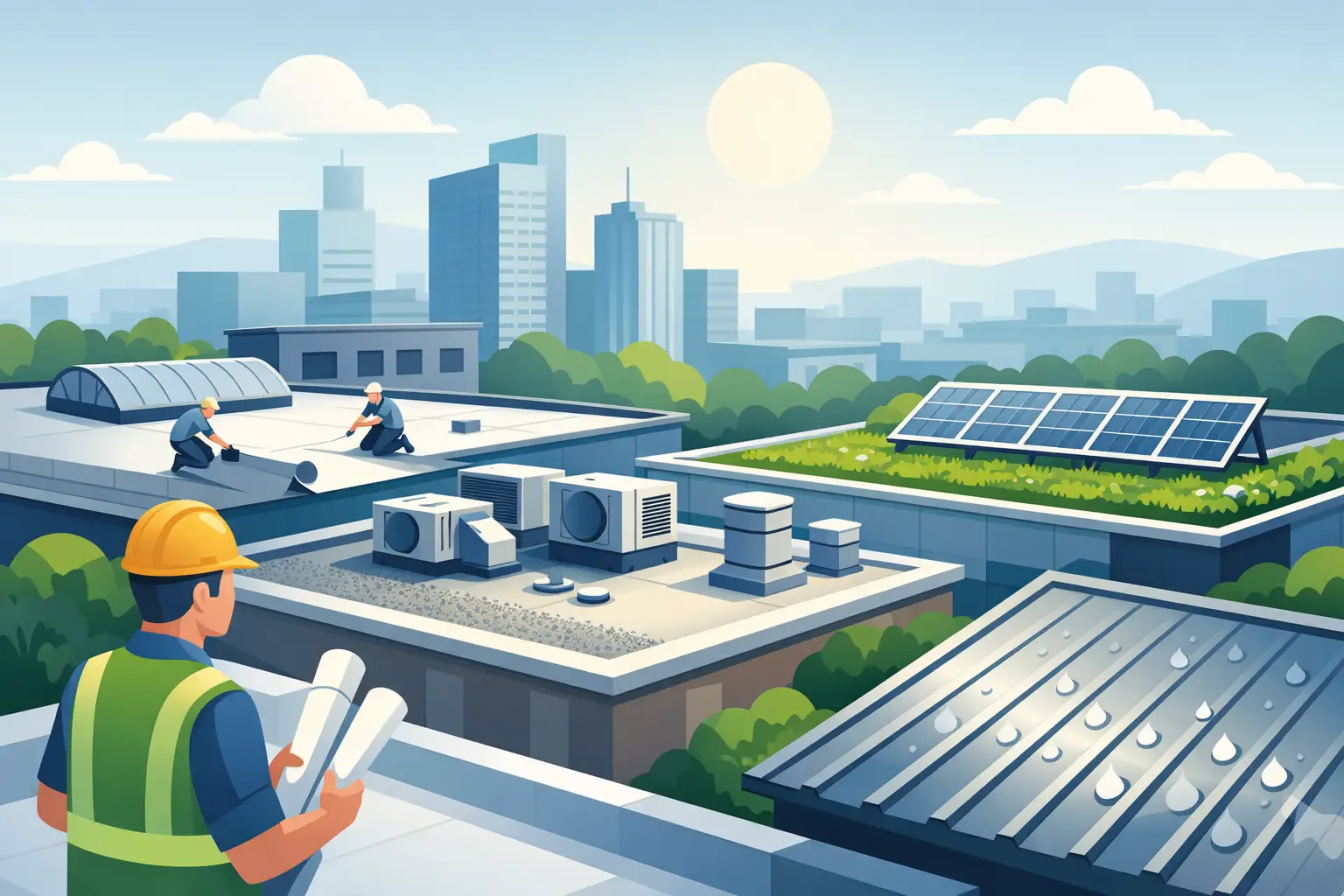
A commercial roof can look serviceable from the ground while water is working its way into insulation, decking, and occupied space. For facility managers and property owners, this commercial roofing systems guide focuses on the decisions that protect the building, control long-term costs, and avoid disruptive emergency repairs. The right system is not simply the one with the lowest installation price. It is the one that fits the roof’s condition, drainage, use, and exposure to the severe sun, wind, snow, and temperature swings common in Nevada and Northern California.
Start With the Building, Not the Material
Commercial roofing is rarely a one-size-fits-all purchase. Low-slope roofs must manage standing water, ultraviolet exposure, expansion and contraction, foot traffic, rooftop equipment, and penetrations for drains, vents, and HVAC units. A system that performs well on a small retail building may not be the best fit for a warehouse, medical office, apartment complex, or industrial facility.
Before selecting a material, a qualified roofing contractor should inspect the existing roof assembly. That includes the membrane or surface, insulation, flashings, seams, drains, edge metal, roof deck, and areas around mechanical equipment. The inspection should also identify whether moisture is trapped below the current roof surface. Installing a new layer over wet insulation can hide a problem temporarily, but it does not remove the risk of deterioration, leaks, and reduced energy performance.
The building’s use matters as much as its square footage. A roof with frequent service traffic needs a system that can handle wear around walk paths and equipment. A building with high cooling costs may benefit from a reflective cool roof surface. A property with aging drainage may need slope corrections or drain improvements before a new membrane can perform as intended.
Commercial Roofing Systems Guide: Main Options
The best commercial roofing system depends on conditions at the property. Each option has strengths, limitations, and maintenance needs.
Single-Ply Membrane Roofing
Single-ply systems are widely used on low-slope commercial roofs because they provide continuous waterproofing across large areas. Common membrane options include TPO, PVC, and EPDM. TPO and PVC are often selected for their light-colored, reflective surfaces, which can help reduce heat absorption and cooling demand in hot, sunny climates. EPDM is typically dark and known for its flexibility, although it may not provide the same reflective benefit without a coating or ballast approach.
Membrane roofing can be mechanically attached, fully adhered, or installed with ballast depending on the system and building requirements. Its performance depends heavily on seam work, flashing details, and secure attachment at the perimeter. Strong winds place extra stress on roof edges and corners, so installation quality is not an area to compromise.
Single-ply membranes are often a practical choice for offices, retail buildings, warehouses, and other properties with broad, low-slope roof areas. They are not maintenance-free. Seams, penetrations, drains, and areas near rooftop equipment should be inspected regularly.
Commercial Roof Coatings and Restoration
A roof coating can be a cost-effective restoration option when the existing roof remains structurally sound and dry. Coatings create a protective surface over a compatible roof system, helping address UV exposure, minor weathering, and energy efficiency concerns. Many coatings are highly reflective, making them especially useful for facilities exposed to intense summer heat.
Restoration is not a shortcut for a roof with widespread saturated insulation, major membrane failure, unstable decking, or poor drainage. A coating follows the shape of the roof beneath it. If water ponds because of drainage problems, those conditions must be evaluated and corrected where possible before restoration work begins.
When conditions are right, a coating system can extend roof life, reduce disposal from a tear-off, and limit disruption to building operations. It also requires proper surface preparation. Cleaning, repairs, seam treatment, primer selection, and correct coating thickness all affect the result. Mountain Valley Roofing evaluates restoration first when it offers a realistic long-term benefit, not simply because it costs less upfront.
Metal Roofing Systems
Metal roofing is a durable choice for many commercial and mixed-use properties, particularly where steep-slope architecture, snow shedding, wind resistance, and long service life are priorities. Standing seam metal systems provide a clean appearance with concealed fasteners, while exposed-fastener panels can be a more economical option for certain structures.
The trade-off is that metal roofs require careful detailing around penetrations, transitions, fasteners, and panel movement. Metal expands and contracts with temperature changes. If the system is improperly installed or neglected, loose fasteners, failed sealant, and flashing issues can become leak points. A well-designed metal system paired with regular maintenance can deliver reliable protection for decades.
Modified Bitumen and Torch Down Roofing
Modified bitumen systems use asphalt-based sheets that are installed in multiple layers. Torch down roofing is one application method, although other methods may be used based on project requirements and site safety. These systems are valued for toughness, redundancy, and dependable waterproofing on low-slope roof sections.
Because modified bitumen is a layered system, it can provide strong protection in areas with regular foot traffic or demanding weather exposure. Reflective coatings may be added to improve UV resistance and reduce surface temperatures. The system’s weight, roof deck capacity, drainage conditions, and safe installation procedures should all be considered before selection.
Drainage and Flashing Decide More Than Most Owners Expect
The field of the roof gets attention because it covers the most area, but many commercial leaks begin at details. Flashings at walls, curbs, skylights, pipes, drains, and roof edges must move with the roof and remain watertight through changing temperatures. Poorly sealed penetrations can undermine an otherwise high-quality membrane.
Drainage is equally critical. Water that remains on the roof accelerates wear, increases loading, and exposes weaknesses in seams and flashings. Some ponding after a storm may occur on low-slope roofs, but water that remains for extended periods deserves attention. Clogged drains, damaged scuppers, inadequate slope, and crushed drain lines are common causes.
A replacement project is the right time to address these concerns. Adding or replacing drains, improving crickets around curbs, correcting localized low areas, and upgrading edge details can prevent repeated repair costs after the new roof is installed.
Compare Cost by Service Life, Not Installation Price
A lower bid may exclude insulation upgrades, deteriorated deck repairs, drainage corrections, premium flashing details, or a maintenance plan. Those omissions can make the initial number attractive while shifting costs into the future. A clear proposal should explain the roof assembly, removal or recovery scope, insulation approach, attachment method, flashing work, warranty terms, and anticipated disruptions.
Energy savings should also be considered carefully. Reflective roofing and adequate insulation can reduce cooling loads, but the actual benefit depends on the building’s HVAC system, occupancy, insulation levels, utility rates, and local climate. A cool roof is often a smart investment in high-sun locations, yet it should be selected as part of a complete roofing strategy rather than as a standalone selling point.
Maintenance Protects the Investment
Every commercial roof benefits from scheduled inspections, typically before and after severe weather seasons. Maintenance teams should keep drains and gutters clear, watch for damage around equipment, remove debris that holds moisture, and document repairs before they spread. Interior water stains, musty odors, rising energy use, and damaged ceiling tiles can all signal a roofing issue even when the leak is not visible on the roof surface.
Facility staff should avoid allowing unrelated trades to cut or patch the roof without coordination. HVAC, solar, communications, and maintenance work can create penetrations or damage flashings. A documented process for rooftop access and repairs helps preserve system integrity and warranty coverage.
The strongest commercial roof is the one matched to the building and cared for throughout its service life. Start with a thorough inspection, weigh restoration against replacement honestly, and choose workmanship and details that will stand up when the weather turns.